
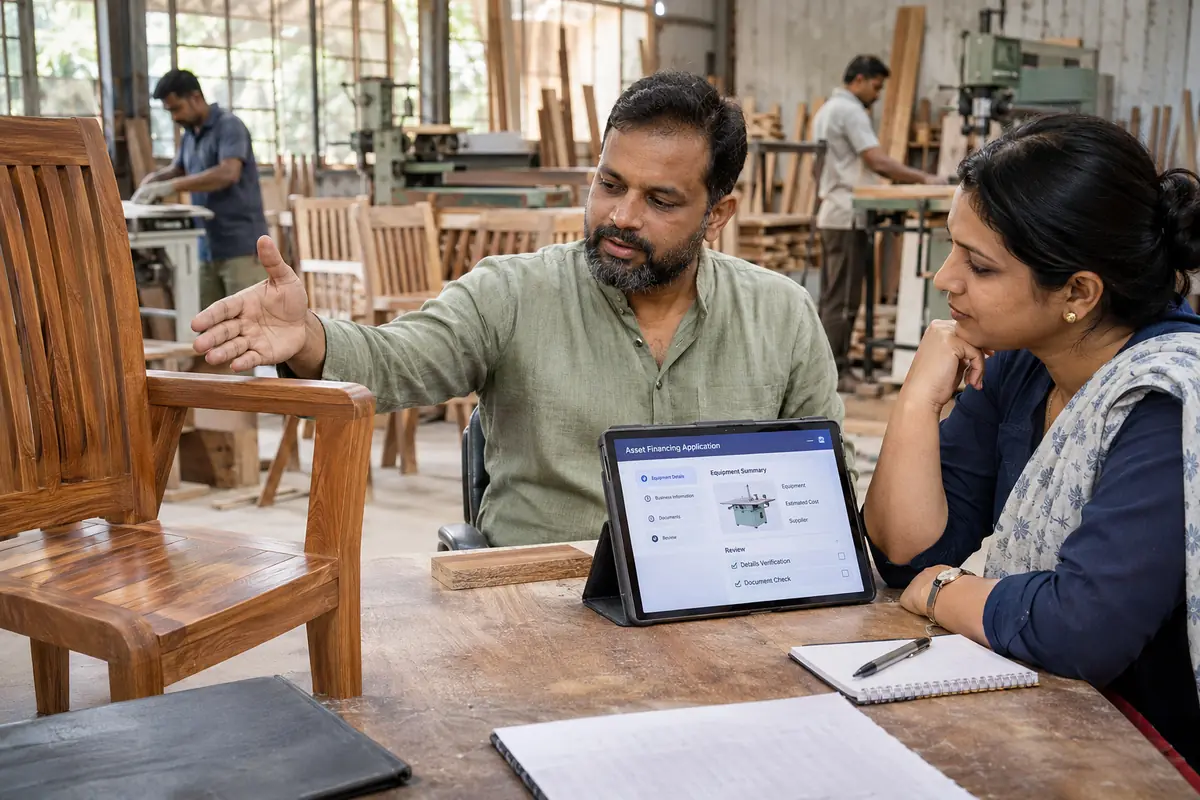
Agra P2P loan apps online in India are mobile and web platforms that connect people in the Taj city who need money with individuals ready to lend it, without a bank sitting in the middle. A registered platform works as an NBFC-P2P intermediary under Reserve Bank of India rules: it verifies users, lists borrowing requests, matches them with lenders and collects repayments, but it does not lend its own funds. The tool suits small businesses, salaried people and households in Uttar Pradesh, while demanding careful checks of the platform and the repayment risk.
Agra's economy and why borrowers look beyond banks
Agra is best known for the Taj Mahal, and tourism shapes daily earnings for guides, hoteliers, drivers, shopkeepers and restaurant owners around Taj Ganj and Fatehabad Road. Income there rises and falls with the visitor season, which makes regular bank-style credit hard to plan.
The city is also a manufacturing centre. Footwear and leather units, many of them family-run, supply domestic and export buyers. Marble inlay, zari-zardozi embroidery, carpets and the famous petha sweet trade add thousands of home-based workers and tiny workshops.
These sectors share one trait: cash needs arrive in bursts. A workshop must buy leather before an export order is paid, and a hotel must repaint rooms before the season. Peer-to-peer platforms respond to this pattern by offering short, fixed-tenure loans arranged online.
Who borrows and who lends in the city
Borrower groups in Agra are easy to recognise, and each has a different reason to use an online platform.
- Shoe makers and leather workshop owners who need working capital between orders.
- Tourism-linked traders who must stock goods before the busy months.
- Salaried staff at schools, hospitals and private firms who face a sudden medical or education bill.
- Young professionals and students linked with the university and coaching institutes.
Lenders are usually salaried individuals, retired people and small business owners with spare savings. Many of them lend small amounts across several borrowers rather than one large sum, because the RBI framework itself caps single-lender exposure to one borrower at Rs 50,000 across platforms.
How regulated apps work for residents of Agra
A person in Agra registers on an app, completes KYC with Aadhaar and PAN, and links a bank account. Borrowers state the amount, purpose and tenure; the platform assesses the profile and publishes the request for lenders.
- The borrower submits documents and a loan request.
- The platform checks identity, income and repayment history.
- Lenders choose requests and fund them in parts.
- Repayments flow through an escrow arrangement and reach lenders.
Hindi is the working language of the city, with Braj and Urdu heard widely in older neighbourhoods, so apps that offer Hindi screens and support make life easier. Agra is also served well by rail and road, which helps field verification when needed.
Rules, limits and the question of risk
The RBI treats peer-to-peer platforms as NBFC-P2P entities, and each must hold a Certificate of Registration. The framework sets Rs 50 lakh as the most a lender may hold across platforms and Rs 10 lakh as the ceiling for one borrower's total outstanding borrowing. Loans may run for at most 36 months.
A platform cannot guarantee repayment, promise assured returns or lend from its own balance sheet. That means a lender in Agra can lose money if a borrower defaults, even when the app shows a high grade for that borrower. Limits reduce concentration but do not remove credit risk.
Interest-free Islamic options in Agra
Agra has a long-established Muslim community, including craftsmen in zardozi, carpet and leather work, and many families look for finance without riba. Genuine Qard Hasan, sometimes called Qarz-e-Hasana, returns only the principal, with no fixed return for the giver.
In India such arrangements mostly run through mosques, charitable trusts, community funds and cooperative societies, not through RBI-registered NBFC-P2P apps. Some cooperatives charge a fixed service fee to cover costs. Murabaha and Ijarah carry a profit or rental element, so they differ from a pure benevolent loan. Anyone choosing these routes should ask for written terms and confirm who the legal entity is.
Reading the cost of a loan before accepting it
The headline rate is only one part of the price. A borrower in Agra should look at the processing fee, any platform charge deducted from the disbursed amount, the penalty for late payment and the total sum repayable over the tenure.
- Ask for the full repayment schedule with each instalment date.
- Compare the amount received in the bank account with the amount sanctioned.
- Check whether early closure is allowed and whether it carries a fee.
- Note who handles complaints and how long a reply takes.
Lenders should read the same documents from the other side: the grade given to the borrower, the stated purpose, the tenure and the way collections are handled if an instalment is missed.
Local habits that shape borrowing
Informal credit has deep roots in the city. Traders of Sanjay Place and Kinari Bazaar, shoe makers around Hing Ki Mandi and families in the old quarters have long relied on relatives, committees and neighbourhood moneylenders. Online platforms compete with that world, and the contrast should be understood clearly.
A written agreement, a traceable bank transfer and a complaint route are what the regulated route adds. The informal route can be faster and more personal, but it often lacks records, and rates can be far higher. Anyone mixing the two should keep every promise documented.
Safety checks before using any app
Fake loan apps are a real hazard across Uttar Pradesh, so basic verification matters before any document or contact list is shared.
- Confirm the legal name of the company and its RBI registration as an NBFC-P2P.
- Be wary of apps that ask for access to contacts, photos or messages.
- Reject any promise of assured returns or instant approval without checks.
- Read the fee schedule, late-payment charges and tenure before accepting.
- Keep all agreements and repayment receipts in a safe place.
Harassment by recovery agents, hidden charges and look-alike apps are the common complaints, and a registered entity with a clear grievance process is the safer starting point.
Repayment discipline and sensible borrowing
Borrowing works best when the instalment is a modest part of monthly income. A footwear unit owner should plan for delayed buyer payments, and a tourism worker should allow for the slow months when setting the amount and tenure.
Lenders, for their part, gain from spreading small sums across many borrowers, from reading the borrower's stated purpose and from treating any return as uncertain. Information of this kind is general and is no personal financial advice or loan offer.
Frequently asked questions
Are P2P loan apps legal in Agra?
Peer-to-peer lending is legal in India when the platform is registered with the Reserve Bank of India as an NBFC-P2P. Residents of Agra should confirm the registration of any app and the company's legal identity before sharing documents or money.
Can I get an interest-free loan through an app in Agra?
Most RBI-registered P2P apps work on interest, not on Qard Hasan. Interest-free lending in India usually runs through community, charitable or cooperative systems, some of which charge a small fixed service fee. Always read the written terms first.
How much can one person borrow or lend through P2P apps?
Under the RBI framework a borrower can hold at most Rs 10 lakh outstanding across platforms, a lender can place up to Rs 50 lakh in total, and a lender can put at most Rs 50,000 with one borrower. Loan maturity cannot exceed 36 months.
Further reading
- i2iFunding : i2iFunding is an NBFC-P2P lending platform whose public information shows how online matching of borrowers and lenders works, which is useful for readers in Agra comparing registered options.