
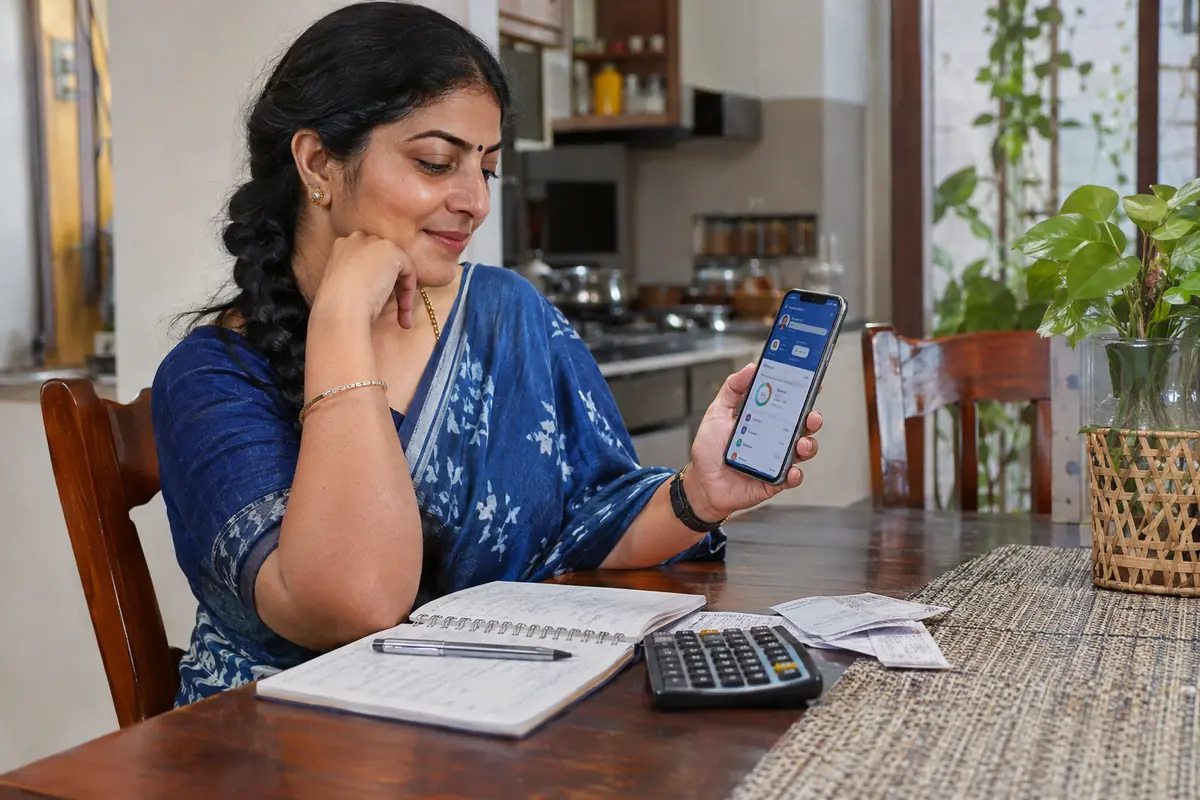
Surat P2P loan apps online India are digital services that let people in this Gujarat city lend money to, or borrow from, other individuals through a registered intermediary. The operator must be an NBFC-P2P with a Certificate of Registration from the Reserve Bank of India. It verifies users, publishes loan requests, holds money in escrow and passes repayments to lenders. It cannot lend from its own funds or guarantee repayment, so a lender carries the risk that a borrower may pay late or default altogether.
An industrial city built on textiles and diamonds
Surat, in southern Gujarat on the Tapi river, is one of India's busiest manufacturing and trading centres. It is known for synthetic textiles, embroidery, weaving and dyeing units, and for cutting and polishing a very large share of the world's diamonds. Newer strengths include chemicals, port-related logistics and the nearby Hazira industrial area.
The workforce is huge and mobile. Many workers come from Odisha, Uttar Pradesh, Bihar, Maharashtra and Saurashtra, and a large number are paid on piece rates or weekly settlements. Business owners range from small loom operators to established merchants, and most are used to short-term credit between suppliers and buyers.
Who might use a peer app
Typical borrowers are a loom owner waiting on a delayed payment from a trader, a diamond polisher bridging a slow month, a migrant worker paying for a family event in the home village, or a retail shop owner stocking up before the wedding season.
Lenders are often established traders, brokers or professionals who have idle cash and want to place small amounts in many loans. Younger residents with technology jobs also participate in small amounts.
Gujarati is the main language, with Hindi widely used by migrant communities and English on most apps. Because some users read little English, it is worth asking a platform whether Gujarati or Hindi support exists, rather than accepting terms that were not understood.
The regulated model in brief
A user registers with Aadhaar, PAN and a bank account. A borrower's request is assessed, graded and shown to lenders, who may fund only part of it. Money moves through an escrow account kept apart from the platform's own funds, and repayments are collected by mandate and shared among lenders.
The RBI NBFC-P2P framework stops a platform from promising assured returns or guaranteeing repayment. It sets lender exposure at Rs 50 lakh in total and Rs 50,000 per borrower, a borrower ceiling of Rs 10 lakh, and a maximum maturity of 36 months.
These limits cut concentration. They do not remove credit risk, which is why many small loans are safer than a few large ones.
Business cycles and borrowing decisions
The textile and diamond trades are cyclical. Orders rise before festivals and fall when export demand weakens, and payment from buyers can be delayed for weeks. A borrower in these trades should look at how long a delay might last before choosing a loan term, and should not assume next month will repeat last month.
For lenders, the same cycle matters. A slowdown can cause several borrowers from the same industry to struggle together, so spreading funds across professions, not only across names, offers better protection.
Keeping a record of invoices and bank movements helps a borrower prove income and negotiate with the platform if difficulty arises.
Avoiding unsafe lenders
Unlicensed apps target workers who need cash quickly and have limited documents. They may charge steep fees, demand contact access and threaten borrowers by calling relatives.
- Confirm the legal name and RBI registration before uploading any document.
- Avoid loans offered through unsolicited messages.
- Never pay an upfront charge to receive funds.
- Keep receipts of each payment and the agreement.
This is general information, not personal advice, and borrowers must check the identity of any app themselves.
Interest-free help among Surat's communities
The city has Muslim, Bohra, Memon and Jain communities among others, with welfare trusts active in areas such as Rander, Lalgate and Salabatpura. Qard Hasan, also written Qarz-e-Hasana, is a loan in which the borrower repays only the principal and no return is fixed for the lender.
It typically operates through trusts, mosque committees, cooperative societies and personal ties, not through RBI-registered P2P apps. A few cooperatives charge a fixed service fee for administration. Murabaha and Ijarah contain a profit or rental element and should not be confused with pure interest-free lending.
Anyone who asks for such help should ask for the terms in writing and learn who administers the funds.
Repayment habits
Piece-rate earners should compare the instalment with their lowest likely monthly income, not their best month. An automatic debit on a date shortly after wages arrive reduces the chance of missing a payment.
If income falls, contacting the platform quickly to discuss rescheduling is better than disappearing. A new loan to repay an old one deepens the problem and should be avoided.
Lenders should remember that they may need patience, because overdue amounts can take months to recover and some may not be recovered at all.
Migrant workers and remittances
A large share of Surat's workers send money home to villages in other states. Their finances follow a pattern of weekly wages, monthly remittances and occasional large costs such as a wedding, a harvest season or a medical emergency back home.
For such borrowers, a loan that requires monthly payments from a bank account is workable only if wages are paid into that account. Workers without a bank account in their own name cannot register, and those who use a relative's account should not do so, since a mismatch can invalidate the agreement.
Opening a basic account and linking it to a mobile number is the first step to any formal credit, whether from a bank, a cooperative or a peer platform.
Reading the agreement and fees
Before accepting, a borrower should locate the interest rate, the processing fee, the late-payment penalty, the number of instalments and the date each falls due. Adding all charges gives the true cost, which is often higher than the headline rate suggests.
Lenders should read the platform's description of how it handles defaults, what recovery steps are used and how any amounts recovered are shared. A short, clear answer is preferable to a long, vague one.
Both sides should keep a copy of the signed agreement and every receipt for future reference.
Choosing small steps first
New users do well to start modestly. A first loan can be small and short, and a first lending amount can be a few thousand rupees spread over several borrowers. After several months the user will know how the platform behaves in practice, how quickly support responds and how reliable repayments are.
Only then does it make sense to consider larger amounts, always within the RBI ceilings and always from money that is not needed for daily living.
Frequently asked questions
Can a diamond or textile worker in Surat borrow through an app?
Yes, if the person passes KYC and the platform considers the income credible. Borrowing across all platforms is limited to Rs 10 lakh, and the term to 36 months, so the instalment should fit even a slow month.
Are Surat P2P apps guaranteed by the government?
No. The RBI registers and supervises NBFC-P2P platforms, but it does not guarantee any loan. A lender can lose money if a borrower defaults, and platforms may not promise repayment or assured returns.
Is there an interest-free choice in Surat?
Community and charitable Qard Hasan help exists, repaying principal only. It is usually run by trusts, cooperatives or families, not RBI-registered apps, so borrowers should confirm the rules, the fees if any and who manages the money.
Further reading
- Lendbox : Lendbox is an NBFC-P2P lending platform, which helps Surat readers see how a registered peer lending service lists borrowers, explains risk to lenders and arranges repayments.