
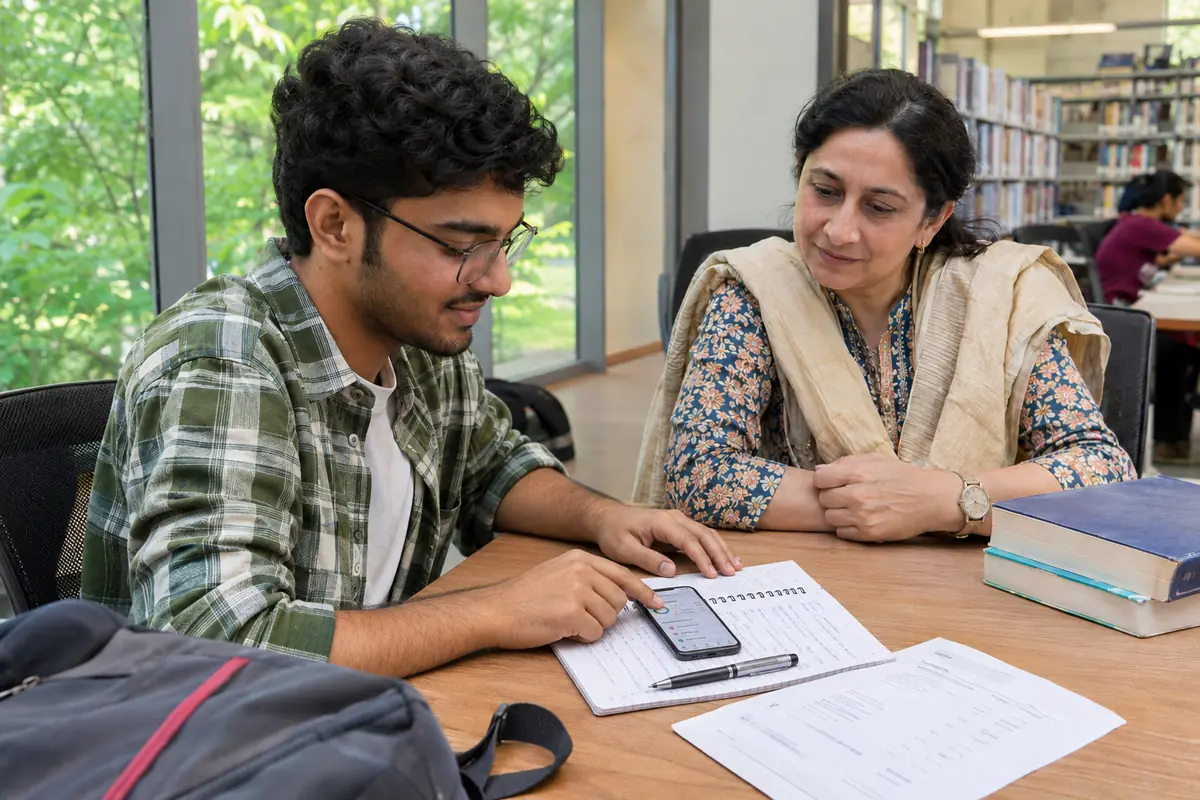
Kolkata P2P loan apps online India are digital platforms that help residents of West Bengal's capital lend to and borrow from one another through a regulated middleman. The operator has to be an NBFC-P2P registered with the Reserve Bank of India. It checks identities, lists loan requests, keeps funds in escrow and distributes repayments, yet it cannot lend from its own balance sheet or promise a return. A lender therefore bears the chance that a borrower will delay payments or fail to repay entirely.
A city of trade, culture and old banking habits
Kolkata, the capital of West Bengal, was once the capital of British India and still carries a heritage of banking, trading houses and publishing. Its economy now rests on wholesale markets such as Burrabazar, jute and engineering units around the Hooghly, healthcare, education, and growing services and information technology zones in Salt Lake and New Town.
The city also has a large informal economy of street vendors, small manufacturers, rickshaw and taxi operators and home-based workers. Many of them earn steadily, yet cannot easily prove income with formal papers, which is why digital peer lending attracts them.
Typical users in the city
Borrowers include teachers and clerks paid monthly who face an unexpected bill, wholesalers in Burrabazar and Posta who need short-term stock finance, graduates from the city's colleges seeking funds for a course, and families in Howrah or the southern suburbs managing medical costs.
Lenders are often professionals, retired government employees, business families and small investors who have grown wary of low fixed deposit yields and wish to try a small allocation in peer loans.
Bengali is the language of daily conversation, with Hindi, English and Urdu also common. Residents who prefer Bengali should ask platforms whether support or key documents are available in that language.
How a regulated platform operates
After verification with Aadhaar, PAN and a bank account, a borrower's request is assessed and shown to lenders. Lenders offer amounts of their choice, funds are held in escrow, and repayments are collected by mandate from the borrower's account. The platform earns fees, not from lending its own money.
Under the RBI framework a lender may have at most Rs 50 lakh across platforms and Rs 50,000 with any single borrower. A borrower may hold at most Rs 10 lakh across platforms, and a loan cannot exceed 36 months. A platform may not guarantee repayment or advertise assured returns.
A user should read these rules as boundaries for the market, not as protection from loss.
Risks that deserve attention
Credit risk is the first concern, since borrowers may lose their income or move away. Concentration risk follows: a lender who places too much with a few borrowers suffers badly if one fails. Liquidity risk is also real, because loans run for months and cannot be withdrawn early in most cases.
Operational risk exists too. Some apps are not registered, and others close without notice. Before using any service, a resident should confirm the company's legal name, registration number and registered office, and should read the lender and borrower agreements fully.
The information here is general, intended for awareness, and it is neither an offer of credit nor personal advice.
Spotting predatory apps
Reports from several states describe apps that give quick small loans with very high charges and then threaten borrowers. A person in West Bengal who feels pressured can take practical steps:
- stop paying through links sent by unknown callers;
- save call recordings, messages and screenshots;
- file a complaint on the national cybercrime portal;
- approach the nearest police station or the state consumer authorities;
- warn relatives not to respond to abusive messages.
An RBI-registered NBFC-P2P also has a grievance process, so legitimate complaints can be raised with the platform directly.
Interest-free practice in Kolkata's communities
The city has Muslim communities in Park Circus, Metiabruz, Rajabazar and Garden Reach, together with Marwari, Gujarati, Bohra and Memon traders. Among those who follow Islamic principles, Qard Hasan or Qarz-e-Hasana means returning only the principal borrowed, with no return fixed for the lender.
Support is typically given through mosque committees, welfare trusts, cooperative societies and family networks, not through RBI-registered P2P apps. Some cooperatives levy a fixed service charge for administration. Murabaha and Ijarah have a profit or rental element, and they are financing structures rather than interest-free loans.
Whoever approaches such a group should ask for written terms and a clear account of how the funds are managed.
Repayment and household budgeting
Many families in the city live on tight monthly budgets, with joint households sharing costs. A borrower should list income and fixed spending, then test whether the instalment still fits if a month brings extra medical or festival expenses around Durga Puja.
An automatic payment instruction avoids slips, and a modest reserve covers delays in salary. When repayment becomes hard, early contact with the platform about rescheduling is far better than silence.
Borrowers should also avoid taking one loan to pay another, because the combined burden grows quickly.
Good habits for lenders
A lender benefits from starting with a small sum, reading each borrower's grade, and spreading money across many loans. Statements should be kept for tax purposes, since interest is income.
It is wise not to treat expected returns as certain, to keep emergency savings elsewhere, and to avoid funding borrowers who approach privately outside the platform.
Peer lending and the informal economy
Many Kolkata workers, from market porters to home tutors, are paid in cash and have no payslip. Peer platforms rely on bank statements and digital transactions, so users who run their money through accounts and mobile payments find it easier to qualify.
That gives a practical incentive to build a clean financial record: regular deposits, no bounced payments and a stable mobile number. Over time this helps with both peer loans and bank credit.
Lenders should recall that thin records mean higher uncertainty, which is why spreading small amounts matters even more for borrowers drawn from the informal economy.
Comparing costs and tenures
Peer loans differ in rate, fee and tenure. A short loan of a few months costs less in total but needs larger monthly payments; a long loan eases monthly strain but extends the period of exposure and charges. Borrowers should request the complete schedule and calculate the total repayable amount.
For lenders, a longer tenure means a longer lock-up of money, and the longer the period, the more can change in a borrower's job or health. Reading the grade and the stated purpose, and choosing shorter tenures where possible, is a reasonable compromise.
Frequently asked questions
Is peer lending legal in West Bengal?
Yes, nationwide rules apply. A platform must be an NBFC-P2P with RBI registration. Lenders and borrowers must follow the framework limits, and a user in Kolkata should confirm the company's registration before sharing any documents.
Can a Kolkata lender expect fixed returns?
No. The RBI prohibits platforms from guaranteeing repayment or advertising assured returns. Displayed yields are expectations only, and defaults can reduce or eliminate a lender's gains, so only spare money should be placed.
What if a Kolkata borrower cannot repay on time?
The borrower should contact the platform quickly to ask about rescheduling. Late payment can bring charges and a lower credit score, and repeated default may lead to recovery steps as set out in the agreement.
Further reading
- i2iFunding : i2iFunding is an NBFC-P2P lending platform, offering Kolkata readers a concrete example of how a registered intermediary presents loan listings, lender choices and repayment information.