
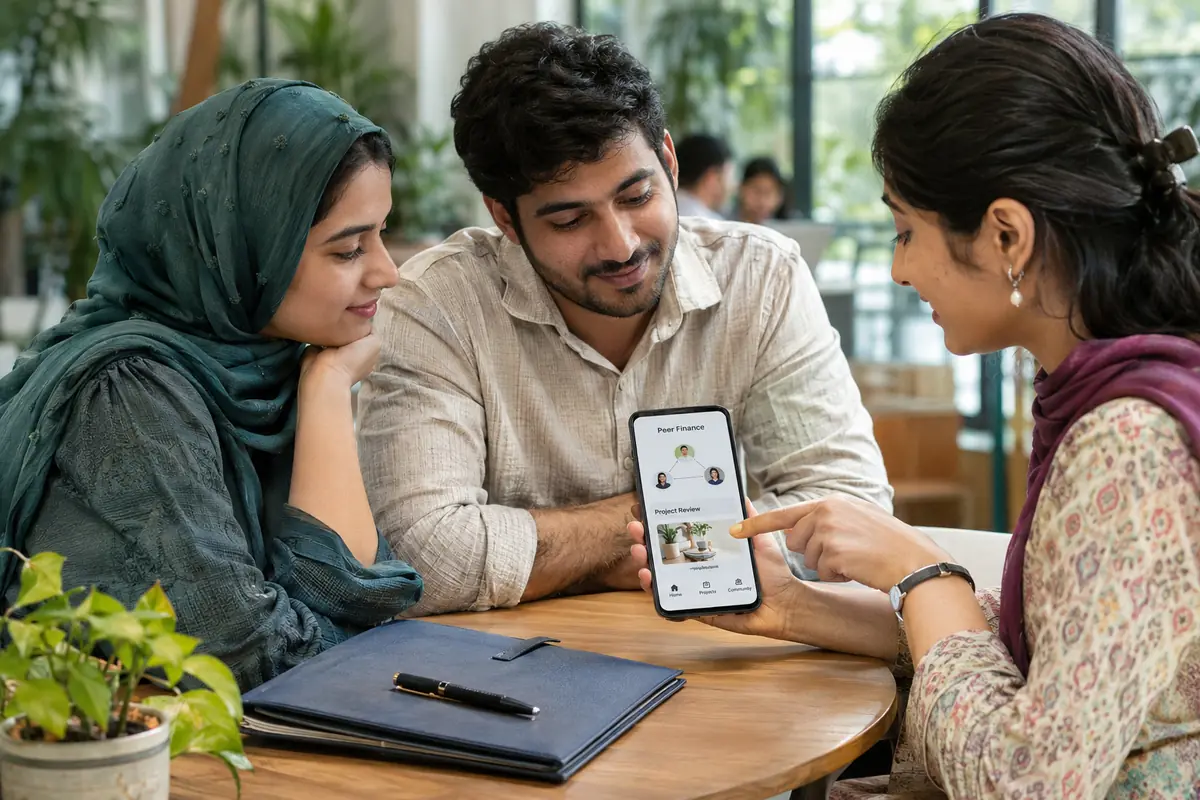
Gwalior P2P loan apps online India are mobile platforms through which residents of this historic Madhya Pradesh city lend to or borrow from other individuals without a bank standing in the middle. Under Indian rules the platform must be an NBFC-P2P company registered with the Reserve Bank of India. It verifies users, lists requests, collects instalments and forwards them, but it may not lend its own money or guarantee repayment. The lender therefore accepts the borrower's credit risk, and the borrower accepts a contractual duty to repay on schedule.
A fortress city with a modern economy
Gwalior is known for its hill fort, the Scindia family heritage, its role in classical music and its place on the road between Delhi and central India. Today it combines government offices, military and police training institutions, universities and a growing industrial belt at Malanpur and Banmore.
The city's economy is therefore a blend of salaried public employment, small manufacturing, retail and services. That blend creates steady but moderate demand for personal credit, and a good share of it comes from households that rarely visit a bank branch for small amounts.
Tourism adds another layer, since visitors to the fort, the palaces and the annual trade fair support guides, drivers, handicraft sellers and guesthouse owners, many of whom earn unevenly through the year.
Language and local context
Hindi is the common language, with Bundeli and Braj-influenced speech heard in daily conversation across the Gwalior-Chambal region. Urdu, Punjabi and Sindhi-speaking families form long-settled communities, and English is used in the colleges and in offices.
Because platform screens are usually in English or Hindi, borrowers from older generations may need a relative to read the terms with them. A loan agreement signed without full understanding of charges, due dates and penalties is the most avoidable source of later conflict.
Who borrows and why
Typical borrowers include:
- staff of government departments who need a bridge before arrears or allowances are paid;
- shop owners in the Lashkar and Morar markets who must pay wholesalers before festival sales;
- students from nearby districts preparing for examinations, who face rent and coaching costs;
- small manufacturers who wait for payment from larger buyers.
The platform will review bank statements, existing loans and repayment behaviour. A borrower who already has several unpaid obligations should address those before applying for anything new.
Self-employed borrowers such as drivers, tailors and electricians should be prepared to show several months of bank entries, because platforms cannot rely on a salary slip.
Who lends and what limits protect them
Retired officers, teachers, doctors and traders form a natural pool of lenders, since many have modest savings that earn little in a deposit account. The RBI allows a lender to hold exposure of up to Rs 50 lakh across all platforms, but only Rs 50,000 towards a single borrower.
The purpose of that second limit is to force diversification. A lender who splits a sum among many loans will feel a default less sharply than one who backs a single request. Still, defaults happen, recovery can be slow, and a platform cannot promise to make the lender whole.
Steps to follow on a regulated app
- Select a platform and confirm its RBI registration.
- Create an account with a mobile number linked to your bank.
- Upload identity and address documents for KYC.
- Link a bank account held in your own name.
- Choose the role of lender or borrower and read the offered terms.
- Confirm only after checking the amount, term, charges and repayment dates.
Loan maturity cannot go beyond 36 months, and a borrower cannot hold more than Rs 10 lakh of outstanding P2P debt across platforms.
Music, education and the regional economy
Gwalior has a celebrated place in Hindustani classical music, and the memory of Tansen and the Gwalior gharana still draws students, performers and instrument makers. Jiwaji University, medical and engineering colleges, and training academies bring thousands of young people who live in rented rooms and depend on family transfers that sometimes arrive late.
These groups illustrate why small, short loans attract attention. A student whose remittance is delayed or a musician awaiting payment for a concert may need a modest sum for a few weeks. Even so, peer lending is not a substitute for family support or scholarships, and it should never be used to fund a lifestyle. Anyone in this position should compare the total cost of the loan with simpler alternatives such as an advance from an employer or a short delay in paying a bill.
Interest-free community systems
Gwalior's Muslim families, along with Jain and Sikh communities that have strong charitable traditions, often favour help without interest. Qard Hasan, or Qarz-e-Hasana, refers to a loan where only the principal comes back and the lender takes no predetermined return.
It is typically arranged by welfare committees, trusts and cooperatives, not by RBI-registered P2P apps. Some cooperatives levy a fixed service fee to cover costs, while Murabaha and Ijarah arrangements include a profit or rental element. The right approach is to ask the body in writing how the arrangement works and who is legally responsible for it.
Avoiding fraudulent apps
Fraudulent lenders target people who need money urgently. They offer approval within minutes, demand fees before disbursal and threaten borrowers by messaging their contacts.
- Check the legal name and RBI registration of the company, not just the app's brand name.
- Read what permissions the app requests before installing it.
- Never share an OTP or banking password.
- Do not pay any advance fee for a loan.
- Preserve screenshots and call records if harassment begins.
Complaints can be raised with the platform's grievance officer and, if necessary, the cyber crime authorities.
Keeping repayment on track
A realistic plan starts by working out the total amount to be repaid and dividing it against monthly income after fixed expenses. Government employees in Gwalior with predictable salary dates can choose an instalment date just after payday, while traders should favour a date following their strongest sales week.
If a payment will be late, informing the platform early is better than staying silent. Lenders should handle delays calmly, since the platform manages collection and the borrower's credit record is also at stake. Both parties benefit from remembering that peer lending is a financial contract between real people, not an anonymous transaction.
One final point concerns timing. A borrower who takes several small loans on different dates ends up juggling many due dates, and a missed one can trigger penalties. Keeping a single calendar of all instalments avoids this trap.
Frequently asked questions
Can a Gwalior borrower use a P2P app instead of a bank loan?
Often yes for smaller personal needs, but approval depends on credit history, income proof and platform policy. P2P loans are capped at Rs 10 lakh outstanding across platforms and 36 months, so large long-term finance still usually needs a bank.
What should a lender in Gwalior check before funding a loan?
The lender should confirm the platform's RBI registration, read the borrower's risk grade and stated purpose, check the repayment term and charges, and avoid placing more than a small share of savings in any single loan.
Does Qard Hasan work through P2P apps in Gwalior?
Generally not. Qard Hasan is a community or charitable arrangement where only the principal is returned. RBI-registered P2P platforms are commercial intermediaries, so interest-free help is normally sought through trusts, committees or cooperatives.
Further reading
- Lendbox : Lendbox is an NBFC-P2P lending platform, so it offers Gwalior residents a practical example of how a registered intermediary lists loans, verifies users and handles repayments online.