
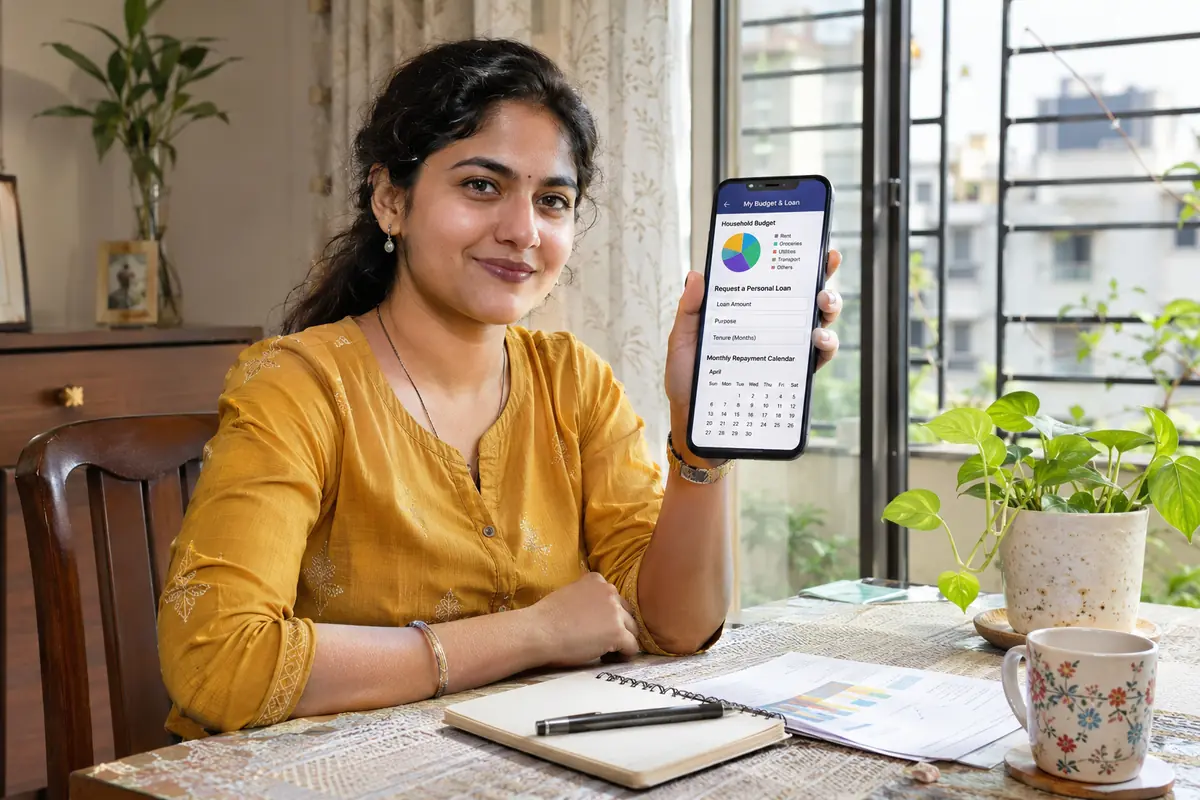
Srinagar P2P loan apps online India are digital platforms through which people in the summer capital of Jammu and Kashmir borrow from, or lend to, other individuals instead of going through a bank counter. Only companies holding an RBI Certificate of Registration as an NBFC-P2P may run such a marketplace, and they remain intermediaries: they screen users, match offers, and manage repayments, but they cannot lend their own money or guarantee returns. Residents usually register with e-KYC, a bank account and a mobile number.
The Srinagar economy and why digital lending appeals
Srinagar lies on the Jhelum river and around Dal Lake, and its economy blends tourism, handicrafts, horticulture, trade and government employment. Pashmina shawls, papier-mache, carpets and walnut-wood carving are made by home-based artisans, while orchards in the wider Kashmir valley feed a large wholesale fruit trade.
Much of this activity is seasonal and informal. A houseboat owner earns most of the year's income during the tourist months, an artisan waits for payment from an exporter, and an apple trader needs cash before the harvest. These cycles make short-term funding attractive, and they also create uneven repayment capacity that any borrower should plan for.
Kashmiri, Urdu and Hindi are all in daily use, with English common in business and education.
Srinagar is also a government hub, with a large public-sector workforce whose salaried income and bank accounts make them easier to assess than informal traders, although both groups may seek peer loans for different reasons.
Practical hurdles of online access in the valley
Mobile connectivity in the region has at times been interrupted or slowed, and that matters for any app-based loan. A borrower who cannot reach the app on a due date may incur late fees even though the delay was not intentional, so it is wise to understand how the platform handles repayment by auto-debit or by transfer through the bank.
Residents with a bank account in a local or cooperative bank should check that the account supports electronic mandates before applying. Documents such as Aadhaar, PAN and proof of address are normally needed, and a mismatch in names or addresses is a common reason for delay.
It also helps to keep the registered mobile number active, since one-time passwords are used for most steps.
Applicants who live in the old city or on the outskirts should enter their address exactly as it appears in identity records, because verification systems match text, not local landmarks.
Before signing, read the key facts statement that regulated lenders provide, which sets out the annualised cost, the tenure and the penalty clauses in plain terms.
How an NBFC-P2P platform operates
After registration, the platform grades each borrower on credit history, income and existing obligations. Lenders then select profiles or use automated allocation, committing small amounts to many people rather than a large amount to one.
The RBI framework sets clear rails around this model:
- A platform cannot lend from its own balance sheet or guarantee repayment.
- Loans mature within 36 months at the longest.
- A borrower's total outstanding across platforms may not exceed Rs 10 lakh.
- A lender may place at most Rs 50,000 with the same borrower across platforms, and Rs 50 lakh overall.
These rules do not remove credit risk. They merely limit the size of any single exposure.
Who borrows and who lends in the city
Borrowers include shopkeepers around Lal Chowk and Residency Road, artisans buying raw material, students preparing for competitive examinations, families meeting medical or wedding costs and small tourism operators repairing shikaras or guesthouses before the season.
Lenders tend to be salaried employees, professionals, retired people and traders with spare savings who want to earn more than a deposit but accept the possibility of delay or loss. Because defaults happen, diversification across many borrowers matters more than a high headline rate.
Neither side should treat a P2P app as a substitute for emergency savings.
A craft exporter waiting for a foreign buyer to pay, for example, may use a short loan to bridge the gap, but should be sure the receivable is genuine and near, because a delayed payment can turn a bridge loan into a burden.
Interest-free finance in a Muslim-majority region
Jammu and Kashmir has a Muslim-majority population, so questions about riba-free borrowing are common. A genuine Qard Hasan, or Qarz-e-Hasana, means that only the principal is returned and the lender receives no predetermined gain. Some cooperatives add a fixed service fee to cover administrative costs.
Other Islamic contracts, such as Murabaha and Ijarah, include a profit or rental element, so they are not interest-free in the same sense, although they are structured as sales or leases and not as loans.
In practice, most interest-free help in Srinagar flows through family networks, mosque and neighbourhood funds, charitable trusts and cooperative societies. These are community or charitable systems, not RBI-registered NBFC-P2P apps, and they lack the formal grievance route that a regulated platform must provide.
Spotting unsafe apps
Fraudulent lending apps target people under pressure, and the following warning signs deserve attention:
- The company cannot be traced to a registered legal entity or lacks an RBI Certificate of Registration.
- An upfront fee is demanded before a loan is released.
- The app requests access to contacts or photos and then threatens to share them.
- Returns are described as assured or risk-free.
- Repayment terms are vague or change after acceptance.
If something goes wrong, keep screenshots, contact the platform's grievance officer first and then use the RBI's complaint channels or the local cyber police.
Responsible borrowing habits
Before accepting any offer, work out the full cost: interest, processing fee, late charges and taxes. Compare it with a bank loan, a cooperative loan or a family arrangement, which can be cheaper for artisans and farmers who qualify.
A useful habit is to write down the sanctioned amount, the instalment date and the final due date the moment a loan is approved, then set a reminder a few days before each payment so that a slow connection never becomes the reason for a late fee.
Borrow for a clear purpose with an identifiable source of repayment, and keep each instalment comfortably within what monthly income can bear, remembering that winter often brings fewer visitors and slower sales.
Where a borrower is already struggling, early talks with the platform about a revised schedule are usually better than silence, and free credit counselling is available through some banks and non-profit bodies.
Information here is general and not personal advice, and nothing in it is an offer to lend.
Frequently asked questions
Can people in Srinagar use P2P lending apps?
Yes, as long as the platform is a registered NBFC-P2P. The RBI rules apply across India, including Jammu and Kashmir. Residents need a bank account, e-KYC documents and a working mobile connection, and should verify the company's registration first.
Are there interest-free P2P options in Srinagar?
Regulated NBFC-P2P apps charge a return to lenders. Interest-free help usually comes from community, charitable or cooperative Qard Hasan arrangements, where only the principal is repaid. These are not RBI-registered apps, so borrowers should check who runs them and on what terms.
What happens if a Srinagar borrower misses an instalment?
Late charges may apply and the delay can be reported to credit bureaus, harming later access to bank credit. Borrowers should contact the platform quickly, ask about restructuring and avoid taking a second loan merely to cover the first.
Further reading
- i2iFunding : i2iFunding is an NBFC-P2P lending platform whose public material explains how borrowers and lenders are matched under RBI rules, a useful reference for Srinagar residents comparing registered options.