
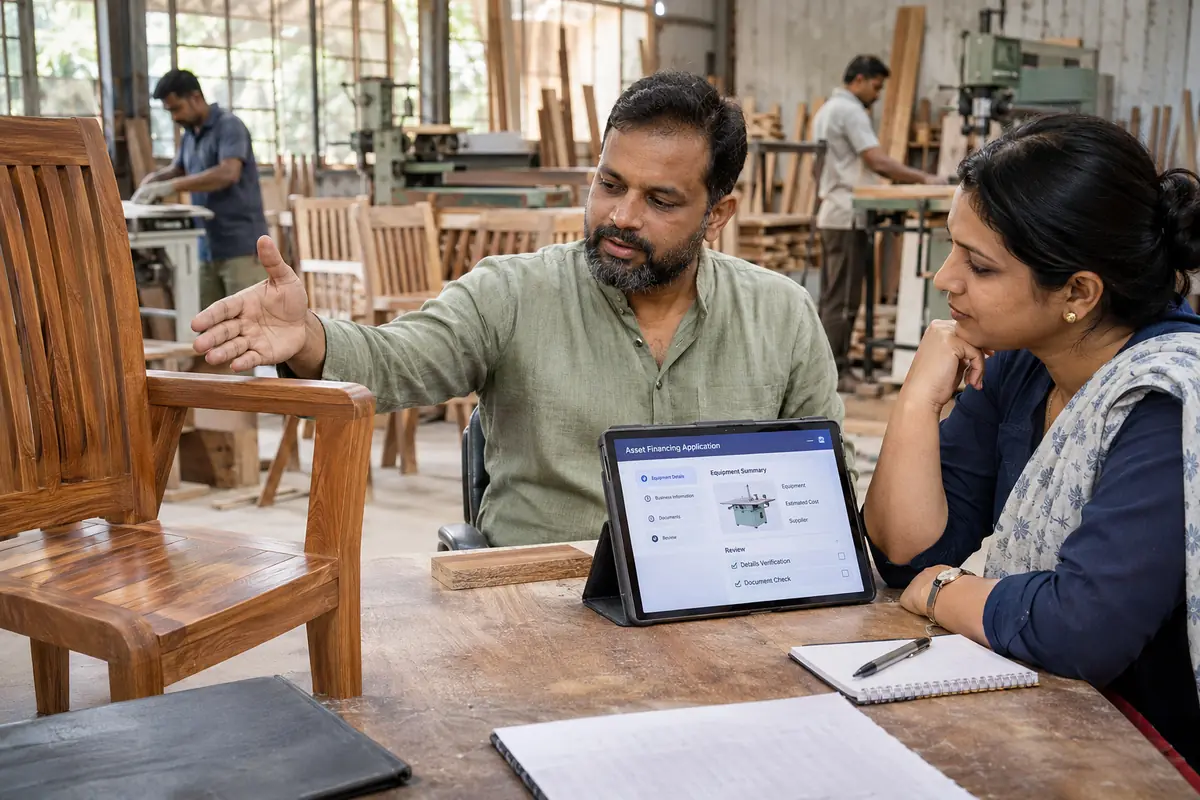
Jodhpur P2P loan apps online India are digital platforms where residents of this western Rajasthan city can lend to or borrow from other individuals without relying on a conventional bank loan. In India the operator must be an NBFC-P2P company registered with the Reserve Bank of India, which allows it to verify users, publish loan requests and collect instalments. It may not use its own funds, guarantee repayment or promise returns, so every lender bears the credit risk and every borrower owes the agreed amount on time.
The Blue City and its economy
Jodhpur is known for the Mehrangarh Fort, its blue-washed old quarter and the sandstone from which many Rajasthani buildings are made. It lies at the edge of the Thar desert and serves as a trade and service centre for Marwar. Handicrafts, wooden furniture, iron goods, spices and textiles move through its markets, and tourism supports hotels, guides and craft sellers.
The city also hosts national institutions, including an engineering institute and a medical sciences institute, which add a professional and student population.
Villages across the district supply labour, livestock products and seasonal crops such as bajra, mustard and cumin, and families often move between village and city for work. This movement means that earnings may reach a household in uneven instalments.
A merchant tradition and the Marwari language
Marwar has a famous commercial tradition, and many Marwari trading families built businesses across India. Rajasthani dialects, especially Marwari, are spoken alongside Hindi, while English is common among professionals and in educational settings.
This history gives local people a strong sense of credit and accounts. It is helpful for peer lending, since good bookkeeping is the basis of every sound loan. Still, familiarity with trade credit is not the same as understanding platform terms, so each agreement should be read fully before acceptance.
Hindi-language explanations from a trusted adviser can clarify difficult terms, while the written agreement remains the final reference for every party involved.
Ask questions before signing.
Typical borrowers
The people who commonly seek small loans through apps include:
- handicraft and furniture makers who buy wood, metal or fabric before an export order is paid;
- hotel and guesthouse staff whose income peaks with tourist seasons;
- shopkeepers in the old city's markets who restock for wedding and festival months;
- students and young doctors at the city's institutes who need short bridges.
A platform checks income evidence and existing debts. Seasonal earners should be ready to show bank entries across the whole year, not just the best months.
Tourism-linked workers such as drivers and camel-safari operators may also look for short loans before a busy season to repair a vehicle or buy equipment, repaying once visitors arrive. That is a reasonable purpose, provided the season actually materialises.
Typical lenders
Lenders are usually traders, professionals, pensioners and families who want to put modest amounts to work. The RBI limits total lender exposure to Rs 50 lakh across platforms and exposure to one borrower to Rs 50,000, which pushes lenders towards a spread of smaller loans.
Merchants used to personal trust may be tempted to lend more to someone they know. In a regulated setting, the platform's rules still apply, and the sound approach is to follow the limits, read the risk grade and accept that even careful lenders sometimes lose a portion of the money.
Lenders should also recognise that a risk grade reflects past data and a platform's own models. A grade can be revised, and a borrower in a seasonal trade may move from reliable to stretched within a few months.
Process on a registered platform
- Select a platform and verify its registration with the RBI.
- Register and finish KYC with identity and address documents.
- Attach a bank account in your name.
- Choose whether to lend or borrow.
- Study the amount, term, charges and risk grade before confirming.
Loans cannot extend beyond 36 months, and a borrower may not have more than Rs 10 lakh outstanding across platforms. Information is for general understanding only and does not constitute advice or an offer.
Interest-free arrangements in Marwar
Jodhpur has Hindu, Jain, Muslim and Sikh communities with their own traditions of charity and mutual help. For Muslim families, Qard Hasan, sometimes written Qarz-e-Hasana, offers a loan in which only the principal is repaid and the lender expects no predetermined return.
Help of this kind is normally organised by committees, trusts and cooperatives, not by RBI-registered P2P platforms. Some cooperatives levy a fixed service fee, and Murabaha or Ijarah arrangements involve a profit or rental element. Applicants should ask for written terms and learn who is legally responsible before committing.
Anyone who approaches a community body should be prepared to explain the purpose of the loan honestly, to show some evidence of need and to accept the body's own repayment expectations, which are usually modest and flexible but not unconditional.
Safety checks against fake apps
Fake lending apps often use bright promotions and fast approval to attract users. Take these steps first:
- verify the company's legal name and registration number;
- decline apps that request access to contacts or photos;
- never pay a fee before receiving funds;
- keep copies of agreements, receipts and chats;
- report harassment to the platform and to the cyber crime portal.
Residents who receive repeated calls or threatening messages should not respond and should preserve the evidence.
Remember too that a registered platform will never send a stranger to a borrower's home or workplace to humiliate them over a late instalment. Such tactics belong to illegal lenders.
Planning repayment in a seasonal economy
Tourism in Jodhpur peaks in the cooler months, while summer can be slow for guesthouses and guides. Craft exporters depend on orders that may come in irregular waves. A borrower in these trades should plan an instalment amount that remains manageable even in the weakest month.
Setting aside money in good months, repaying early where the platform permits and keeping a note of every due date are healthy habits. Lenders should expect delays in lean seasons and should view diversification across occupations as a sensible way to reduce the impact of any single downturn.
Finally, never borrow from one app to pay another. Stacking loans across platforms is the quickest road to a debt spiral.
Frequently asked questions
Can a Jodhpur resident use a P2P app for a business need?
Yes, if the platform accepts the profile. Business borrowers should show bank entries and keep the loan within the Rs 10 lakh outstanding limit across platforms. Short working-capital gaps suit this route better than long-term business expansion.
Are P2P loans in Jodhpur backed by any guarantee?
No. The RBI framework prevents platforms from guaranteeing repayment or promising assured returns. If a borrower defaults, the lender can lose part or all of the amount, so only spare funds should be lent.
How is Qard Hasan different from a P2P app loan in Jodhpur?
Qard Hasan returns the principal alone with no predetermined return to the lender and is usually arranged through community or charitable bodies. A P2P app is a commercial intermediary registered with the RBI, and returns are normally expected.
Further reading
- i2iFunding : i2iFunding is an NBFC-P2P lending platform, so it gives Jodhpur residents a real-world example of how a registered intermediary presents loan requests and manages repayments online.