
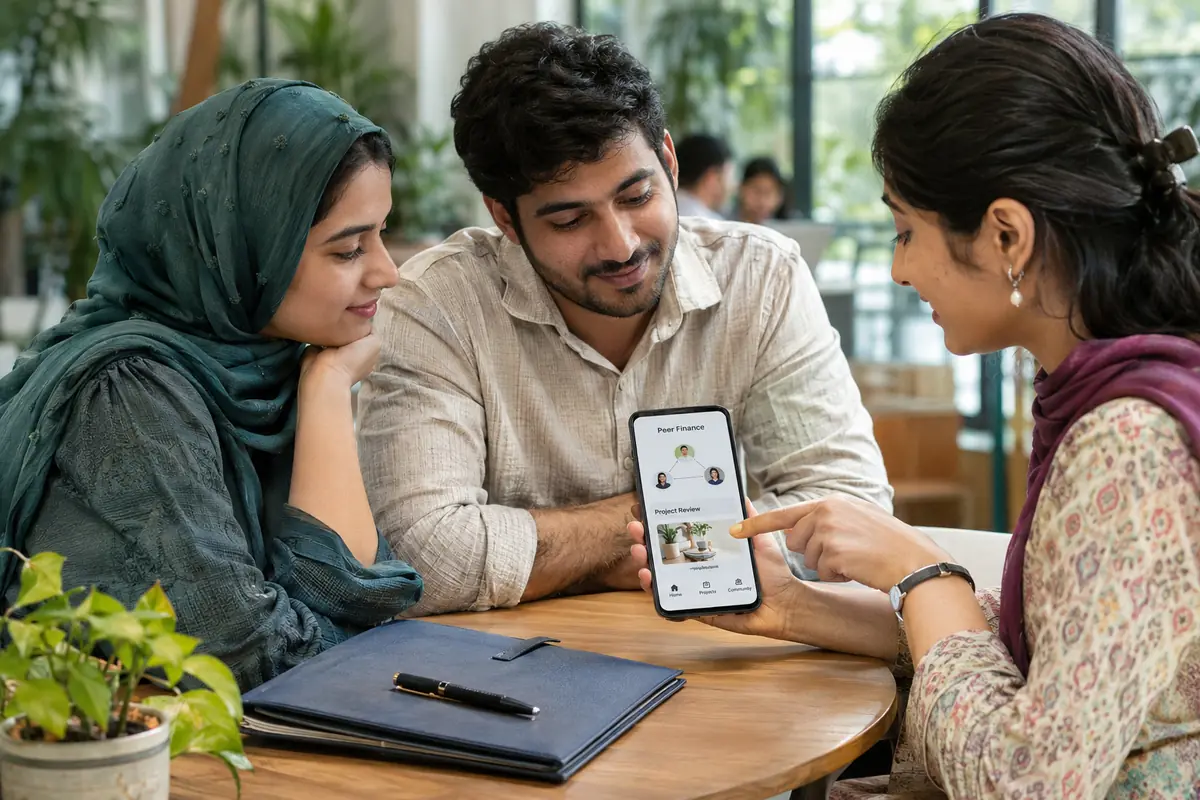
Hubballi Dharwad P2P loan apps online let people in northern Karnataka's twin cities lend to, or borrow from, other individuals through a registered internet platform instead of relying only on banks or local moneylenders. In India such platforms must be NBFC-P2P companies holding a Certificate of Registration from the Reserve Bank of India. They verify users, publish loan requests, collect instalments and pass repayments to lenders, but they cannot lend from their own funds or guarantee returns. Traders, students and families in the twin cities use them for modest short-term credit.
Two cities, one economic region
Hubballi and Dharwad lie close together in the Dharwad district of Karnataka and are governed as a single municipal corporation area. Hubballi is the larger commercial centre, with a major railway workshop and junction, wholesale markets and a busy trade in cotton, grain, spices and jaggery. Dharwad is more of an educational and cultural town, with a university, agricultural university, colleges and a long tradition of classical music and literature.
Kannada is the main language, with Hindi, Urdu, Marathi and English also in use, owing to the region's closeness to Maharashtra and Goa.
The region is also a gateway for travellers and goods heading towards the coast, which keeps transport, warehousing and small hospitality businesses active throughout the year.
Everyday credit needs in the twin cities
Hubballi's merchants buy goods in volume and wait for sales, so working capital is a constant concern. Small manufacturers and workshops serve the railways, the farm economy and the growing urban population. Education and healthcare institutions employ many salaried residents who may need a bridge between paydays.
Students from nearby districts rent rooms in Dharwad, and families often juggle fees, rent and travel before a scholarship or a remittance arrives. A small loan arranged over a mobile phone may fit such moments, as long as the repayment plan is realistic.
A grocery wholesaler in Hubballi might use a short loan to buy festival stock, while a Dharwad tutor could borrow to furnish a small classroom. Both examples involve a defined purpose and an income that can be explained clearly to a lender.
How a registered platform works
An NBFC-P2P platform is a marketplace under RBI supervision.
- Register using your own mobile number and complete KYC with valid documents.
- Link a bank account held in your name.
- Borrowers submit a request and receive a risk grade and terms after assessment.
- Lenders choose requests and amounts; repayments flow back according to the schedule.
Platform fees and late charges can change the effective cost, so compare the total repaid with the amount received before accepting. Check that the agreement is in a language you read well, such as Kannada or English.
Regulatory caps in plain terms
The same national limits apply to everyone in the twin cities.
- A lender can hold at most Rs 50 lakh in total exposure across platforms.
- A borrower can have at most Rs 10 lakh outstanding across platforms.
- A lender can lend at most Rs 50,000 to the same borrower across platforms.
- A loan can run for at most 36 months.
Platforms may not guarantee repayment or advertise assured returns. These ceilings reduce concentration but do not remove credit risk, so a lender can still lose money and a borrower can still be stretched.
Because the borrower ceiling is measured across platforms, taking loans on several apps at once does not create extra room, and a heavy existing debt can make a new request harder to approve.
Typical users of P2P apps here
Borrowers include market traders, small food and textile businesses, auto and engineering workshop owners, tutors, and employees who need an advance for a medical or family expense. Young entrepreneurs in the growing technology and start-up scene around the cities may also seek small sums to bridge client payments.
Lenders are mostly salaried people, retired employees and merchants with spare funds. Lending small amounts across many listings, reading each borrower profile and avoiding any single big bet are good habits. Money needed for fees, rent or health should stay out of P2P lending entirely.
Patience is part of the job: repayments arrive month by month over the loan term, so the money is not available on demand. Lenders who plan around this avoid forced decisions during an emergency.
Interest-free arrangements at community level
The twin cities have significant Muslim, Lingayat, Jain and other communities, many with charitable trusts and mutual-aid committees. Residents who prefer to avoid interest rely on Qard Hasan, also called Qarz-e-Hasana, where only the principal is returned and no return is fixed for the lender.
Murabaha and Ijarah include a profit or rental element, so they are different from a pure interest-free loan. Most interest-free options in India are community, charitable or cooperative systems and are not RBI-registered NBFC-P2P apps. Participants should ask who manages the funds, how records are kept and how a difficult month would be handled, and should get the agreement in writing.
It is wise to ask how the group would respond if a borrower loses a job or faces illness. A clear and humane answer, agreed in advance, is a good sign of a well-run arrangement.
Safety checks before sharing documents
Unregistered lending apps often copy genuine names. A short checklist helps.
- Match the company's legal name to its RBI Certificate of Registration as an NBFC-P2P.
- Reject any request for an upfront fee before the loan is paid.
- Allow only permissions the app really needs, and never give out one-time passwords.
- Save agreements, receipts and chat records.
If a lender or collection agent harasses you, report it to the platform's grievance officer, the cyber crime portal or the RBI.
Elderly relatives are common targets of persuasive callers, so share these warning signs with them as well.
Repayment and record keeping
Merchants whose income swings with market seasons should choose instalments that can be met even in slower weeks. Salaried borrowers can match due dates to payday. Keep a small cushion in the linked account to avoid a failed automatic debit, and set reminders in advance.
Late payment may add charges and weaken your credit record, making later loans more costly. Lenders should note each amount placed and every repayment received, since income from lending may be taxable. The details here are general information, not personal advice or a loan offer.
Frequently asked questions
Can residents of Hubballi and Dharwad use the same P2P app?
Yes. Both cities fall under the same national rules, and an NBFC-P2P app registered with the RBI operates across India. Users in either city should confirm the registration and legal name before they register or upload documents.
How long can a P2P loan last?
Under the RBI framework for NBFC-P2P platforms, loan maturity is limited to 36 months. A registered app cannot offer a longer period, so a borrower in Karnataka who is offered more should check the platform carefully.
Are there P2P options without interest in Karnataka?
Qard Hasan arrangements, where only the principal is repaid, exist in community, charitable and cooperative settings. They are generally separate from RBI-registered NBFC-P2P apps, so ask for written terms and confirm how the scheme is run.
Further reading
- Faircent : Faircent is a P2P lending marketplace operating as an RBI-registered NBFC-P2P, and its public pages help residents of Hubballi and Dharwad see how registered platforms list loans and set lender limits.