
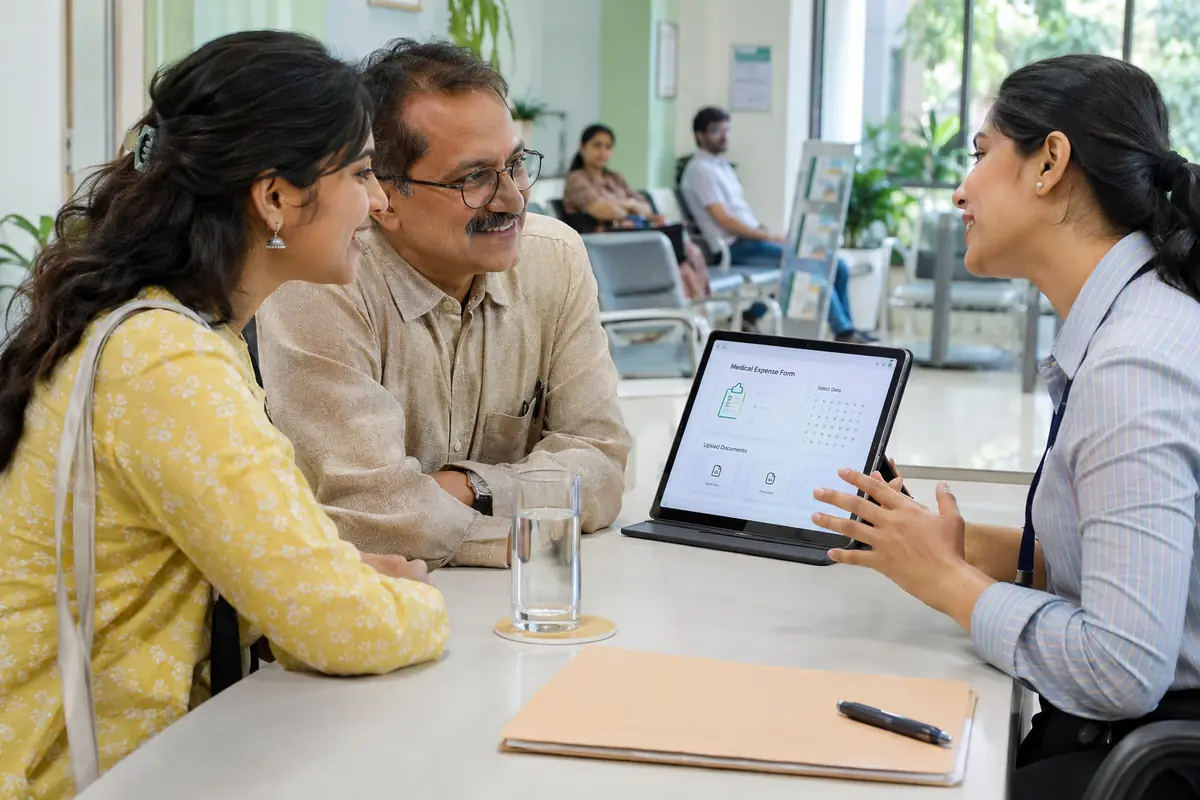
Meerut P2P loan apps online in India are platforms on which residents of this western Uttar Pradesh city arrange loans with individual lenders, with an intermediary handling verification, matching and collection. A genuine operator is licensed by the Reserve Bank of India as an NBFC-P2P and may not lend from its own balance sheet, guarantee repayment or promise fixed returns. Workshop owners, farmers, traders and salaried families use the service for small amounts, always bearing the cost of interest and the risk that a borrower does not pay.
Meerut's economy in brief
Meerut is a large city on the Ganga-Yamuna doab, about an hour from Delhi by the expressway and the new regional rail link. Its fame rests on sports goods, especially cricket bats and equipment, made in clusters of small units around Sports Goods Complex and the old quarters. Scissors, handloom items, jewellery and a printing and publishing trade add further livelihoods.
The countryside around the city is sugarcane country. Jaggery and sugar mills shape cash flow for growers, and Gandhi Bagh and Sadar Bazaar keep the retail trade busy. A cantonment and the university add salaried and student populations.
Why small producers look at online lending
Sports-goods makers buy willow, cane, leather and cloth well before orders are paid, and exporters or distributors often settle late. Cane growers wait for mill payments. Scissor makers and jewellers in family workshops usually have thin records, so a bank file can be slow to open.
A peer-to-peer platform asks for KYC, bank statements and a clear purpose, then lets lenders decide. It will not replace a term loan for machinery, since a single borrower's outstanding amount across platforms may not exceed Rs 10 lakh.
Stepping through an application
- Install an app and finish KYC with Aadhaar, PAN and a selfie or video check.
- Add the bank account that will receive funds.
- Declare the amount, reason and tenure up to 36 months.
- Wait while the platform grades the request and shows it to lenders.
- Receive funds once enough lenders commit, then repay each month.
Hindi is the working language, with Urdu strongly present in many mohallas, and Khari Boli flavours everyday speech. A clear Hindi agreement lowers the chance of misunderstanding about charges.
Regulatory limits and remaining risk
Under the RBI's NBFC-P2P framework a registered platform acts only as a marketplace. A lender's total exposure is capped at Rs 50 lakh, exposure to one borrower at Rs 50,000, and a borrower's total outstanding at Rs 10 lakh.
Those figures are boundaries, not protection. Defaults happen, particularly among borrowers whose income depends on a single season or a single buyer, and the platform cannot promise to cover the loss. Lenders in Meerut should spread small sums widely.
Community-based interest-free finance
Meerut has a large Muslim population, and interest-free borrowing matters to many families here. In a real Qard Hasan, or Qarz-e-Hasana, the borrower returns the same amount received and the giver expects no preset return.
- Mosque funds and charitable trusts may help with medical or education costs.
- Cooperatives sometimes charge a fixed service fee to meet running costs.
- Murabaha and Ijarah involve a profit or rental element and are not pure benevolent loans.
These are community systems, not NBFC-P2P apps registered with the RBI, so participants should ask for a written record and the legal identity of the body.
Warning signs and protective checks
Cheap, instant, no-document offers are the usual bait for fraudulent apps in Uttar Pradesh.
- Confirm the company name and its RBI registration before uploading documents.
- Refuse apps that ask to read messages, contacts or gallery.
- Do not pay any fee in advance to release a loan.
- Keep copies of the agreement and every repayment.
Abusive recovery, including calls to relatives, is a complaint to raise with the platform's grievance officer and, if necessary, the police.
Planning repayment with seasonal income
A bat maker who sells most stock before the cricket season should align instalments with the months of sales. A cane grower should look at the mill's payment pattern before accepting a tenure.
Salaried borrowers should keep instalments to a small share of pay. Information here is general, not a recommendation or a loan offer for any individual.
Keeping a small reserve equal to a few instalments in a separate account gives a buffer when a payment from a buyer is late, and avoids the cycle of borrowing again to repay an earlier loan.
Comparing formal apps with local credit
Money lending by commission agents and wholesalers is common in Meerut's markets, and credit on account between trader and supplier is part of the culture. These arrangements can work well on trust but frequently leave no records.
A regulated app brings written terms, traceable payments and a complaint path, and its cost can be compared against the local alternative. Whichever route is taken, the amount, rate and dates should be recorded in writing.
Students, young earners and women entrepreneurs
Chaudhary Charan Singh University and the many colleges bring students and young graduates who may want a small loan for a course, a laptop or exam fees. Young earners rarely have a credit history, so approval can be harder and the amounts smaller.
Women who run tailoring, embroidery or packaging work from home form another group. A platform may ask for proof of a stable activity and a bank account in their own name. Self-help groups remain a common first source of credit, and a regulated app can complement them for short needs.
What to read in the agreement
The loan agreement should state, in plain words, the sanctioned amount, the rate, every fee, the number and size of instalments, the penalty for delay and the grievance process.
- Check that the borrower's name and the platform's legal name match official records.
- Look for any clause allowing the company to change terms later.
- Make sure the repayment schedule matches what the app displays.
- Save a copy in a place that cannot be lost with the phone.
If a clause is unclear, ask in writing before accepting, and do not rely on a verbal promise from a caller.
Lenders and what to expect
People with spare money in Meerut, such as retired officers from the cantonment, teachers and professionals, may fund small loans. The aim should be modest returns with a clear understanding that capital can be lost, and the sums should never be funds needed for school fees or medical care.
Returns may be taxable, so keeping statements of each transfer helps at filing time. Diversifying across many borrowers and reading the stated purpose of each request are the habits that matter most.
Frequently asked questions
Are there P2P loan apps that serve Meerut residents?
Registered NBFC-P2P platforms operate online across India, so residents of Meerut can apply if they pass KYC and credit checks. Approval is not guaranteed, and the app's RBI registration should be verified first.
Can sports-goods workshop owners use these apps?
Small workshop owners may apply for working-capital loans if they meet the platform's checks. Since one borrower's outstanding across platforms is limited to Rs 10 lakh, the route fits modest needs, not large equipment purchases.
Is interest-free lending available through P2P apps in India?
Registered P2P apps normally charge interest. Interest-free Qard Hasan, with principal-only repayment, is mostly found in community, charitable or cooperative systems, some of which add a fixed service fee, so terms should be confirmed in writing.
Further reading
- Faircent : Faircent is a P2P lending marketplace operating as an RBI-registered NBFC-P2P, and its public material shows Meerut readers how a regulated platform describes borrowing, lending and risk.