
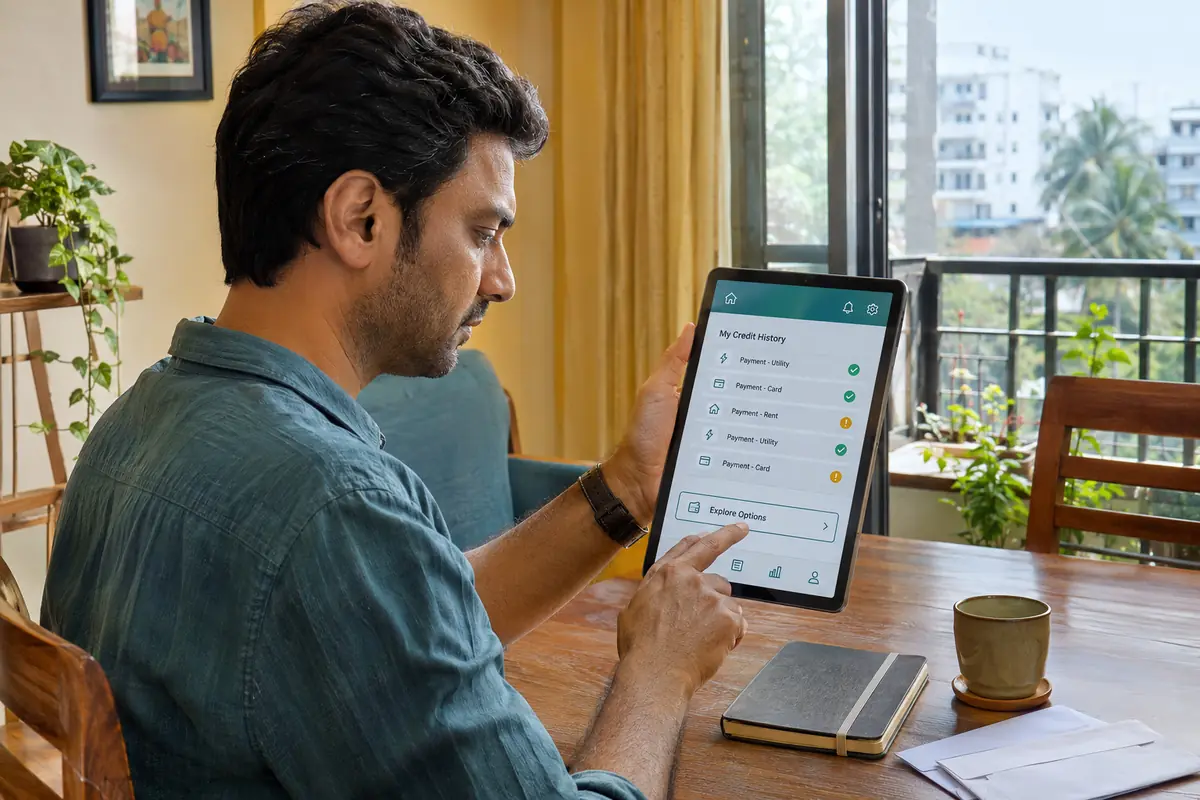
Pune P2P loan apps online India are mobile and web platforms on which people in Pune, the Maharashtra city known for software parks, engineering plants and colleges, can lend money to or borrow money from other individuals without a bank in the middle. Platforms that do this lawfully are NBFC-P2P entities holding a Reserve Bank of India registration. They list borrower requests, let lenders choose how to spread their money, collect repayments and pass them on, but they may not lend from their own funds or promise returns. Every loan still carries the risk that the borrower fails to repay.
A city of software, factories and classrooms
Pune sits on the Deccan plateau where the Mula and Mutha rivers meet, and it has grown from a historic Peshwa-era town into one of the busiest economic centres of Maharashtra. Its software parks in Hinjewadi and Kharadi employ a large young workforce, while the industrial belts of Pimpri-Chinchwad, Chakan and Ranjangaon build vehicles, components and machinery.
Alongside this sits an education economy. Savitribai Phule Pune University, engineering institutes, management schools and many private colleges draw students from every state. That mix of salaried professionals, small manufacturers, shop owners and newcomers produces a steady demand for short-term credit that does not always fit a bank's checklist.
Who borrows through P2P apps in Pune
Typical borrowers are young salaried employees who have just moved to the city and have a thin credit history, freelancers whose income arrives in uneven amounts, and owners of small workshops that supply larger factories and wait weeks for invoices to be paid.
Common purposes include:
- a security deposit and furniture for a rented flat in a city where deposits are often several months of rent
- a gap in working capital for a small supplier waiting on a customer payment
- course fees or certification costs for a skills programme
- a medical or family expense that cannot wait for a bank sanction
A borrower should treat these loans as real debt. Funding on an app is not free money, and a missed instalment can affect a credit record just as it would with a bank.
Who lends, and how lenders spread risk
On the other side are residents with spare savings: engineers, business families, retirees and professionals who want a different outlet from a fixed deposit. Lenders on regulated platforms usually divide their money into many small loans instead of placing everything with one person.
This spreading matters because the framework limits the exposure of one lender to one borrower across platforms to Rs 50,000, and total lender exposure across all platforms to Rs 50 lakh. These limits restrict concentration, yet they do not remove credit risk. A lender in Pune should assume that some borrowers will pay late and a few will not pay at all, and should never lend money that is needed for rent, tuition or emergencies.
Everyday scenarios around the city
A software tester in Kharadi who changes jobs may face a month without salary and need a small bridge amount. A fabricator in Bhosari may wait for a large manufacturer to clear an invoice while wages fall due on Friday. A student from another state may need to pay a hostel deposit before a scholarship is credited.
In each case the sensible question is whether the repayment date is realistic. A short, small loan matched to a known incoming payment is easier to manage than a long loan taken for comfort. Lenders in the same city can also behave sensibly by spreading small amounts across many such requests instead of backing one story.
How regulated platforms operate
An NBFC-P2P platform in India acts as a marketplace. It must hold a Certificate of Registration from the Reserve Bank of India and follow the rules for this category. It cannot lend from its own balance sheet, it cannot guarantee that a borrower will repay, and it cannot advertise assured returns.
The main limits that shape every loan are listed here.
- A borrower can have at most Rs 10 lakh of outstanding borrowing across all P2P platforms.
- The longest permitted loan maturity is 36 months.
- One lender may place at most Rs 50,000 with the same borrower across platforms.
- Funds move through an escrow arrangement rather than into the platform's own account.
Because the rules apply nationwide, a resident of Pune gets the same protections and the same limits as a user in any other city.
Checking an app before using it
Many fraudulent loan apps imitate genuine ones, so a short routine of checks is worth following before any document is uploaded.
- Look up the company's legal name and confirm its RBI registration as an NBFC-P2P on the regulator's own listing.
- Compare the name on the app with the name on the registration; look-alike names are a common trick.
- Read the fee schedule and the full repayment table before accepting any offer.
- Be wary of any request for an advance payment before disbursal, or for access to your contacts and photo gallery.
- Keep screenshots of the agreement and every payment.
If a platform promises guaranteed returns or instant approval for everyone, that alone is a reason to walk away.
Interest-free options in Pune's communities
Pune has long-established Muslim neighbourhoods such as Camp, Kondhwa and the older peths, and many households there look for finance that avoids a fixed interest charge. Most such arrangements are not RBI-registered P2P apps. They are community, charitable or cooperative systems built on personal trust.
A genuine Qard Hasan, sometimes written Qarz-e-Hasana, returns only the principal, so the lender receives no predetermined gain. Some cooperatives add a fixed service fee to cover costs. Murabaha and Ijarah are different contracts because they contain a profit or rental element. Anyone considering one of these routes should ask who runs the scheme, how funds are held and what happens if repayment is delayed, and should seek advice from a qualified scholar or adviser.
Languages, paperwork and repayment habits
Pune residents work in Marathi, Hindi and English, and most regulated apps offer English screens with some regional language support. Identity checks usually need Aadhaar-linked verification, a PAN, a bank account and proof of income.
Repayment discipline is the real test. Set the instalment date a few days after salary arrives, keep a small buffer in the account, and contact the platform early if a payment will be late. Borrowing to repay another loan is a warning sign. A person who already has several loans should compare the total monthly outflow with income before adding another.
This text offers general information only. It is not personal advice and it is not an offer of credit.
Frequently asked questions
Are P2P lending apps legal in Pune?
Yes, provided the platform is an NBFC-P2P with a Certificate of Registration from the Reserve Bank of India. The rules are national, so Pune residents use the same regulated platforms as everyone else. Apps without that registration should be avoided, however attractive their offers look.
How much can a Pune resident borrow through a P2P platform?
Aggregate outstanding borrowing for one borrower across all platforms is capped at Rs 10 lakh, and the maximum maturity is 36 months. The amount a platform actually approves depends on its own assessment of income, repayment capacity and credit history.
Is there an interest-free way to borrow in Pune?
Community, charitable and cooperative Qard Hasan schemes exist in some neighbourhoods, repaying principal only. They are not regulated P2P apps, so borrowers should confirm who runs the scheme, how money is held and what terms apply before agreeing.
Further reading
- LenDenClub : LenDenClub is an RBI-registered NBFC-P2P lending platform, so it shows how a regulated marketplace lists borrowers and lenders, which is the model Pune users meet when comparing apps.