
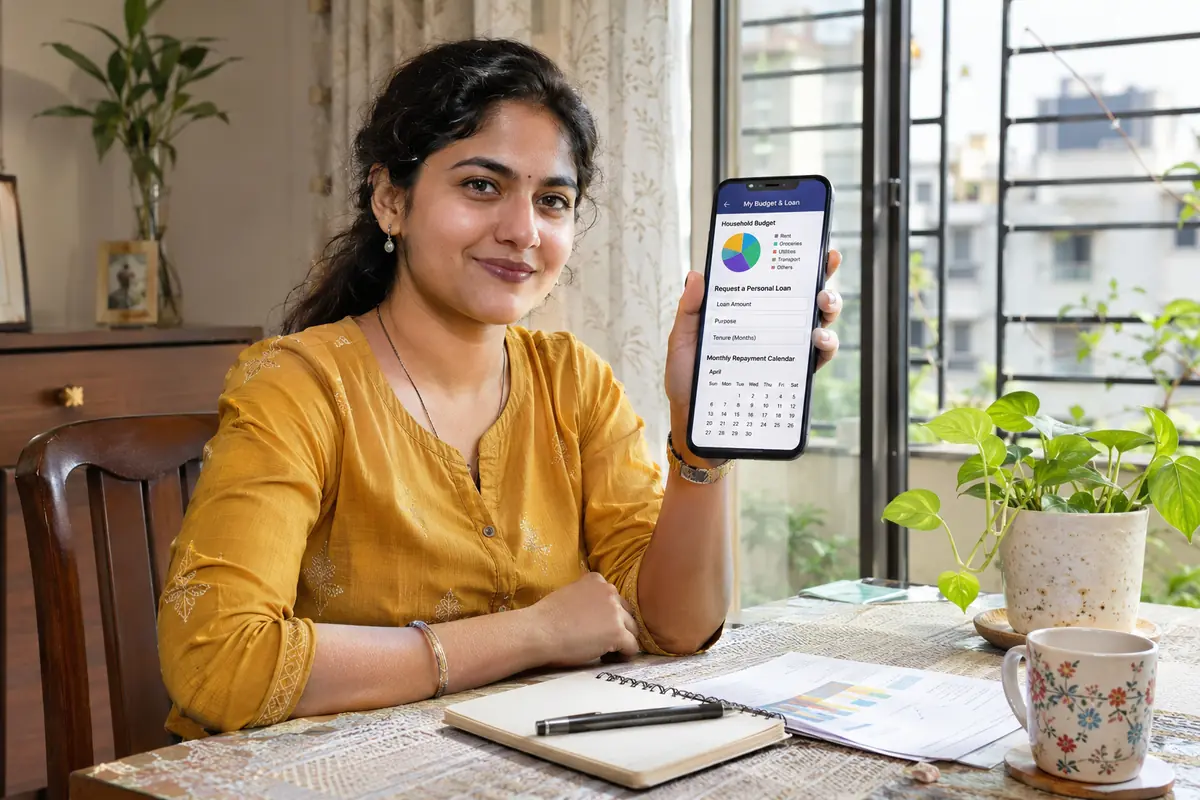
Mumbai P2P loan apps online India are digital platforms that connect people in the city who want to lend money with people who need a personal loan, without a bank sitting between them. In Mumbai they operate as NBFC-P2P entities registered with the Reserve Bank of India. The platform lists borrowers, lenders choose how much to offer, and repayments flow back in instalments. The app only matches the two sides and collects payments; it cannot lend its own money or promise returns. Each lender therefore carries the credit risk of the borrowers chosen.
Why peer lending suits a city like Mumbai
Mumbai is the capital of Maharashtra and the country's main financial centre, home to the Reserve Bank of India headquarters, the major stock exchanges and the head offices of many banks. That concentration of money and expertise explains why digital lending took root here early.
The city is also a place of uneven incomes. Salaried professionals in Nariman Point and Bandra Kurla Complex sit alongside traders in Zaveri Bazaar, film and television crew members paid per project, and gig workers who move across the suburbs. Not all of them fit the narrow profile a traditional bank wants for a small unsecured loan.
Peer platforms try to fill that gap by assessing borrowers with digital data such as bank statements, and by letting individual lenders spread small amounts across many borrowers.
Language is rarely a barrier: apps usually work in English and Hindi, while Marathi and Gujarati speakers rely on support staff or relatives for the fine print.
Who borrows and who lends in the city
Typical borrowers on Mumbai-based profiles include:
- young professionals with a steady salary but a thin credit history;
- small shop owners and wholesalers who need working capital between payment cycles;
- freelancers in media, design and advertising whose income arrives irregularly;
- families covering a medical bill or a rent deposit, which is a heavy cost in this city.
Lenders are often salaried residents, business owners with idle cash, or retired people looking for an alternative to a fixed deposit. A lender in Thane or Navi Mumbai can fund a borrower in Andheri without ever meeting. Because the model is open to anyone with a verified identity, the lender pool also includes people from other states who simply use the platform from where they live.
Small amounts matter here. A lender may offer only a few thousand rupees to each borrower, and a borrower may be funded by many lenders at once, which is how a single request gets filled quickly.
How a regulated app works step by step
Every registered app follows a similar sequence, even if screens differ.
- The user installs the app and completes KYC with Aadhaar, PAN and a bank account.
- A borrower states the amount, purpose and preferred tenure, and the platform assesses the profile.
- Approved requests are shown to lenders, who may fund part of a loan.
- Funds move through an escrow account kept separate from the platform's own money.
- Borrowers repay monthly, and each lender receives a share of principal and interest.
Under the RBI framework a platform cannot guarantee repayment or advertise assured returns. If a Mumbai app uses such language, treat it as a warning sign.
Limits that protect both sides
The RBI NBFC-P2P rules set ceilings that apply across all platforms combined. A lender may have at most Rs 50 lakh outstanding in total, and no more than Rs 50,000 with the same borrower. A borrower can have at most Rs 10 lakh outstanding across platforms, and a loan cannot run longer than 36 months.
These caps make diversification the practical rule. A lender who splits an amount over dozens of borrowers feels one default far less than a lender who backs a single borrower. The limits reduce concentration, but they do not remove credit risk, so some borrowers will pay late and some will not pay at all.
Checks before registering on any app
The city has many lookalike apps, some of them illegal money-lending services that harvest contact lists. Before sharing documents, a resident should:
- confirm the company's legal name and its RBI Certificate of Registration;
- read how fees, late charges and processing costs are stated;
- refuse apps that ask for access to photos, contacts or messages;
- keep screenshots of agreements and payment receipts;
- report harassment or threats to the police cyber cell.
Where a platform is unclear about who runs it, walking away costs nothing. Reading user reviews, comparing several apps and asking a trusted friend who has used one also helps. Information of this kind is general and is not personal financial advice or an offer of a loan.
Interest-free lending within Mumbai communities
The city has long-established Muslim, Memon, Bohra and Khoja business communities, and many of them keep informal or charitable lending traditions alongside commercial banking. The best known concept is Qard Hasan, sometimes written Qarz-e-Hasana, where the lender gets back the principal only and no predetermined return.
In practice these arrangements run through mosque committees, trusts, cooperative societies and family networks rather than through RBI-registered apps. Some cooperatives charge a fixed service fee to cover administration, which is different from interest on the amount lent. Murabaha and Ijarah, by contrast, include a profit or rental element and belong to financing contracts rather than pure loans.
Anyone using such a route should still ask who is responsible for the funds and what happens on late payment.
Many families in the city also help each other through savings circles and small trust funds that support education, medical needs or a small trade, with repayment expected as and when circumstances allow.
Repayment discipline and living costs
Mumbai's expenses leave little slack. Rent, commuting and school fees absorb a large share of salary, so a borrower should test the instalment against monthly income before accepting. A useful habit is to keep the instalment comfortably within what remains after fixed costs.
Missing a payment can bring penalties and a lower credit score, and it harms the lender who relied on that repayment. Setting up an automatic bank mandate, or a reminder just before salary day, prevents most accidental delays.
If trouble arises, contacting the platform early to ask about rescheduling is better than disappearing. Borrowers should also never take a new loan from one app simply to repay another.
Lenders have a discipline of their own: keep records, expect that some instalments will arrive late, and avoid lending money that may be needed for rent or emergencies.
Frequently asked questions
Are Mumbai P2P loan apps legal?
Yes, when the operator is an NBFC-P2P holding an RBI Certificate of Registration. The company must follow RBI rules on exposure limits, escrow and disclosure. Apps without that registration are not covered, and a resident should avoid sharing documents with them.
Can a lender in Mumbai lose money?
Yes. Borrowers can pay late or default, and the platform cannot promise or guarantee repayment. Spreading small amounts over many borrowers within the Rs 50,000 per-borrower ceiling reduces the effect of any single default, but it never removes the risk.
Is there an interest-free option in the city?
Community and charitable Qard Hasan arrangements exist, repaying the principal only. They normally work through trusts, cooperatives or family networks, not RBI-registered apps, so a borrower should check who manages the funds and the rules for repayment.
Further reading
- LenDenClub : LenDenClub operates an RBI-registered NBFC-P2P lending platform, useful for Mumbai residents who want to see how regulated peer lending is presented to lenders and borrowers.