
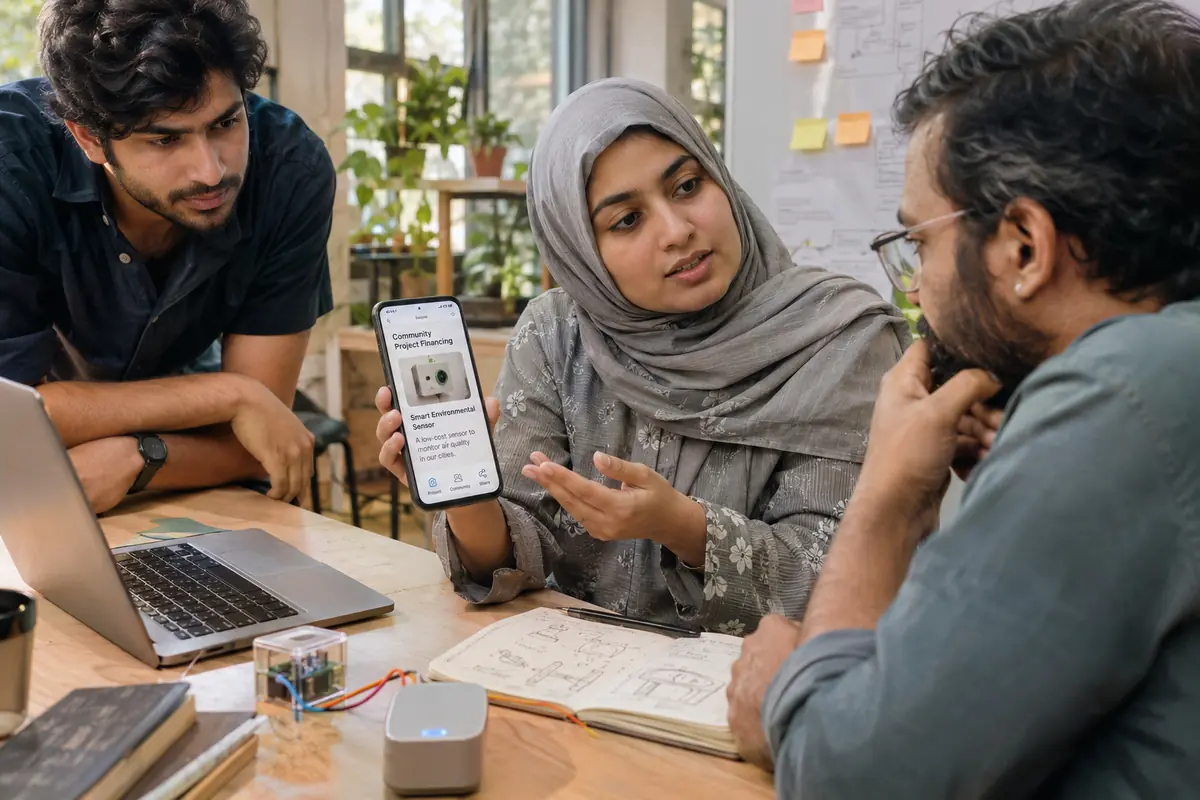
Ludhiana P2P loan apps online India are digital platforms where residents of this Punjab city lend to or borrow from other individuals, with no bank as the direct lender. In Ludhiana, only NBFC-P2P companies holding an RBI registration may run such a marketplace. They verify identity, grade borrowers, publish loan requests and carry instalments back to the lenders who funded them, who bear the risk of default. Factory owners, workers, traders and professionals in Ludhiana use these apps for short loans with fixed repayments, usually for working capital or personal needs.
The manufacturing heart of Punjab
Ludhiana is the largest city in Punjab and one of the best-known manufacturing centres in northern India. It is associated with hosiery and knitwear, woollen garments, bicycles and cycle parts, sewing machines, machine tools and auto components, much of it produced in thousands of small and medium units.
The Focal Point industrial areas, the old markets near Chaura Bazaar and the grain trade of the wider region all generate cash flows that are lumpy and seasonal. Winter garments, for instance, drive heavy demand for stock and labour well before the cold weather arrives.
Dyeing, packaging, transport and trading services cluster around these industries, so the city's earners range from skilled machinists to truck operators and commission agents. This breadth explains why informal credit among traders has always been strong, and why digital alternatives draw interest.
Borrowers and lenders
Local demand is shaped by the structure of small industry:
- Unit owners who need raw yarn, metal or components before an order is paid.
- Migrant workers from Bihar and Uttar Pradesh who send money home and sometimes need a bridge between wages.
- Shopkeepers and wholesalers who buy stock for the wedding and festival seasons.
- Salaried staff and students facing medical, rent or fee expenses.
Punjab's culture of saving and of family remittances from abroad produces many potential lenders: professionals, traders and retired residents who may be willing to place modest sums. Most prefer small tickets spread over several borrowers, since one late payment then affects only a small part of the money placed.
How a regulated app handles a request
The user signs up with a mobile number, passes electronic KYC using PAN and Aadhaar and adds a bank account. Business borrowers may also share GST or banking records, and the platform may ask for proof of the premises or the trade licence.
The platform grades the profile and lists the request, lenders fund it in parts, and the money is then released. Repayments return through the platform and are split between lenders in proportion to their stake.
Punjabi is the everyday language, with Hindi and English common in commerce. An app that gives its terms in a language the user reads comfortably makes it simpler to spot fees and penalties before agreeing. Taking a screenshot of the final summary screen gives a record to refer to later.
The limits the RBI applies
These national ceilings bind all registered platforms and users, including those in Ludhiana:
- Aggregate lender exposure across platforms: Rs 50 lakh at most.
- Aggregate outstanding for one borrower across platforms: Rs 10 lakh at most.
- One lender's exposure to a single borrower across platforms: Rs 50,000 at most.
- Maximum loan maturity: 36 months.
Platforms are forbidden to lend from their own balance sheet, to guarantee repayment or to market assured returns. The ceilings cap exposure, yet a lender can still lose money when a borrower defaults.
Interest-free lending traditions
Punjab's Sikh community places high value on seva and mutual help, and Ludhiana also has Muslim, Hindu and Christian residents, some of whom avoid interest on religious grounds. Support of this kind generally moves through gurdwara and charitable committees, cooperative societies, family networks or trusted circles, not through registered P2P apps.
With Qard Hasan the borrower returns the principal and no return is fixed for the lender. Some cooperatives charge a set service fee for expenses. Murabaha and Ijarah rely on a profit or rental element, so they should not be confused with a purely benevolent loan.
Ask for the terms in writing and find out who will hold the funds. Be wary of any arrangement in which a fee is described as a gift or a donation but is in practice required, because the real cost should always be visible before money changes hands.
Spotting unsafe apps
Aggressive advertising and copycat apps make a short checklist essential:
- Confirm that the company appears on the RBI list of NBFC-P2P entities.
- Check the complete fee schedule, including delay and closure charges.
- Never pay anything in advance to obtain a loan.
- Be cautious of apps that ask for access to contacts or photographs without need.
Harassment, threats and the shaming of borrowers are not allowed, and nobody has the right to contact a borrower's relatives, staff or customers to press for payment. A complaint can go to the platform first, then to the police or the RBI complaint channels.
Matching repayment to the production cycle
A unit owner who sells winter garments earns heavily in a few months, so a loan with fixed monthly instalments should be sized to cash that arrives in the slow season as well. Borrowing against an order that has not yet been paid carries the risk of delayed receipts, which is a common cause of missed instalments.
As a guide, total loan instalments should stay comfortably under half of income. A reserve of one or two months of expenses reduces the temptation to take a new loan to pay an old one.
Lenders should diversify across borrowers and grades, avoid lending money they may need soon and accept that late payments occur.
Before accepting any offer
A borrower should be able to say what the annual rate is, what the total repayable amount will be, how many instalments are due and what penalties apply. Checking whether any processing fee is deducted from the disbursed sum is also wise, because the amount received can be smaller than the loan.
Where a bank, a cooperative bank or a supplier's credit period offers better terms, those should be compared first. Peer platforms suit people who have a clear purpose, a repayment plan and no cheaper alternative, and who can afford the instalments even if one customer pays late.
Frequently asked questions
Are Ludhiana P2P loan apps meant for businesses?
Many serve individuals and small business owners alike, though terms vary by platform. A business borrower may need to share banking or GST records, and the overall RBI limit of Rs 10 lakh per borrower across platforms still applies.
How can I tell whether an app is registered?
Look up the company's legal name on the Reserve Bank of India's list of NBFC-P2P entities and compare it with the name in the app's terms. If the name, registration or grievance officer is missing, avoid sharing documents.
Can lenders lose their money?
Yes. Borrowers can pay late or default, and platforms cannot guarantee repayment or promise returns. Lenders reduce risk by spreading small amounts across many borrowers, within the limit of Rs 50,000 per borrower across platforms.
Further reading
- Faircent : Faircent is a P2P lending marketplace operating as an RBI-registered NBFC-P2P, showing Ludhiana readers how a regulated platform lists loan requests and distributes repayments.