
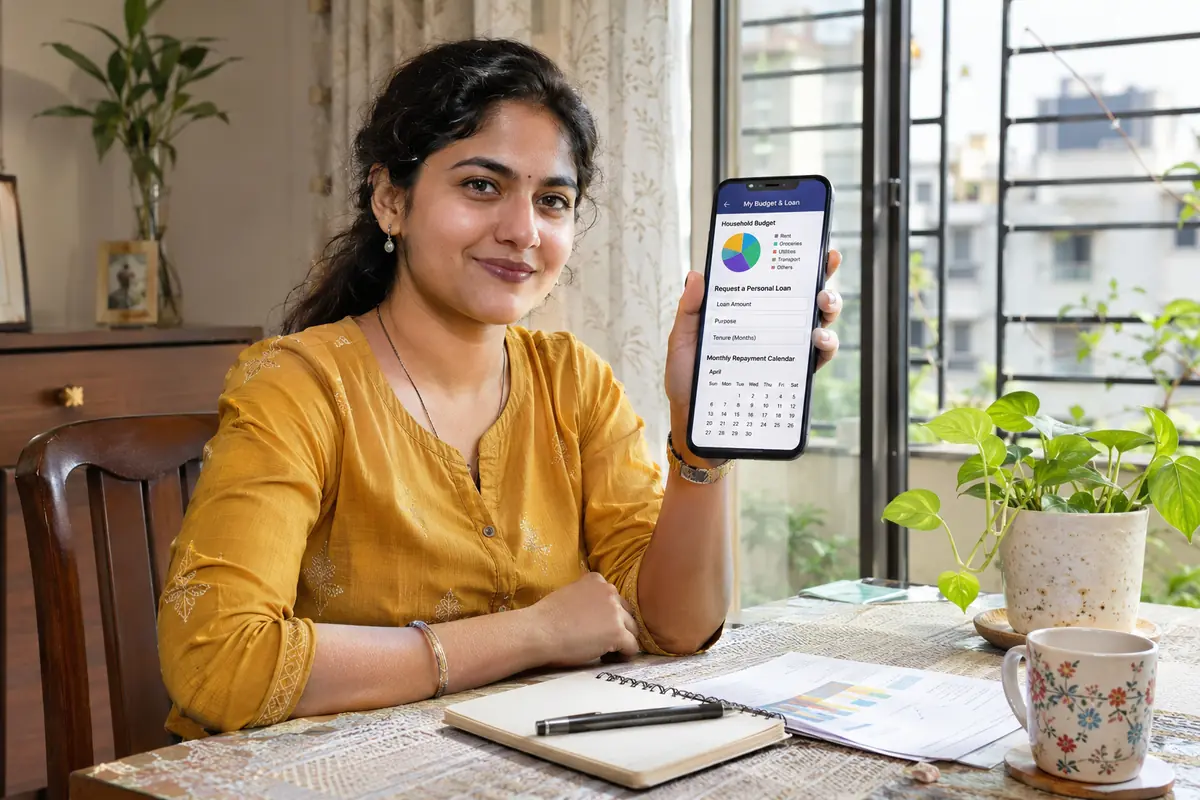
Lucknow P2P loan apps online India are web and mobile services that allow people in the capital of Uttar Pradesh to lend to or borrow from other individuals through a registered intermediary. The intermediary must be an NBFC-P2P licensed by the Reserve Bank of India, which means it only brokers the match, handles collection and settlement, and may not lend from its own funds or guarantee returns. In a city of government employees, craftspeople, traders and students, such platforms offer a supplement to bank credit, with real default risk.
Lucknow's economy in brief
Lucknow is the administrative centre of Uttar Pradesh, so a large share of local incomes flows from state government offices, public-sector institutions and the services that surround them. Around this core are traditional crafts, especially chikankari embroidery, along with zardozi work, perfumery and the famous Awadhi food trade.
Hazratganj, Aminabad and Chowk are old commercial districts with dense small-trader networks, while newer areas such as Gomti Nagar host offices, hospitals, coaching centres and technology firms. The city also has several universities and medical institutions that bring in students and professionals.
Lucknow is also known for its courtesy, poetry and cuisine, and this cultural economy supports guides, cooks, performers and small hospitality businesses whose earnings rise and fall with the visitor season and the wedding calendar.
Government pay cycles shape spending too. Many households budget around the salary date, and the days before it are when short loans are most often sought.
Who looks for P2P loans in the city
Salaried clerks and teachers with fixed pay often need a short bridge before a festival or a family event. Chikankari workers and small embroidery businesses buy fabric and thread in advance and are paid after delivery. Shopkeepers in the older markets need stock before wedding seasons.
Many of these people have limited formal credit history. A P2P app may assess them using bank statements, income documents and repayment behaviour, which gives a path to credit that a branch might not offer quickly. The amounts are usually modest and the cost higher than a bank loan, so careful comparison matters.
An embroidery contractor who supplies boutiques in other cities may wait a month for payment while paying workers every week. A coaching teacher may pay a deposit for a new classroom before fees arrive. A tailor in an older neighbourhood may need a machine on instalments. Each of these has a clear path to repayment, which is what a lender will want to see.
What lenders in Lucknow should expect
Lenders are usually salaried professionals, retired officials and business owners with savings. On a regulated app they pick loans by risk grade and tenure, and good practice is to hold many small positions.
The framework restricts one lender to Rs 50,000 with the same borrower across platforms, and Rs 50 lakh in total across platforms. Returns are not guaranteed. The platform cannot promise a fixed yield, and a lender can lose part of the principal if a borrower stops paying. Money needed within a short time should not be placed here.
The regulatory frame, simply put
An NBFC-P2P must hold a Certificate of Registration from the Reserve Bank of India and follow its direction. These are the rules that shape every transaction.
- The platform cannot lend from its own balance sheet.
- It cannot guarantee principal or return.
- A borrower can hold at most Rs 10 lakh across platforms at any time.
- The maximum maturity is 36 months.
- Payments flow through a designated account structure.
These rules are identical across the country, so Lucknow users get the same framework as anyone in Mumbai or Chennai.
The platform also acts as a collection channel and keeps records of each instalment. A borrower who repays on time builds a payment history that may help later with a bank. A borrower who defaults may face recovery action and a damaged credit record, so the commitment is serious on both sides.
Verifying an app before you apply
A genuine-looking interface does not prove a lender is registered. Several checks take only minutes.
- Search for the legal entity behind the app and confirm that it appears on the regulator's list of registered NBFC-P2P companies.
- Make sure that the company name on the loan agreement matches the registered name.
- Request a complete schedule of fees and repayments before agreeing.
- Decline any demand for payment before disbursal.
- Refuse permissions that let an app read contacts, messages or photographs.
People who have faced harassment from unregistered collectors often say they never checked the registration first.
Interest-free community lending in Lucknow
Lucknow has an old and well-established Muslim population, with a history of charitable trusts, endowments and community funds. Many families would choose finance without fixed interest where it is available, and the usual routes are community, charitable or cooperative, not RBI-registered P2P apps.
A genuine Qard Hasan, also written Qarz-e-Hasana, requires only the principal back. Some cooperatives charge a fixed service fee to cover administration. Murabaha and Ijarah are sale and lease structures with a profit or rental element, and are therefore not interest-free loans in the strict sense. Ask who runs a scheme, how money is protected and what happens if a payment is late.
Language, paperwork and practical habits
Hindi and Urdu both shape everyday speech in Lucknow, with Awadhi and English also heard, and the language of the app is often English. Applicants normally need Aadhaar-based verification, PAN, an active bank account and income evidence.
Repay on a fixed day soon after income arrives, keep a modest buffer and tell the platform early if a delay is likely. A government employee with a stable salary has an advantage here, but should still avoid taking a second loan to pay the first.
When filling forms, enter the name exactly as it appears on identity documents, because mismatches slow verification. Keep the registered mobile number active, since one-time passwords are used for consent and must never be shared with anyone who calls.
Using the information responsibly
Everything stated here is general information, not personal advice and not a loan offer. Borrowers should check the legal identity and RBI registration of any app, read the agreement fully and borrow only what repayment capacity supports. Lenders should treat every loan as capital at risk.
A decision that affects a family's finances is best taken after talking to a trusted, qualified adviser.
Frequently asked questions
Is it safe to use a P2P loan app in Lucknow?
It is safer when the platform is a registered NBFC-P2P and its legal name matches the agreement. No P2P loan is risk-free: borrowers can default, and unregistered apps may use abusive collection methods. Check registration before sharing any documents.
Do Lucknow lenders earn guaranteed returns on P2P platforms?
No. Registered platforms may not guarantee repayment or promise assured returns. A lender can receive less than expected or lose principal if borrowers default, so spreading small amounts across many loans within the Rs 50,000 per-borrower limit is prudent.
Are interest-free loans available through P2P apps in Lucknow?
Most regulated P2P apps charge interest. Qard Hasan arrangements, returning principal only, are usually community or charitable systems, not RBI-registered apps, and some cooperatives add a fixed service fee. Always confirm who runs the scheme and what terms apply.
Further reading
- i2iFunding : i2iFunding is an NBFC-P2P lending platform, offering Lucknow borrowers and lenders a concrete example of a regulated marketplace where loan requests are listed and funded by individuals.