
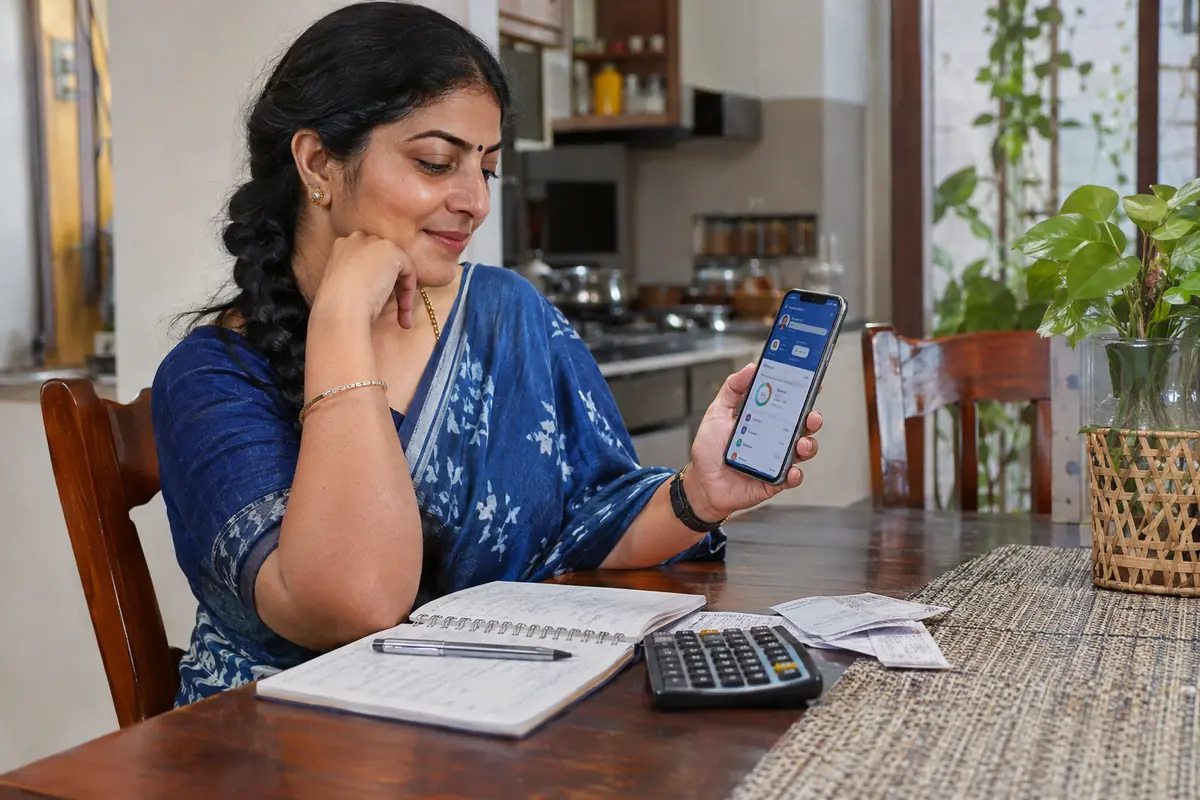
Pimpri Chinchwad P2P loan apps online are mobile and web platforms where people in this Maharashtra industrial city lend to or borrow from other individuals directly, without a bank acting as lender. A platform must be an NBFC-P2P company with a Reserve Bank of India registration. It verifies users, grades borrowers, lists requests and collects instalments for lenders, who bear the default risk. Factory employees, engineers, contractors, small shop owners and migrant workers in the twin city use these apps for short, structured loans with fixed monthly repayments.
An industrial twin city beside Pune
Pimpri Chinchwad is administered as a single municipal corporation and forms part of the Pune metropolitan region in Maharashtra. It grew around manufacturing: automobile makers, engineering works, component suppliers and a pharmaceutical presence fill the industrial areas at Pimpri, Chinchwad, Bhosari and Akurdi.
Many of the people who work here migrated from other districts and states, so the population is unusually mixed. Contract labour sits next to skilled technicians, while software and service firms around Hinjewadi and nearby areas employ a younger white-collar group.
This blend of steady wages, contract work and small enterprise explains why informal borrowing among colleagues, neighbours and shopkeepers has long been common, and why digital platforms that formalise such lending attract attention.
Who tends to borrow and who tends to lend
Demand and supply come from distinct circles:
- Shop-floor workers and supervisors needing money between pay cycles or for a family event back home.
- Small vendors in markets near the railway stations and along the old highway.
- Owners of tiny workshops that supply parts to larger plants and wait long for payments.
- Salaried professionals and retired managers who lend small slices of savings.
Delayed invoices are a recurring theme here, particularly among the many small units that depend on a handful of large manufacturers. A supplier paid after sixty or ninety days may borrow briefly to buy raw material, then repay when the invoice clears, which suits a short-tenure peer loan if the cost is understood.
Steps on a registered platform
Registration begins with a mobile number and electronic KYC based on PAN and Aadhaar. The user adds a bank account and, for borrowing, income details such as salary slips or bank statements.
The platform scores the profile and posts the request with a risk grade. Lenders review it and commit small amounts; when the target is reached the money is released, and later instalments are distributed in proportion to each lender's share.
Marathi is the local language, with Hindi widely spoken among workers from northern states and English common in offices. Using an app that presents terms in a familiar language reduces the chance of misunderstanding fees. Before confirming, the user should note the interest rate, the processing charge, the number of instalments and the final due date.
Ceilings under the RBI framework
The NBFC-P2P rules apply uniformly, so a resident of this city faces the same limits as one anywhere else.
- Maximum aggregate lender exposure across all platforms: Rs 50 lakh.
- Maximum aggregate borrowing outstanding for one borrower across platforms: Rs 10 lakh.
- Maximum exposure of one lender to the same borrower across platforms: Rs 50,000.
- Maximum loan maturity: 36 months.
The operator cannot fund loans from its own balance sheet, cannot guarantee repayment and cannot advertise assured returns. These rules limit concentration, yet they do not protect a lender from losses when borrowers stop paying.
Interest-free routes in the twin city
Pimpri Chinchwad has Muslim, Jain, Sikh, Christian and Hindu communities, and some residents look for financing without interest. Such help typically comes through mosque committees, charitable funds, co-operative societies or informal savings circles, not through registered P2P apps.
Under a true Qard Hasan loan only the principal is repaid and the lender expects no predetermined return. A co-operative may add a fixed service fee for its costs. Murabaha and Ijarah include a profit or rental element and should be understood as sale or lease contracts.
Always request the arrangement in writing and learn who keeps the money in the meantime. Where a community body offers help, ask whether it expects a donation, a membership fee or a fixed charge, so that the actual cost is known from the start.
Safety checks before sharing documents
Imitation apps are a real problem across Indian cities. Before registering, a resident can do the following:
- Compare the legal entity behind the app with the list of registered NBFC-P2P companies published by the RBI.
- Find a grievance officer's name and contact details.
- Study every fee, including delay charges and any early repayment cost.
- Avoid any app that wants money upfront to approve a loan.
- Be wary of apps that request access to the phone's contact list.
Harassing a borrower's colleagues or relatives to recover money is not permitted, and a complaint can be raised with the platform and then with the police. Keeping screenshots of the agreement, the schedule and each payment receipt makes any later dispute much easier to settle.
Managing instalments around shift and invoice cycles
Workers on monthly salary can arrange auto-debit shortly after pay day. Contractors and small suppliers should instead align the instalment with the date a customer is likely to pay, and keep a buffer for delays.
A rule of thumb is to keep all loan instalments well under half of take-home income. Rolling over one loan with another becomes expensive quickly and leaves little room for rent, school fees and travel.
Lenders do best with patience and diversification, funding many small loans across grades and reinvesting repayments slowly. The information here is general, not personal advice or an offer. A lender should also remember that money placed in these loans is not insured and cannot be withdrawn at will before repayments arrive.
Common reasons for small online loans
Requests from this city frequently cover rent deposits for a move closer to the plant, tuition fees for polytechnic or engineering courses, medical costs, travel to a native village, and temporary working capital for a machine shop.
Because the sums are small and tenures short, rates are generally higher than a bank's. Before applying, compare a cooperative bank, a credit society or a salary advance from the employer, which may cost less.
Another useful test is to calculate the total amount repaid, not only the monthly figure. A loan that looks affordable each month can still be expensive once processing charges and a long tenure are added together.
Frequently asked questions
Are Pimpri Chinchwad P2P loan apps safe to use?
Safety depends on the operator. Registered NBFC-P2P platforms follow RBI rules on verification, escrow-style fund handling and grievance redress, but borrowers and lenders still face credit and fraud risk. Verify registration, read fees and never pay upfront.
Can a factory worker without a bank loan history borrow?
Some platforms assess income through bank statements or salary data, so a thin history is not always a barrier. Approval, amount and rate depend on the platform's assessment, and a worker should confirm the total repayable amount before accepting.
What is the maximum loan period on these apps?
Under the RBI NBFC-P2P framework the maximum loan maturity is 36 months. Many platform loans are shorter, often a few months to a couple of years, and instalments are normally fixed and monthly.
Further reading
- Faircent : Faircent is a P2P lending marketplace operating as an RBI-registered NBFC-P2P, which lets Pimpri Chinchwad readers see how a registered platform handles borrower profiles and lender funding.