
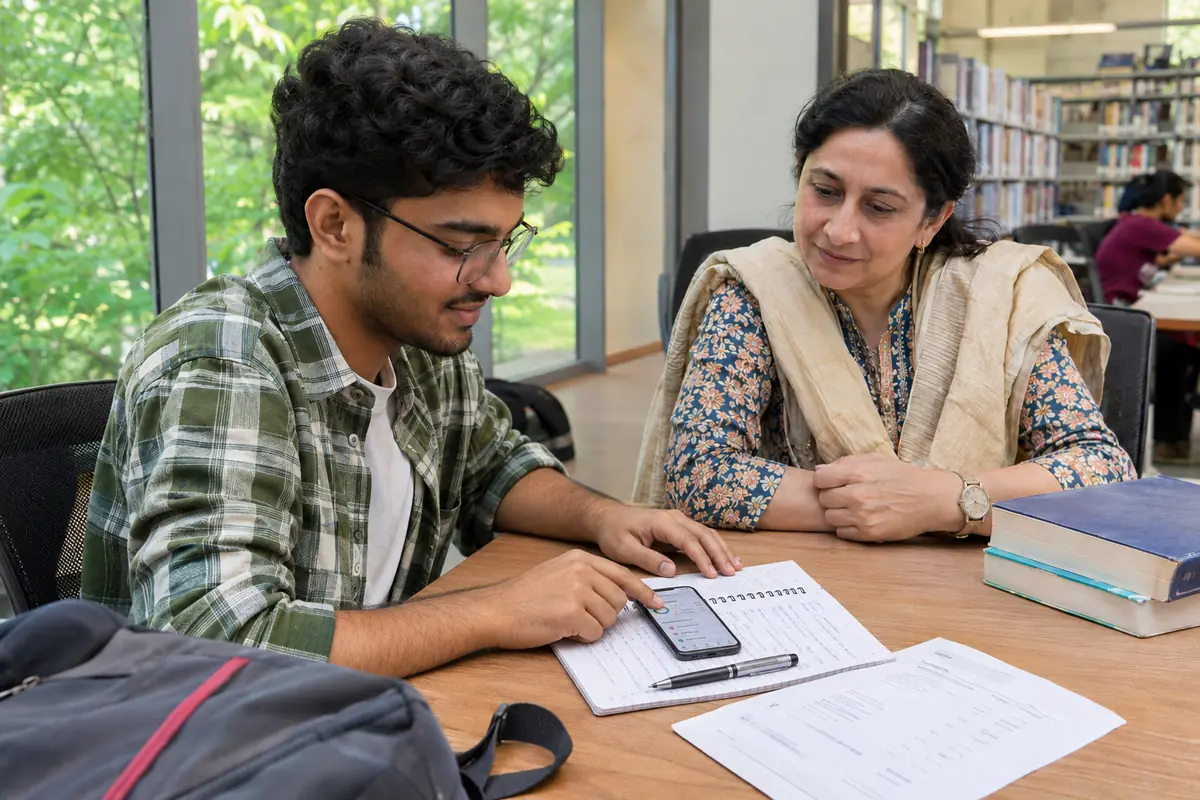
Chandigarh P2P loan apps online India are internet platforms where residents of the Union Territory can lend money to, or borrow it from, other individuals instead of relying only on a bank. In India these platforms must be NBFC-P2P entities registered with the Reserve Bank of India. They verify participants, publish loan requests, collect instalments and pass repayments to lenders, but they are not allowed to lend from their own books or guarantee returns. Professionals, traders and families in the Tricity area use them for modest, short-term needs.
A planned city and its Tricity neighbours
Chandigarh is a Union Territory and the shared capital of Punjab and Haryana. Designed in sectors with wide roads and green belts, it has a distinct urban character, and its economy blends government employment, education, healthcare and services. Panjab University, a large postgraduate medical institute and many colleges draw students and professionals from several states.
The city forms a Tricity with Mohali and Panchkula, where IT parks, start-ups and real estate have expanded. Punjabi, Hindi and English are all in daily use, which makes bilingual app interfaces helpful.
Beyond offices and campuses, the Tricity has a lively private sector: automobile dealers, furniture and hosiery units, hospitality businesses and a growing community of software and service professionals. Many of them are comfortable with digital payments, which makes the move to app-based credit a short step.
Who looks for online credit here
Residents range from salaried government staff and bank employees to freelancers, small manufacturers in the industrial area and traders in sector markets. Restaurants, salons, coaching centres and clinics are common small businesses, and each can face short gaps between expenses and receipts.
Many households in the region have family abroad or farmland in nearby districts, so cash can arrive in lumps instead of every month. A short-term loan arranged on a mobile phone can bridge such gaps, while a person with spare funds may choose to lend small sums to verified borrowers.
Examples include a restaurant owner in a sector market who needs to replace kitchen equipment, a consultant waiting for a client invoice to clear, or a young couple covering a security deposit before a salary increase takes effect. In each case the loan is small, short and tied to income that is expected soon.
What a registered platform does
A licensed NBFC-P2P company is a marketplace with regulatory duties. It checks identity, assesses borrowers, grades risk and lists loan requests. Lenders decide how much to offer and to whom.
- KYC verification links each user to official identity records.
- Funds travel through designated accounts rather than personal wallets.
- Repayments follow an agreed schedule and are credited to lenders.
- The platform may charge fees, which must be disclosed.
Because the platform cannot guarantee repayment, the quality of each borrower still matters most.
Borrowers should compare the total amount repaid with the amount received, noting processing fees, late charges and any prepayment terms. A low-looking monthly figure can hide a high total cost if the tenure is long.
Numbers set by the RBI
The framework for NBFC-P2P lending is national, so Chandigarh users face the same limits as anyone else.
- Lenders: Rs 50 lakh maximum aggregate exposure across platforms.
- Borrowers: Rs 10 lakh maximum aggregate outstanding borrowing across platforms.
- Single lender to the same borrower: Rs 50,000 maximum across platforms.
- Loan maturity: 36 months maximum.
Assured returns cannot be promised. The caps spread exposure but do not remove credit risk, so lenders should expect some delayed or unpaid loans in a diversified portfolio.
A borrower also cannot sidestep the ceiling by opening accounts on several apps, since the Rs 10 lakh limit is measured across platforms. Anyone whose repayments are already heavy should think twice before adding another loan.
Interest-free choices at community level
Chandigarh has Sikh, Hindu, Muslim, Christian and other communities, and gurdwaras, temples, mosques and charitable trusts often support members in hardship. Among Muslim families seeking to avoid interest, Qard Hasan, also called Qarz-e-Hasana, is the reference model: the borrower repays only the principal and no return is set in advance for the lender.
Some cooperatives add a fixed service fee. Murabaha and Ijarah include a profit or rent element and are different products. Most such arrangements in India run through community, charitable or cooperative systems and are not RBI-registered NBFC-P2P apps, so records, trust and dispute resolution rest on the organisers. Seek written terms and avoid informal promises.
It also helps to ask how a repayment delay caused by illness or job loss would be treated. Community schemes often show flexibility, but the arrangement should still be written down so that both sides remember the same terms.
Safety checks for residents
Digital lending fraud affects every city, including those with high smartphone use. Take a few minutes to verify any app.
- Find the company's legal name and RBI Certificate of Registration as an NBFC-P2P.
- Treat guaranteed returns, instant approval without checks and advance-fee demands as red flags.
- Grant only the permissions the app needs, and never share one-time passwords.
- Keep records of agreements, fees and receipts.
Complaints can go first to the platform's grievance officer and then to the RBI if the issue is unresolved.
Planning repayments sensibly
A borrower with irregular freelance income should choose an instalment that can be paid even in a slow month. Salaried people can align the due date with the day after salary arrives. Keep a modest buffer in the linked account so that an automatic debit does not fail.
Late payments may bring penalty charges and harm a credit record, which in turn affects future loans, including home and vehicle finance. Contact the platform early if difficulty is likely instead of waiting for the account to become overdue.
Where possible, repay slightly ahead of schedule when cash allows, after checking that no prepayment charge applies, because a shorter loan reduces total cost and risk.
Habits for lenders who want to stay careful
A sensible lender begins with a small amount, reads each borrower's profile and purpose and spreads funds over many listings and risk grades. Reinvesting slowly and reviewing results every month shows how the portfolio is really performing.
Money needed within a year, such as tuition, rent or medical costs, should stay out of P2P lending, as repayments arrive over time and cannot be withdrawn at will. Maintain records for tax reporting, since earnings from lending may be taxable.
The information on this topic is general and does not replace personal advice or constitute a loan offer.
Frequently asked questions
Do Chandigarh residents need a special permit to use P2P apps?
No special permit is needed for users. The requirement lies with the platform, which must be an NBFC-P2P holding an RBI Certificate of Registration. Users should check that certificate and the company's legal name before registering.
How much can one borrower raise across all P2P platforms?
Under the RBI framework, a borrower's aggregate outstanding amount across all NBFC-P2P platforms is limited to Rs 10 lakh. Maturity is capped at 36 months, so a registered platform cannot offer a longer repayment period.
Are interest-free Islamic loans available through registered apps?
Registered NBFC-P2P apps generally charge interest. Genuine Qard Hasan, where only the principal is repaid, is mostly offered through community, charitable or cooperative systems, which are separate from RBI-registered platforms and need their own checks.
Further reading
- i2iFunding : i2iFunding is an NBFC-P2P lending platform whose public pages explain how borrowers and lenders are matched, which is useful background for Tricity residents comparing registered apps.