
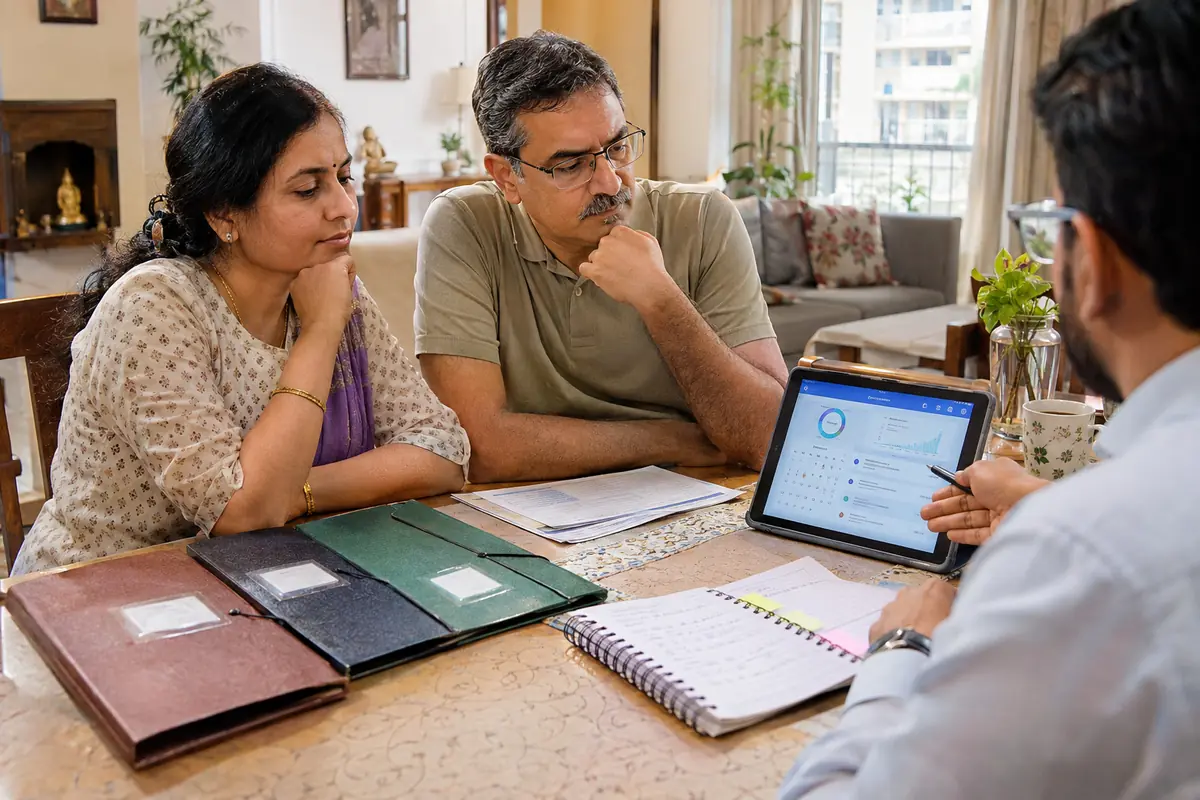
Faridabad P2P loan apps online in India are digital platforms through which people in this Haryana industrial city borrow from, or lend to, other individuals instead of approaching a bank. A registered operator functions as an NBFC-P2P under Reserve Bank of India supervision: it checks identities, lists requests, collects instalments and passes money to lenders, without lending its own capital or guaranteeing results. The model serves factory employees, small manufacturers and shopkeepers in the Delhi region, but it carries default risk and demands careful verification.
The industrial profile of Faridabad
Faridabad lies on the southern edge of the National Capital Region and has long been one of Haryana's biggest manufacturing centres. Auto components, tractors, tyres, switchgear, forgings, plastics and machine tools are made in large industrial belts, supported by a dense layer of small job-work units.
The city is linked to Delhi by metro and highway, so many residents work across the state border. That mix of factory shifts, supplier invoices and commuting costs shapes the way people think about short-term credit.
Who needs small online loans here
The need for money rarely arrives in tidy form. Several groups in Faridabad turn to platforms for modest sums:
- Workers from Bihar, Uttar Pradesh and other states who must cover rent, a family trip home or a medical bill.
- Owners of small workshops who wait weeks for payment from larger firms.
- Shopkeepers in Ballabgarh and the old city markets restocking before festivals.
- Professionals in the newer sectors who are building a savings pool to lend.
Migrant workers often lack a long banking history, which can limit choices. A registered platform may still ask for stable income proof and a bank account.
How a registered platform operates in practice
Registration starts with mobile number and KYC using Aadhaar and PAN. After that the borrower states the amount, purpose and period. The operator scores the profile and shows the request to lenders, who may fund a slice of it.
Hindi dominates daily speech, alongside Haryanvi and Punjabi, and Hindi-language screens or phone support remove much confusion. Repayment is by monthly instalments drawn through the platform's account structure and passed to the lenders who funded the loan.
What the RBI framework sets and what it leaves open
Registered operators hold a Certificate of Registration. The rules cap a lender's total exposure at Rs 50 lakh across platforms, a lender's money with one borrower at Rs 50,000, a borrower's total outstanding at Rs 10 lakh and loan maturity at 36 months.
Those caps shape sensible behaviour but protect nobody from loss. A platform cannot promise assured returns or stand behind a borrower. A lender in Faridabad who funds a factory worker or a supplier should assume some loans will be late and some will not be repaid.
Faith-compatible finance for Muslim residents
Faridabad has Muslim communities among traders, craftsmen and workers, and some seek lending without riba. Qard Hasan, or Qarz-e-Hasana, means the borrower returns the principal alone, with no preset benefit for the lender.
Such lending in India is mostly arranged by community funds, charitable bodies and cooperatives rather than by RBI-registered NBFC-P2P apps. Certain cooperatives charge a fixed service fee for administration. Murabaha brings a profit mark-up and Ijarah a rental element, so they are different from a gift-like loan. Written terms and a clear legal entity are essential.
Spotting unsafe apps
Illegal lending apps often target migrant workers and low-income households with fast approval and aggressive collection. Several warning signs repeat:
- No named company, no registered address and no clear RBI registration.
- Demand for access to phone contacts or photographs.
- Large deductions from the loan before the money is paid out.
- Threats or shaming messages sent to relatives.
Anyone facing such conduct should stop paying under pressure, keep the evidence and approach the police or the relevant complaint channel.
Habits that keep borrowing manageable
A borrower on a monthly wage should keep all instalments within a modest share of pay and remember that overtime is not guaranteed. A workshop owner should borrow against confirmed orders, not hoped-for ones.
For lenders, small ticket sizes and a long list of borrowers lower the damage from any single default. Reinvesting only repaid money, and keeping emergency savings outside the platform, is a disciplined approach. This text gives general information, not personal advice or any loan offer.
The lender's side of the table
People in Faridabad with surplus income, such as engineers at larger plants, doctors, teachers and retired employees, sometimes lend through these platforms in search of returns higher than a savings account. The attraction is real, yet so is the loss risk.
A careful lender reads the borrower's grade, purpose and tenure, and avoids placing a big share of savings in one listing. The RBI limit of Rs 50,000 per borrower per lender across platforms already pushes in that direction. Returns on offer can be taxable, so records of each transfer should be kept for the annual filing.
Borrowing for business versus borrowing for consumption
Money taken to buy a machine part, raw material or stock can create income that pays the instalment. Money taken for a wedding feast, a gadget or a holiday does not, and repayment then comes from future wages alone.
Faridabad's job-work economy makes the first kind tempting, but orders can be cancelled and payments delayed. A small owner should therefore test the plan against a slow quarter, asking whether the instalment can still be met if one customer pays late. If the answer is no, a smaller amount or a longer tenure within the 36-month limit may be wiser.
Living between Delhi and Haryana
Many households in the city have members who work in Delhi or Gurugram, and bank accounts, addresses and documents may sit in different places. Mismatched addresses are a common cause of delay in verification, so documents should be current and consistent.
The shared border region also means consumers hear about many apps through advertisements and messages. A single unverified link received by message should never be treated as proof that an app is legal. Checking the operator's name in the central bank's published list of registered entities is the dependable step.
Costs to compare before saying yes
A short loan can be expensive once fees are counted. The sensible check is the total repayable and the amount that reaches the bank account.
- Processing and convenience charges.
- Penalty on a late or missed instalment.
- Terms for closing the loan early.
- Whether the lender may change terms later.
Comparing two or three registered operators before choosing makes hidden cost easier to see.
Frequently asked questions
Can a factory worker in Faridabad borrow through a P2P app?
Yes, provided the person passes the platform's KYC and income checks and the app is registered with the RBI as an NBFC-P2P. Approval is never guaranteed, and the borrower must be able to meet monthly instalments.
What happens if a borrower does not repay on a P2P platform?
The platform may attempt recovery, but it does not guarantee repayment, so lenders can lose part or all of their money. Borrowers risk penalties, collection calls and damage to their credit record, so instalments should stay affordable.
How can I check whether a lending app is genuine?
Look for the company's legal name, its RBI Certificate of Registration as an NBFC-P2P, a physical address and a grievance contact. Avoid apps asking for contact-list access, advance fees or promising assured returns.
Further reading
- LenDenClub : LenDenClub is an RBI-registered NBFC-P2P lending platform, so its public pages offer Faridabad readers a concrete example of how a regulated marketplace for borrowers and lenders is presented.