
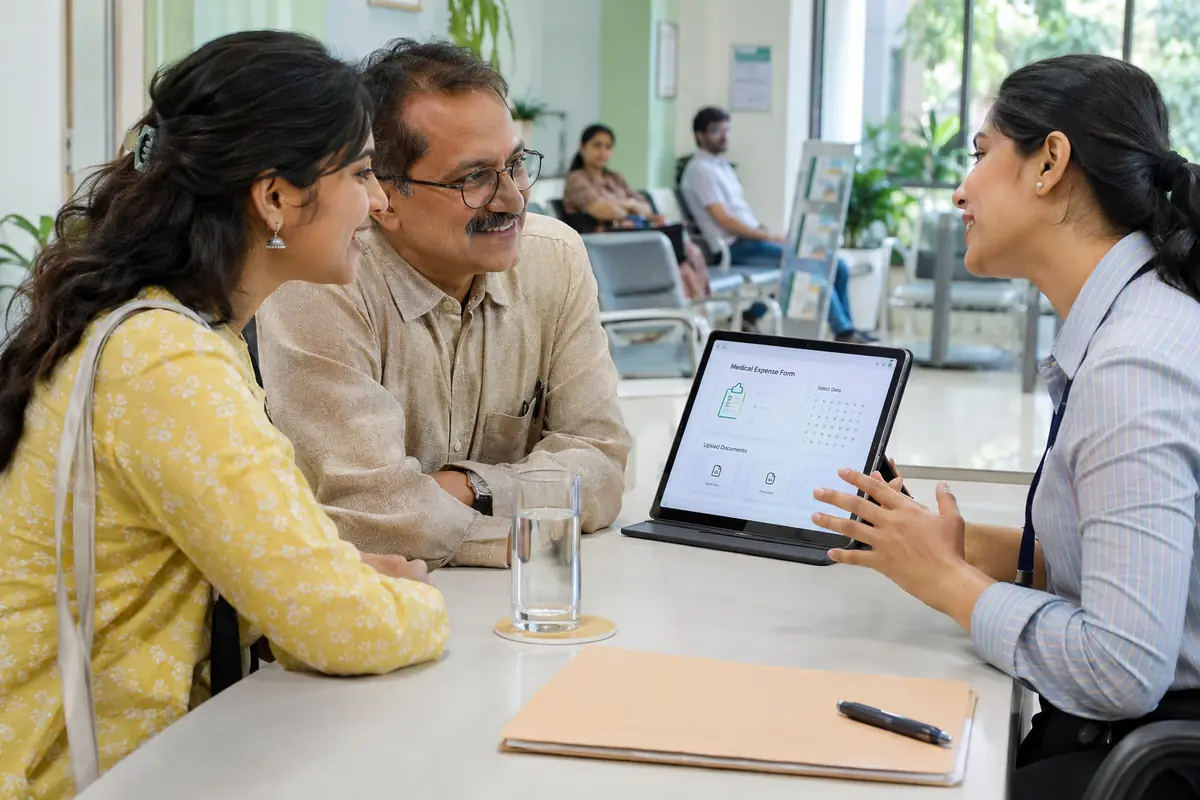
Bhopal P2P loan apps online India are mobile and web platforms that let residents of the Madhya Pradesh capital borrow from, or lend to, other individuals without a bank standing in the middle. Each platform must be an NBFC-P2P entity holding a Certificate of Registration from the Reserve Bank of India. The app verifies identity, assesses the borrower, lists the request, and collects and passes on repayments, while lenders carry the credit risk. Salaried staff, traders, students and small business owners in Bhopal use them for short, structured personal or working-capital needs.
Bhopal's economic profile
Bhopal is the administrative capital of Madhya Pradesh, so a large share of local incomes comes from government service, public-sector undertakings and the offices that surround them. Heavy engineering at the Bharat Heavy Electricals plant, a well-known name in the industrial belt, adds a base of skilled employees, while the old city around the lakes supports markets, handicrafts and small trading shops.
Education and healthcare institutions bring students and professionals from across central India. This mix produces steady salaried earners next to irregular, cash-heavy traders, and the two groups meet peer-to-peer lending from very different angles. A government employee may value predictability and a clean repayment schedule, whereas a trader values speed and flexibility, and a platform's rating system has to serve both.
Who borrows and who lends in the city
Borrowers tend to fall into a few recognisable groups:
- Salaried employees bridging a gap between a medical bill or a wedding expense and the next salary cycle.
- Shopkeepers in markets such as New Market who need stock before a festival season.
- Students and early-career workers with thin credit histories who find bank paperwork slow.
Lenders are usually salaried households, retired government employees and professionals who want to place part of their savings across many small loans instead of one large one. Spreading money thinly matters more than chasing the highest advertised yield, because one default then costs only a small slice of the total.
How a regulated app works for a resident
The process is the same for every NBFC-P2P platform, though screens differ. A resident registers with a mobile number, completes electronic know-your-customer checks with Aadhaar-linked or PAN-based verification, and links a bank account.
A borrower then submits an amount and tenure. The platform scores the profile, assigns a rating and publishes the request to lenders, who fund it in parts. After disbursal, instalments move through an escrow-style arrangement and reach lenders in proportion to their share.
Hindi is the everyday language in Bhopal, and many apps offer Hindi screens, which helps first-time users read terms properly before they accept them. Urdu and English are also widely understood in the city, so key documents can usually be checked in a comfortable language.
RBI limits that shape every loan
The Reserve Bank of India sets boundaries that apply to every registered platform, whichever city the user lives in.
- A lender can have at most Rs 50 lakh outstanding across all platforms.
- A single borrower can hold at most Rs 10 lakh of borrowing across platforms.
- One lender can put at most Rs 50,000 into the same borrower across platforms.
- No loan may run beyond 36 months.
A platform cannot lend from its own balance sheet, cannot guarantee repayment and cannot promise assured returns. These limits cap exposure but do not remove default risk, so a lender in Bhopal can still lose money.
Interest-free options in the community
Bhopal has a long-established Muslim community with a strong tradition of mutual help, and many residents prefer financing that avoids interest. In practice, most interest-free arrangements here are informal or run through charitable and cooperative bodies, not through RBI-registered apps.
A genuine Qard Hasan loan returns only the principal, with no predetermined gain for the lender. Some cooperatives charge a fixed service fee to cover costs, which is a different thing. Murabaha and Ijarah, by contrast, carry a profit or rental element.
Anyone considering such a route should ask for the terms in writing, understand who holds the money, and avoid arrangements that quietly add charges later.
Safety checks before registering
Because the sector attracts imitation apps, a few checks are worth doing before sharing any document:
- Confirm the company's legal name and its Reserve Bank of India registration on the RBI's published list.
- Read the fee schedule, including processing charges, late fees and prepayment terms.
- Never pay money upfront to "release" a loan.
- Refuse apps that ask for access to contacts or photos without a clear need.
- Keep screenshots of agreements and repayment receipts.
- Check that the lender or the loan amount shown in the agreement matches what is credited to the bank account.
Harassment of borrowers or their relatives for recovery is not acceptable and can be reported to the platform's grievance officer and to the police.
Typical purposes and loan sizes
Requests in a city like Bhopal are mostly modest and short. Common purposes include medical expenses, coaching or course fees, two-wheeler or appliance purchases, rent deposits when moving for a transfer, and working capital for a small shop or workshop.
Platforms usually list amounts in the range of a few thousand to a few lakh rupees, repaid in monthly instalments over several months. Larger or longer requests receive closer scrutiny and generally carry a higher rate, which reflects the lender's risk.
A borrower should ask a simple question before applying: is the purpose productive or urgent enough to justify paying a rate that is often higher than a bank would charge? If a cheaper source such as a bank, a cooperative society or an employer advance is available, it deserves a comparison first.
Repayment discipline and planning
A borrower in Bhopal should compare the monthly instalment with take-home income before accepting an offer. A sensible habit is to keep the total of all loan instalments well under half of monthly earnings, leaving room for rent, school fees and emergencies.
Setting an auto-debit date just after salary credit reduces missed payments. Late payment brings penalties and can damage a credit record, which in turn makes later borrowing from banks harder.
Lenders should likewise plan: diversify across many borrowers and rating bands, reinvest repayments gradually, and accept that some loans will be late or lost. Nothing here is personal advice or a loan offer; it is general information, and anyone with a complicated situation can seek a qualified adviser's opinion.
Frequently asked questions
Are Bhopal P2P loan apps legal?
Yes, provided the operator is an NBFC-P2P company with a valid Certificate of Registration from the Reserve Bank of India. Residents should verify the legal entity and registration on the RBI list before uploading documents or linking a bank account.
Can a Bhopal resident lend through these apps?
Yes. Lenders register, complete verification and choose loans to fund, within the RBI cap of Rs 50 lakh across platforms and Rs 50,000 per borrower. Returns are not guaranteed, and the platform cannot promise them or repay on a borrower's behalf.
Is there an interest-free choice in Bhopal?
Community, charitable and cooperative Qard Hasan systems exist, where only the principal is repaid. They are usually not RBI-registered P2P apps, so terms, fees and who holds funds should be checked carefully and kept in writing.
Further reading
- Lendbox : Lendbox is an NBFC-P2P lending platform where Bhopal residents can see how verification, borrower listing and lender funding work on a registered Indian app.