
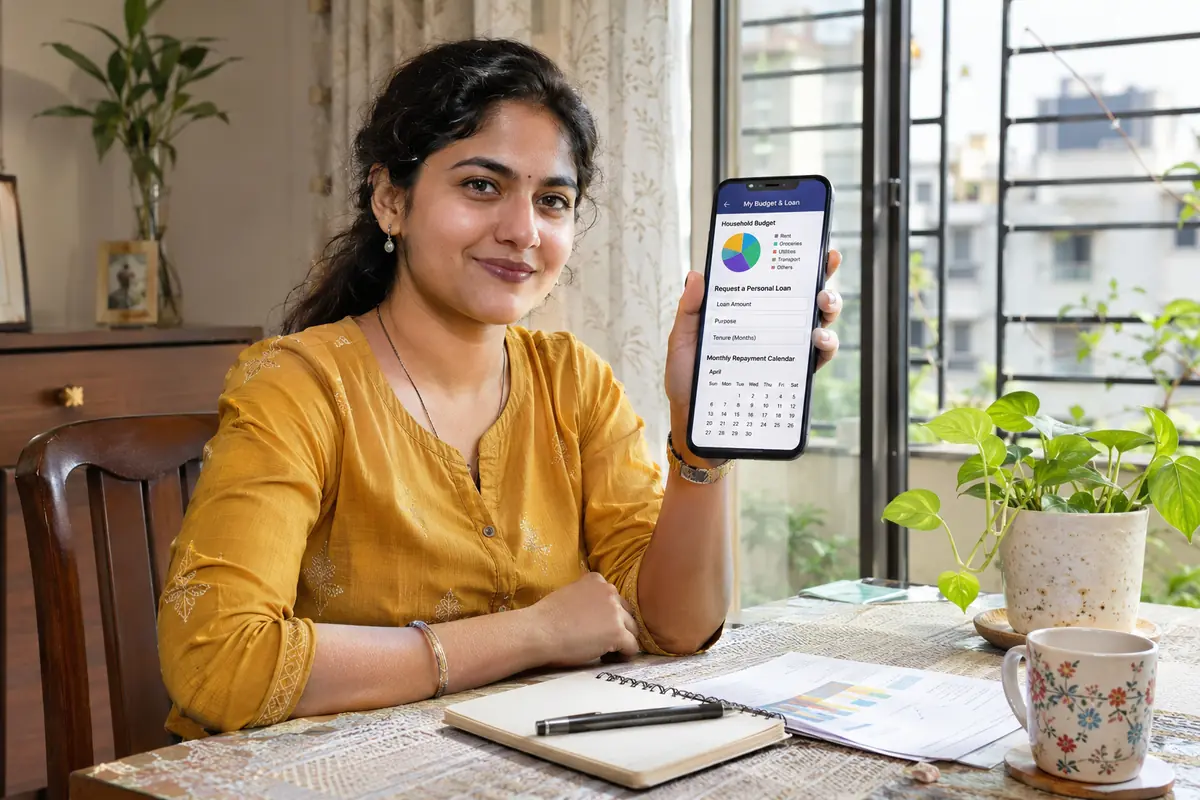
Coimbatore P2P loan apps online India are digital marketplaces where people in this Tamil Nadu city lend directly to other individuals or request a personal loan from them. The marketplace must be an NBFC-P2P registered with the Reserve Bank of India, which means it can verify users, display loan requests and collect instalments, yet it cannot use its own funds, guarantee repayment or promise returns. Lenders carry the credit risk of each loan, and borrowers commit to a fixed schedule that cannot exceed thirty-six months.
Kovai's industrial character
Coimbatore, often called Kovai, grew around cotton mills and is still described as a textile centre of South India. Over time it added pump and motor manufacturing, foundries, wet grinders, auto components and a dense network of micro, small and medium enterprises. Educational institutions, hospitals and software offices add to its service economy.
This industrial base gives the city a strong entrepreneurial culture. Many families run a small unit from a shed or a rented bay, and their funding needs are practical: a machine part, a raw material order or wages while a buyer delays payment.
Hills of the Western Ghats frame the city, and the climate has helped it attract hospitals, colleges and agricultural research bodies. Nearby cotton, coconut and poultry farming support further trade through the city's markets.
Tamil, English and the language of the app
Tamil is the language of daily life, with a distinctive Kongu dialect around the city, while English dominates in colleges, factories and corporate offices. Migrant workers from other states, who staff many mills and workshops, speak Hindi, Malayalam, Odia and other languages.
Most platform screens use English or Hindi, so a borrower more comfortable in Tamil should ask for the terms to be explained by someone trustworthy and should never rely on an informal verbal summary. A repayment table, a total amount and a due date are the three items to understand fully.
Borrowers in the textile and engineering belt
The people who consider peer loans in Coimbatore frequently include:
- owners of small workshops in areas such as Ganapathy and Peelamedu who need working capital;
- power-loom operators and yarn traders whose receivables run late;
- employees of mills and factories facing a medical or education cost;
- students and young professionals starting careers in the IT parks.
Platforms check income stability and debt load. Entrepreneurs should show business bank entries and keep personal and business accounts separate where possible.
Because small units depend on timely payment from bigger customers, a late invoice can affect wages, rent and supplier bills in the same week. Peer loans can fill such short gaps, but they should not become a permanent source of operating funds.
Lenders and diversification
Many lenders in the city are business families, professionals and retired employees who are used to evaluating credit. Their instinct for risk is useful, but P2P lending has its own rules. The RBI caps total exposure of one lender at Rs 50 lakh across platforms and exposure to one borrower at Rs 50,000.
A lender should resist treating a platform risk grade as certainty. Defaults arise from ordinary events such as a lost order or an illness in the family, and the platform cannot guarantee payment. A balanced portfolio of many small loans, reviewed regularly, remains the more sensible approach.
Using a registered platform step by step
- Pick a platform and verify its registration with the regulator.
- Register with a mobile number and email.
- Complete KYC using Aadhaar-based or other accepted documents.
- Connect a bank account in your own name.
- Review each loan's amount, term, charges and risk grade.
- Confirm the deal and track instalments in your account.
A borrower cannot have more than Rs 10 lakh outstanding across platforms, and loans may not run past 36 months.
Interest-free help within the community
Coimbatore has a long-established Muslim community, especially around Ukkadam and Town Hall, alongside strong Hindu, Christian and Jain networks. Within many of these, interest-free help is a familiar idea. Qard Hasan, also written Qarz-e-Hasana, means the principal alone is repaid and the lender seeks no predetermined return.
It is commonly organised by mosque committees, charitable trusts and cooperatives, not by RBI-registered P2P apps. A cooperative may collect a fixed service fee, and Murabaha or Ijarah contracts have a profit or rental element. Ask for the written terms before accepting any such arrangement.
Written documentation matters here: record the amount, the date and the purpose, and keep these notes with the platform's own statements.
That small discipline protects every party.
Seasonal rhythms and festivals
Demand for money in Coimbatore rises before Deepavali, Pongal and Eid, when families spend on clothing, sweets and travel and shopkeepers stock goods in advance. Textile orders also vary with export schedules and with the cotton price, so mill suppliers often see income swing from one quarter to another.
A borrower who knows these cycles should avoid scheduling the heaviest instalments during the weakest months. Lenders, in turn, should remember that default risk can rise when a sector goes through a slow period, even if the borrower is honest. Reading a platform's loan descriptions with that background in mind helps a lender judge whether a request fits a plausible business pattern or only reflects optimism.
Staying clear of fake lenders
Unregistered apps use attractive messages about instant cash. Before trusting one, take these steps:
- search for the company's registration details and match them to the app;
- never pay a fee in advance;
- decline permissions for contacts, photos and messages that a loan does not need;
- keep every agreement, receipt and chat record.
If a lender threatens or shames a borrower, that behaviour is a warning sign, and the matter should be reported through the platform's grievance channel and to the police cyber unit.
Reporting fake apps to the authorities protects the wider community of workers and small traders who are often the first targets.
Repayment habits for business families
A business borrower should match the instalment to the cash cycle: if buyers pay in sixty days, a monthly instalment on a short loan will strain the account. Choosing a longer permitted term, within the 36-month limit, can reduce pressure, but it increases the total charge.
Salaried borrowers can set the date soon after payday. Everyone should keep a small reserve equal to at least one instalment. For lenders, patience matters: a late payment is not always a default, and the platform's collection process exists for exactly that reason.
Frequently asked questions
Can a small workshop owner in Coimbatore raise funds on a P2P app?
Possibly, if the platform accepts the borrower's profile. Applicants must pass KYC and show stable income. The amount is limited to Rs 10 lakh outstanding across platforms, and the loan may not run longer than 36 months.
How can a Coimbatore lender reduce the risk of default?
By spreading funds over many borrowers, choosing loans with realistic purposes and risk grades, staying within the Rs 50,000 limit per borrower, and lending only surplus money. Risk can be reduced, but never removed.
Are P2P apps regulated in Coimbatore differently from elsewhere?
No. The same RBI framework applies across India. A platform needs an NBFC-P2P registration, and the limits on exposure, loan term and guarantees are identical for residents of every city and state.
Further reading
- LenDenClub : LenDenClub is an RBI-registered NBFC-P2P platform, so it lets Coimbatore businesses and households see how a regulated marketplace connects lenders and borrowers online.