
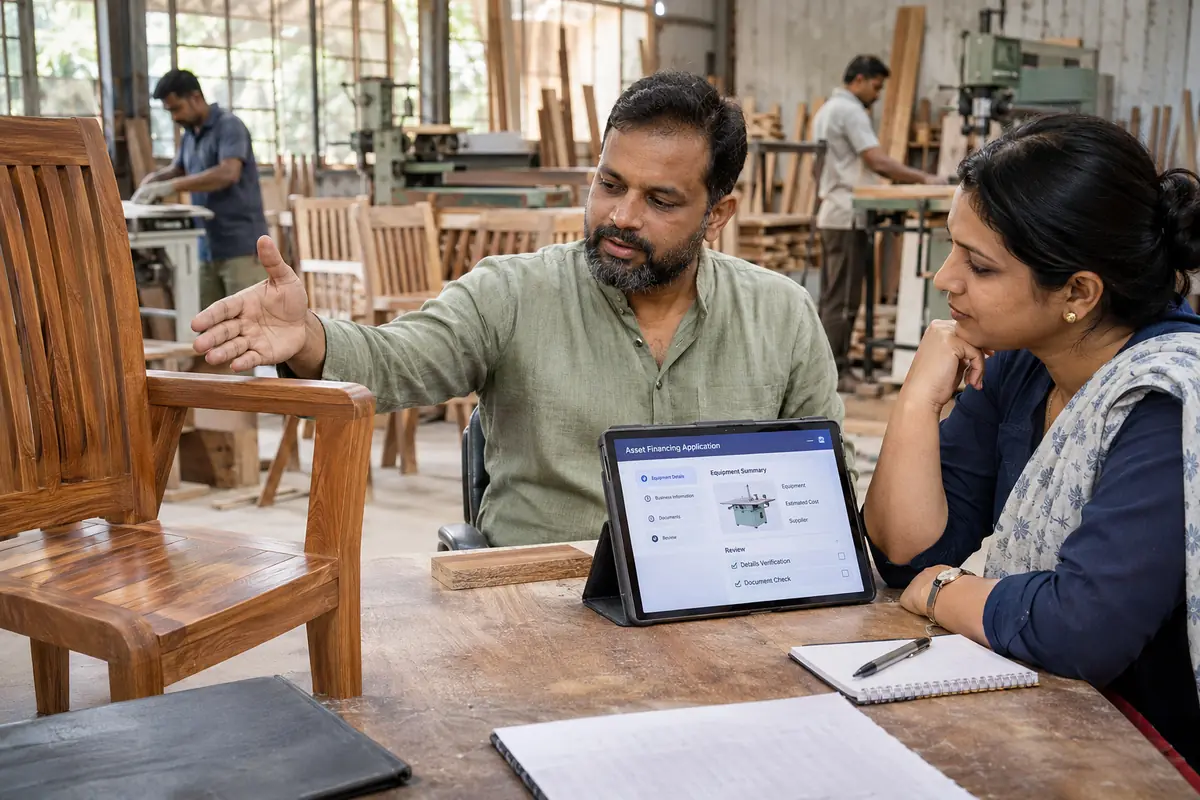
Dhanbad P2P loan apps online India are digital platforms that connect residents of this Jharkhand city with individual lenders or borrowers, replacing the branch visit with an app-based application. Indian regulation allows this only through NBFC-P2P companies holding an RBI Certificate of Registration, and such a company is strictly an intermediary. It verifies users, matches offers and collects instalments, but it cannot fund loans itself, guarantee repayment or advertise assured returns. Applicants normally need Aadhaar-based e-KYC, a PAN and an active bank account.
The coal capital and its working population
Dhanbad is widely known as the coal capital of India. Mines and washeries of Coal India's subsidiary around Jharia and Katras, along with the Indian Institute of Technology (Indian School of Mines), railway operations and a large transport and trading sector, shape the local economy.
Many households depend on salaried jobs in mining and allied units, while others work as contractors, truck operators, labourers, shopkeepers and suppliers. Pay cycles, contract payments and shift work set the rhythm of cash flow, and a delayed contractor payment can leave a family short for weeks.
Hindi is the everyday language, with Bengali, Bhojpuri, Magahi and Santhali also heard across the coalfield.
Because many residents work in shifts and travel between the town, nearby colliery areas and neighbouring Bengal, a loan app that runs on a basic smartphone and offers Hindi support tends to suit them best.
The city is also an education and rail hub, so students, railway staff and traders add further variety to the local borrower pool.
Why peer lending draws interest here
Formal credit is available in the city through banks and cooperative societies, yet many informal workers lack payslips or credit records. Online platforms attract them with quick screening and small ticket sizes.
The same speed has a downside. Short tenures, processing fees and penal charges can make an apparently small loan costly. Households should therefore compare the total repayment amount, not the monthly instalment alone, with other sources such as an employer advance, a self-help group or a bank personal loan.
A worker who needs only a few thousand rupees for a fortnight should ask whether a smaller loan from a colleague or a salary advance would cost less than any app, because fixed fees weigh heavily on small, short loans.
The annualised cost, which regulated lenders must disclose, is the figure that allows a fair comparison between different offers.
The regulatory frame in plain terms
A registered platform has several duties and limits worth knowing:
- It holds an RBI Certificate of Registration as an NBFC-P2P.
- It cannot lend from its own balance sheet, nor guarantee that a borrower will repay.
- It keeps loan maturity within 36 months.
- It must respect Rs 10 lakh as the aggregate outstanding cap for one borrower, and Rs 50 lakh as the aggregate exposure cap for a lender.
- It must respect Rs 50,000 as the most a lender can place with a single borrower across platforms.
These caps spread risk but do not eliminate it. Lenders may lose money if borrowers default.
Typical users in the Jharkhand coalfield
Borrowers include contract workers who need funds between payment cycles, owners of small transport and repair businesses, students of technical institutes, shopkeepers in markets such as Bank More and Hirapur, and families who face a medical bill or a wedding.
Lenders are generally salaried residents, professionals and retired employees who hold a modest surplus. A mine employee with a steady income may find peer lending an interesting use of spare funds, but should keep the total small and diversified.
The mining sector brings a particular reminder: income can be steady for some and highly uncertain for others, especially when contracts end, so both sides should avoid assuming that today's pay will continue unchanged.
A lender in particular should ask what share of a portfolio rests on borrowers in one trade or one town, since a downturn in a single industry could affect many repayments at once.
Interest-free alternatives in the community
Residents who wish to avoid interest often turn to relatives, neighbourhood committees, religious charities and cooperative groups. A true Qard Hasan, also called Qarz-e-Hasana, requires the borrower to repay the principal only, with no predetermined return to the lender, though some cooperatives charge a fixed service fee to cover costs.
Murabaha and Ijarah, by comparison, contain a profit or rental element and are structured as sale or lease transactions.
The majority of interest-free options in India are community, charitable or cooperative systems. They are not RBI-registered NBFC-P2P apps, and a borrower should ask who manages the fund, what documents are signed and whether the arrangement is recorded.
Written acknowledgement of the amount, the date and the agreed repayment date protects both parties and prevents the kind of misunderstanding that can strain family or neighbourhood ties.
Where a cooperative is involved, check that it is formally registered and that its accounts are open to members.
Avoiding fraudulent lending apps
Loan apps that harass borrowers have been reported in several parts of India, so careful checks are essential:
- Confirm the legal name and RBI registration of the company, not only the app's brand.
- Never transfer money in advance to receive a loan.
- Refuse apps that demand access to contacts, photos or messages.
- Distrust offers that promise sure approval without any credit check.
- Read the agreement, including fees, penal charges and recovery terms.
If a problem arises, keep a record, write to the platform's grievance officer, and escalate to the RBI's complaint channels or to the police where threats are involved.
Borrowers should also be cautious about sharing one-time passwords, because callers pretending to be loan officers use them to empty bank accounts.
Keeping repayment within reach
A coalfield household should set the loan size by asking what instalment can be paid in the leanest month, not the best one. Build a buffer for illness, school fees and festivals such as Chhath, which bring heavy spending, and for the months when a mine or contractor slows payments.
Auto-debit helps avoid late fees, but it only works if the account holds enough funds on the due date. Missed payments can be reported to credit bureaus and harm access to cheaper bank credit later.
This text gives general information. It is not personal advice and not a loan offer.
Frequently asked questions
Is P2P lending legal for people in Dhanbad?
Yes, when the platform is an NBFC-P2P with an RBI Certificate of Registration. The rules are national, so they apply in Jharkhand too. Residents should check the registration before sharing identity papers or bank details with any app.
How long can a P2P loan last?
Under the RBI framework the maximum maturity is 36 months. Many peer loans are shorter. The tenure offered depends on the platform's risk assessment of the borrower, and longer tenure usually means a larger total cost even when instalments look smaller.
Can a lender in Dhanbad lose money on a P2P loan?
Yes. The platform cannot guarantee repayment or an assured return, so a borrower's default can cause a loss. Limits such as Rs 50,000 per borrower across platforms reduce concentration, and spreading small sums widely helps further.
Further reading
- LenDenClub : LenDenClub is an RBI-registered NBFC-P2P lending platform, and its public information shows how a regulated marketplace presents borrower profiles and lender choices, useful for coalfield residents comparing legitimate apps.