
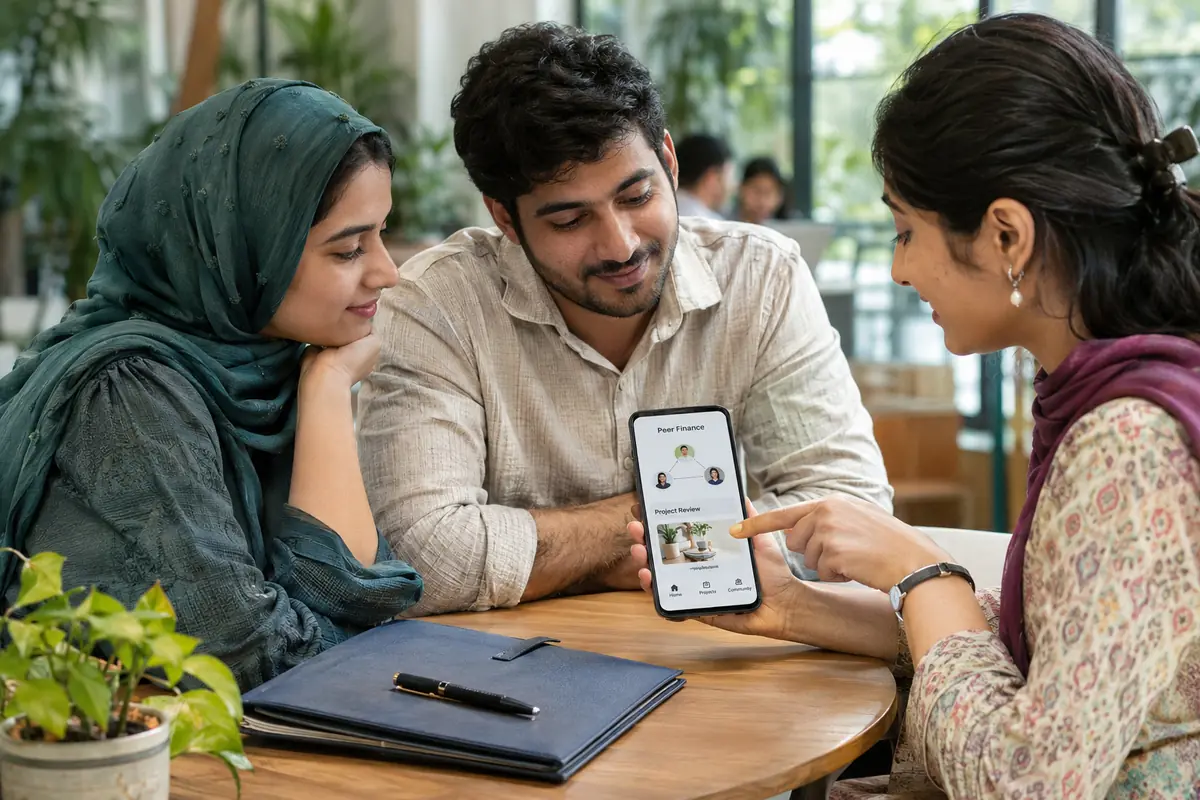
Vadodara P2P loan apps online India are digital marketplaces where residents of this Gujarat city lend to, or borrow from, other individuals without a bank acting as the lender. Every operator has to be an NBFC-P2P company registered with the Reserve Bank of India. It verifies identity, grades borrowers, lists requests and moves instalments to the lenders who funded them, and those lenders carry the default risk. Employees, entrepreneurs, shopkeepers and professionals in Vadodara use these apps for compact working-capital and personal loans over a few months.
Economic character of Vadodara
Vadodara, historically known as Baroda, lies on the Vishwamitri river in central Gujarat. It grew under the Gaekwad rulers as a city of palaces, museums and the Maharaja Sayajirao University, and later became an industrial centre.
Petrochemicals, fertilisers, power equipment and engineering units on the outskirts, together with a well-known refinery and the nearby Halol industrial belt, give it a large manufacturing workforce. A culture of trade and enterprise runs through the old city markets, where family businesses deal in textiles, jewellery, utensils and food. Software and service firms have added a younger salaried group in recent years, and the railway and logistics links to Mumbai and Ahmedabad keep goods and people moving.
Profile of local users
People in the city who might use peer loans include:
- Small manufacturers and ancillary suppliers who wait for payments from bigger plants.
- Traders who need short-term stock finance before Navratri and Diwali.
- Salaried engineers and clerks facing a medical or housing expense.
- Students from other districts studying at the university and technical colleges.
On the lending side are professionals, business families and retired employees who are used to thinking in terms of capital placement. They tend to ask careful questions about default history and diversification, a habit that suits this kind of lending. Some also choose to lend only a fixed amount each month so that exposure grows gradually and can be reviewed.
The registered-app journey
The user installs the app, verifies a mobile number and completes electronic KYC through PAN and Aadhaar. Bank details are linked for credits and debits.
Borrowers fill in the amount, tenure and purpose, and submit income evidence. The platform assigns a risk grade and shows the request to lenders. After funding is complete, the sum is disbursed and every instalment later flows through the platform and is shared out among lenders.
Gujarati is the language of daily life in Vadodara, with Hindi and English common in business. Apps that present agreements in a language the user reads fluently make it easier to spot unwanted charges.
RBI ceilings for every platform
Registered operators must follow national limits, which apply equally in Vadodara:
- Total lender exposure across platforms: up to Rs 50 lakh.
- Total borrowing outstanding for one borrower across platforms: up to Rs 10 lakh.
- Exposure of one lender to one borrower across platforms: up to Rs 50,000.
- Longest loan maturity: 36 months.
No platform may lend from its own balance sheet, guarantee repayment or promise assured returns. Because these ceilings only limit size and not risk, even a modest loan can be delayed or go unpaid.
Interest-free financing in practice
Gujarat has long-standing traditions of community finance among Muslim, Jain, Hindu and Parsi groups, and some Vadodara families prefer to avoid interest. These arrangements are usually run through charitable trusts, community funds, cooperatives or informal groups of friends, not through RBI-registered P2P apps.
A real Qard Hasan loan returns only the principal, with no return fixed for the lender in advance. Cooperatives sometimes charge a flat service fee. Murabaha and Ijarah are sale and lease contracts which contain a profit or rental element.
Whichever route is chosen, and however friendly the setting, the terms should be written, the holder of the funds should be known, and any fee should be disclosed before money moves. A promise made only by word of mouth is difficult to prove if a disagreement arises later.
Protecting yourself from fraud
A careful resident can reduce risk by taking these steps:
- Verify the registered legal entity on the RBI's list before installing the app.
- Confirm that a grievance officer and an office address are published.
- Read every fee, especially late charges and early repayment terms.
- Never transfer an advance fee for approval.
- Deny permissions that have no link to the loan, such as contacts or photographs.
Intimidation or public humiliation of borrowers is unlawful, and no lender or agent has the right to contact relatives or employers to pressure a borrower. A borrower facing it can complain to the platform, then to the police and the RBI channels.
Business cycles and repayment
Many Vadodara borrowers run small enterprises whose cash comes in waves, so an instalment calendar should reflect real receipts. A supplier paid by a large plant after a delay should repay shortly after the invoice clears and keep a reserve for slow months.
Salaried borrowers can use auto-debit on the day after salary credit. In both cases, total loan instalments should stay comfortably under half of income, and one loan should never be taken just to settle another.
Lenders can limit damage by funding many small loans and by not putting money into peer lending that they may need within a short time. This text is general information, not personal advice or an offer.
Questions to settle before accepting a loan
A borrower in the city should be able to answer a few plain questions before pressing the accept button. What is the annual rate and the total repayable amount? How many instalments are due, and on which dates? What are the charges for a late payment or an early closure? Who receives the money, and is there any fee deducted from the amount disbursed?
If any answer is unclear, waiting a day costs nothing. Discussing the figures with a family member or an accountant known to the family is a sensible habit in a city where business households are used to examining numbers before committing.
Everyday uses of small loans
Requests from the city often concern machine or tool repairs, festival stock, school and coaching fees, hospital bills, home renovation, or a vehicle needed for a delivery business.
Peer platforms usually offer modest sums over a few months at rates higher than bank credit, which compensates lenders for risk. Before applying, a borrower can compare a bank, a cooperative bank or a trade-credit arrangement with a supplier, because one of these may cost less.
Frequently asked questions
Is peer-to-peer lending regulated in Vadodara?
Yes, as everywhere in India. P2P platforms must be NBFC-P2P companies registered with the Reserve Bank of India and follow its rules on exposure limits, fund handling and disclosure. Residents should verify registration before using any app.
Can a small business owner borrow up to any amount?
No. A single borrower's aggregate outstanding across all platforms cannot exceed Rs 10 lakh, and loan maturity cannot exceed 36 months. Approval and the actual limit depend on each platform's credit assessment of the applicant.
Is there interest-free peer lending in the city?
Community and cooperative Qard Hasan systems exist, repaying only the principal, but they usually sit outside RBI-registered P2P apps. Users should obtain the terms in writing, learn who holds funds and check for any fixed service fee.
Further reading
- Lendbox : Lendbox is an NBFC-P2P lending platform whose public pages show Vadodara readers how a registered Indian operator verifies users and matches lenders with borrowers.