
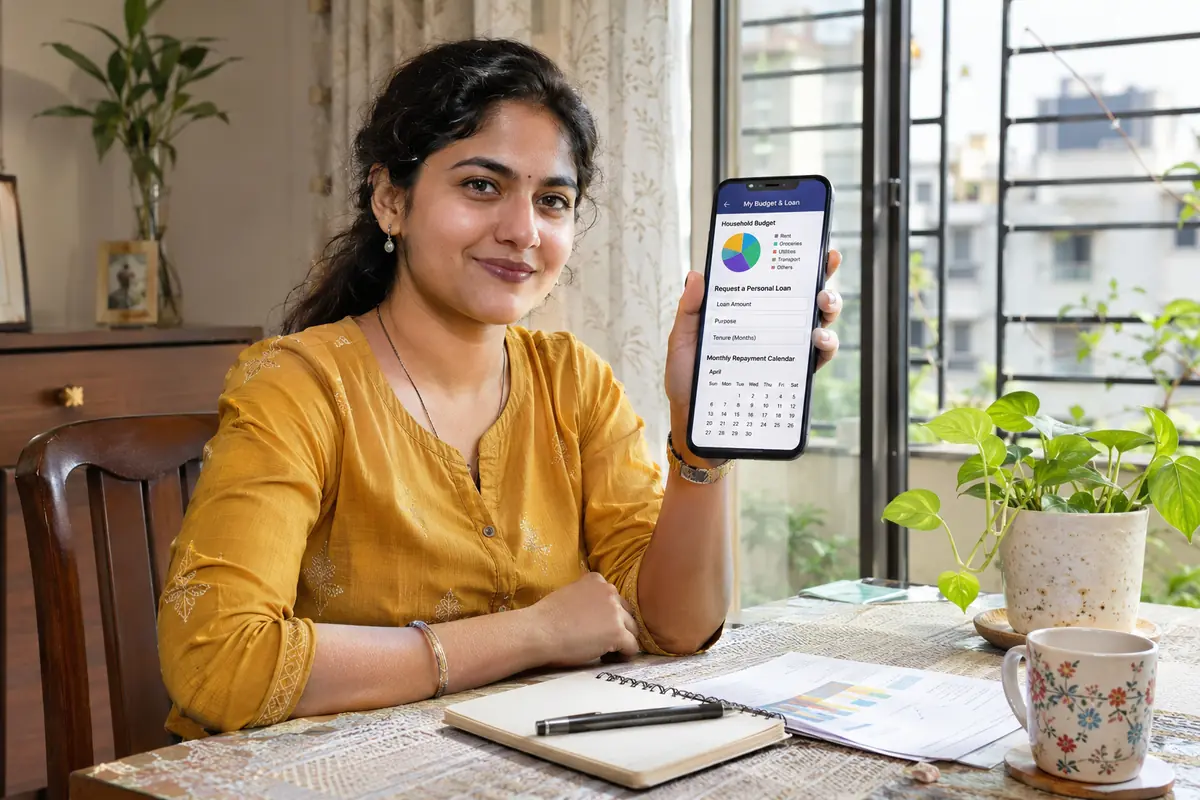
Ghaziabad P2P loan apps online India are digital platforms through which people in this Uttar Pradesh city, part of the Delhi National Capital Region, lend to or borrow from other individuals without a bank as the direct lender. In Ghaziabad, only NBFC-P2P companies holding an RBI registration may run such a marketplace. They verify users, grade borrowers, list requests and pass instalments to the lenders who funded them, who bear any default loss. Commuters, factory workers, shopkeepers and flat owners in Ghaziabad use them for short, fixed-instalment loans.
A satellite city of the national capital
Ghaziabad lies east of Delhi across the Yamuna and Hindon rivers and is one of the largest urban centres of western Uttar Pradesh. Sahibabad, Loni, Vaishali, Indirapuram and Raj Nagar Extension are among its well-known localities.
The city has a long industrial history, with iron and steel, engineering goods, electrical products and packaging units in Sahibabad and Meerut Road, and a dense belt of high-rise housing for people who work in Delhi, Noida and Gurugram. The Delhi Metro extension, suburban rail and the expressways make a daily commute across the state border routine.
Who borrows and who lends
Many different earners meet in this city:
- Commuters whose employers pay late or in instalments.
- Workers in small factories who face sudden family expenses.
- Shopkeepers and wholesalers in markets who need stock finance.
- Young professionals paying rent deposits and moving costs in new housing societies.
Lenders include salaried residents of the larger societies, retired officials and professionals who want to put small amounts to work. A common approach, especially among first-time lenders, is to lend small sums to many borrowers, which limits the damage from any single default. Reinvesting repayments gradually, instead of all at once, also smooths the effect of late payments.
Registration, grading and funding
A user registers with a mobile number and completes electronic KYC using PAN and Aadhaar. A bank account is linked to receive or send money, and the app usually shows the interest rate, fees and schedule before the user confirms.
Borrowers state the sum and tenure and share salary or bank statements. The platform builds a profile, assigns a grade and exposes the request to lenders who fund portions of it, often within a few days. When full, the amount reaches the borrower, and each instalment is later divided among all lenders.
Hindi is the main language, with English widely used in offices and Urdu and Punjabi heard in several neighbourhoods. A platform that supplies Hindi documents helps first-time borrowers understand charges.
Regulatory ceilings
The RBI framework applies identically to a resident of Ghaziabad and a resident of any other city.
- A lender's total exposure across platforms is capped at Rs 50 lakh.
- One borrower's total outstanding across platforms is capped at Rs 10 lakh.
- A lender can place at most Rs 50,000 with the same borrower across platforms.
- Loan maturity can run to 36 months at most.
The platform cannot lend its own funds, guarantee repayment or offer assured returns. Limits of this kind restrict concentration but cannot stop a borrower from missing payments.
Interest-free community arrangements
The Muslim community in places such as Loni and parts of the older city, along with several other groups, keeps alive customs of lending without interest. Such help flows mostly through mosques, charitable funds, cooperatives and trusted circles, not through registered P2P apps.
In Qard Hasan, the borrower repays the amount received and the lender expects no fixed return. Some cooperatives levy a clearly stated service fee. Murabaha and Ijarah are sale and lease structures with a profit or rental element, which is a different matter.
A sound practice is to write down the amount, the due date and the person holding the money, and to ask about any administrative charge before agreeing.
Checking an app before trusting it
Residents of the NCR see a large number of lending ads, so scrutiny matters. Useful steps include:
- Matching the company name with the RBI list of NBFC-P2P entities.
- Locating the grievance officer and a registered address.
- Reading all fees, including penalty and early closure charges.
- Refusing to pay any fee in advance to receive a loan.
- Declining access to contacts, files and photographs that the loan does not need.
Abusive collection practices, including calls to relatives or colleagues, are unlawful, and screenshots of messages and call logs help any complaint. Complain to the platform first, then to the police or the RBI complaint channels.
Fitting instalments into a commuter budget
Households in the city often carry rent or a home loan, transport costs and school fees. Before borrowing, add up every fixed obligation and see what remains.
Total instalments should stay well under half of take-home pay, and a small cash reserve avoids borrowing again when something unexpected arrives. Auto-debit set for a date after salary credit lowers the risk of delay, and a calendar reminder a few days earlier helps keep the account funded.
Lenders should expect that some loans will be late. They can protect themselves by diversifying across grades and amounts, reinvesting slowly and leaving out money they might need soon. This text is general information, not personal advice or a loan offer.
Questions worth answering before accepting
Before pressing accept, a borrower should know the annual rate, the total amount repayable, the number and dates of instalments, and every charge for delay or early closure. It also helps to check whether any fee is deducted from the sum disbursed, because the money received can then be smaller than the amount of the loan.
If something is unclear, waiting costs nothing. Discussing the figures with a family member or a colleague who has borrowed before is a useful second check, especially in housing societies where neighbours often share experiences of lenders and apps.
Common reasons for small loans
Requests from Ghaziabad frequently cover medical bills, school and coaching fees, vehicle repairs for people who drive to work, festival stock for shops, and short bridges while a client or employer is slow to pay.
Rates on peer platforms are usually higher than bank rates because lenders accept credit risk. A borrower with access to a bank, a credit society or a salary advance should compare those first, and use a peer app only for a real need and only when the total repayable amount is acceptable.
Frequently asked questions
Are Ghaziabad P2P loan apps the same as instant loan apps?
Not necessarily. Genuine P2P platforms are NBFC-P2P companies registered with the RBI that connect lenders and borrowers. Many instant-loan apps are different businesses, and some are unregistered, so residents should verify the legal entity before sharing documents.
What happens if a borrower misses a payment?
Late fees may apply, the credit record can suffer, and the platform may follow its collection process within the law. Harassment is not permitted. A borrower expecting trouble should contact the platform early, since lenders and platforms often prefer rescheduling.
Can a Ghaziabad resident be both lender and borrower?
Many platforms allow a user to hold separate lender and borrower roles, subject to their rules and verification. The RBI limits still apply, and a person should make sure that lending money and owing money at the same time is financially sensible.
Further reading
- LenDenClub : LenDenClub is an RBI-registered NBFC-P2P lending platform, so Ghaziabad readers can see how a registered operator grades borrowers and distributes repayments to lenders.