
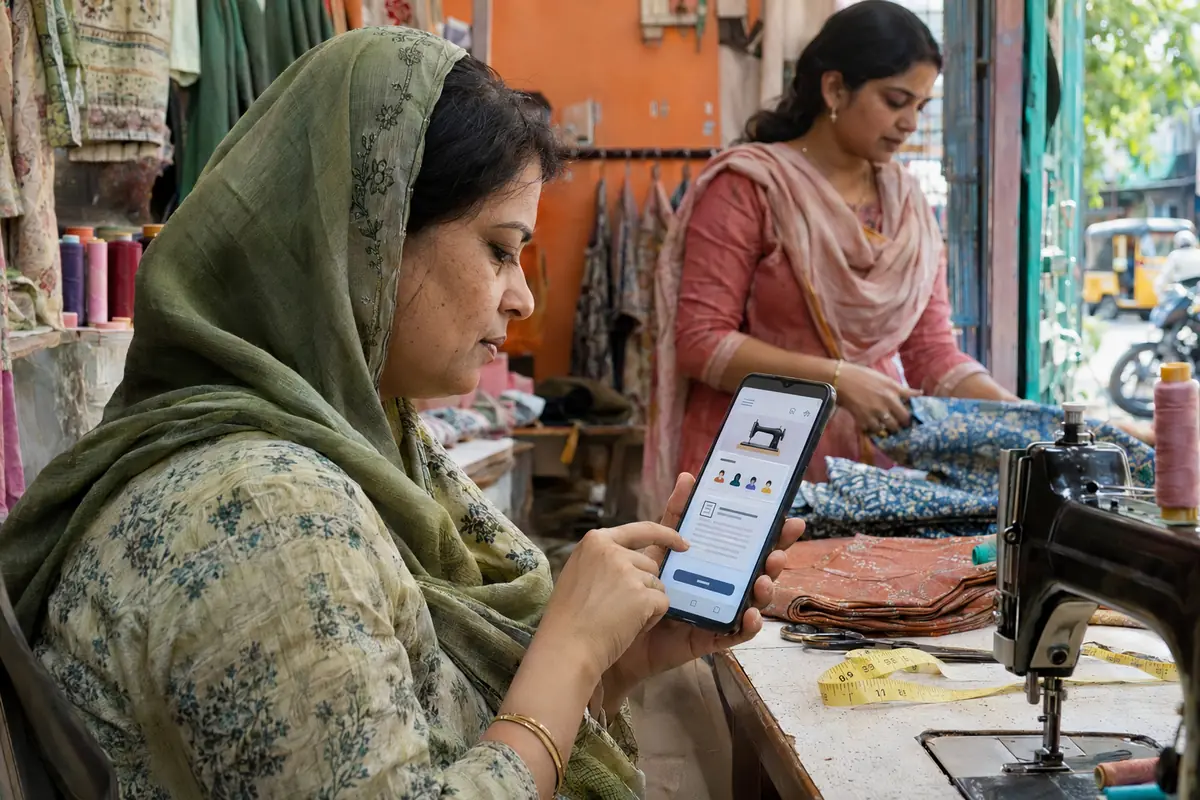
Nashik P2P loan apps online in India let residents of the Maharashtra city arrange small loans directly with individual lenders through a registered intermediary. The platform, licensed by the Reserve Bank of India as an NBFC-P2P, verifies participants, publishes loan requests, routes repayments and keeps records, yet it never lends from its own funds or guarantees returns. Farmers, factory employees, shopkeepers and professionals use such apps for short-term needs, and every user must weigh interest cost, repayment duty and the real possibility of default.
A city of grapes, onions and factories
Nashik sits on the Godavari in north Maharashtra and has an unusually mixed economy. The surrounding district is famous for grapes, and the wine industry grew from those vineyards. Onions traded through the Lasalgaon market help set prices far beyond the state.
Inside the city, industrial estates at Ambad and Satpur host engineering, electrical and auto-component units, while defence manufacturing and the currency press add stable public-sector employment. Pilgrim traffic to Panchavati and nearby Trimbakeshwar supports hotels, priests and small vendors, with the Kumbh Mela bringing exceptional crowds.
Why farm and factory incomes create borrowing needs
Agricultural income arrives in lumps. A grape grower pays for pruning, spraying, labour and packing long before the fruit is sold, and a bad price or weather shock can leave a gap. An onion trader may wait days for payment from a distant buyer.
Factory suppliers face a similar squeeze: raw material is bought up front and the invoice is cleared later. Peer-to-peer platforms are one way to bridge such gaps for modest amounts. They are unsuited to large capital projects, because the borrower cap across all platforms is only Rs 10 lakh.
How a registered platform works for a Nashik resident
- Download the app and register with mobile number, PAN and Aadhaar-based KYC.
- Link a bank account in the borrower's own name.
- Enter the amount, purpose and repayment period, then wait for assessment.
- Lenders review the listing and commit money in parts.
- Instalments are collected through the platform and passed on to lenders.
Marathi is the everyday language, with Hindi and English widely used in business. An app with Marathi support or a responsive helpline reduces the risk of misreading terms. The city's closeness to Mumbai and Pune also means many young professionals commute or work remotely, and they form a steady pool of both borrowers and lenders.
Regulation and what it does not promise
Every NBFC-P2P must hold a Certificate of Registration from the RBI. The central bank limits a lender to Rs 50 lakh across platforms, caps a lender's exposure to a single borrower at Rs 50,000, restricts a borrower's total outstanding to Rs 10 lakh and fixes the longest maturity at 36 months.
None of this makes a loan safe. The platform may not guarantee repayment or promise assured returns, so a lender in Nashik can lose part or all of the money. Spreading small amounts over many borrowers is the usual way to limit that exposure, though it never removes it.
Interest-free routes in the Nashik area
Muslim families in Nashik, as elsewhere, often prefer finance without interest. A true Qard Hasan, also called Qarz-e-Hasana, asks the borrower to return only what was received.
- Mosque committees and charitable trusts sometimes run small benevolent funds.
- Cooperative societies may charge a fixed service fee instead of interest.
- Murabaha involves a disclosed profit margin on goods, and Ijarah involves rent, so neither is a plain benevolent loan.
These systems are community-based, not NBFC-P2P apps under RBI registration. Terms should be written down, and the identity of the lending body should be confirmed.
Typical borrower and lender profiles
Borrowers in the city range from a Satpur machinist with a medical expense to a shop owner near Dwarka circle who wants to refill stock before Ganeshotsav and Diwali. Wine-tourism operators and homestay owners around the vineyards also borrow in small tranches before the visitor months.
Lenders are often engineers, doctors, teachers and retired government staff who hold savings beyond immediate needs. A cautious lender builds a list of many borrowers, funds each with a small sum and reinvests only what has actually been repaid. Treating the return as uncertain, never as a fixed deposit, is the right mindset.
Costs, fees and the true price of a loan
Interest is not the only charge. Processing fees, convenience fees and late-payment penalties can change the effective cost sharply, particularly on a short loan.
- Ask for the annualised cost, not only the monthly rate.
- Check how much reaches the bank account after fee deductions.
- Confirm whether part-payment or early closure is permitted.
- Read what happens after a missed instalment, including any recovery process.
Comparing two or three registered platforms on these points takes little time and prevents expensive surprises later.
Online lending versus the informal market
Nashik has a long tradition of private lending among traders, agents and commission dealers in the produce markets. Money can be arranged quickly on a handshake, but the rate and the recovery methods are often unclear and records may not exist.
A regulated app replaces the handshake with identity checks, written terms and a complaint route. It will not suit every need, and approval is not guaranteed, yet the paper trail protects both sides. Anyone who must use informal credit should still write down the amount, the date and the repayment plan.
Checks that protect borrowers and lenders
Predatory apps target people who need cash quickly. Before installing one, a Nashik resident should look for the registered company name, a physical address and a visible grievance contact.
- Avoid apps that demand access to contact lists or gallery.
- Treat promises of guaranteed profit as a warning sign.
- Never pay an advance fee to release a loan.
- Keep screenshots of the agreement, fees and repayment dates.
Information in this text is general and does not amount to personal advice or a loan offer.
Planning repayment around the farm and market calendar
A borrower tied to the grape season should match instalments with the months when sales money arrives, rather than with the months of heavy spending. Salaried workers should keep the total of all instalments within a comfortable share of take-home pay.
Missing instalments damages credit records and can bring recovery calls. Lenders should record each payment received and avoid putting savings needed for emergencies into any peer-to-peer listing.
Festivals matter here: spending around Ganeshotsav, Diwali and the Kumbh years can tempt households to borrow for consumption. A short written budget before applying helps separate a genuine need from a passing wish, and keeps the total debt within what monthly income can carry.
Frequently asked questions
Is it safe to use a P2P loan app in Nashik?
It is safer when the platform is registered with the RBI as an NBFC-P2P and has clear terms, but no loan is risk-free. Lenders may lose money on defaults, and borrowers should avoid unregistered apps and advance-fee demands.
Can farmers in Nashik district borrow through P2P apps?
Yes, if they meet the platform's KYC and income checks. Because the borrower cap is Rs 10 lakh across platforms and loans run up to 36 months, these apps suit short working-capital needs, not large farm investments.
Do Islamic interest-free loans exist on these apps?
Mainstream RBI-registered P2P apps lend on interest. Genuine Qard Hasan, which returns only principal, is mostly offered through community, charitable or cooperative systems, some of which charge a fixed service fee, and should be confirmed in writing.
Further reading
- Lendbox : Lendbox is an NBFC-P2P lending platform, and its public pages show how registered matching of borrowers and lenders is structured, which helps Nashik readers compare legitimate options.