
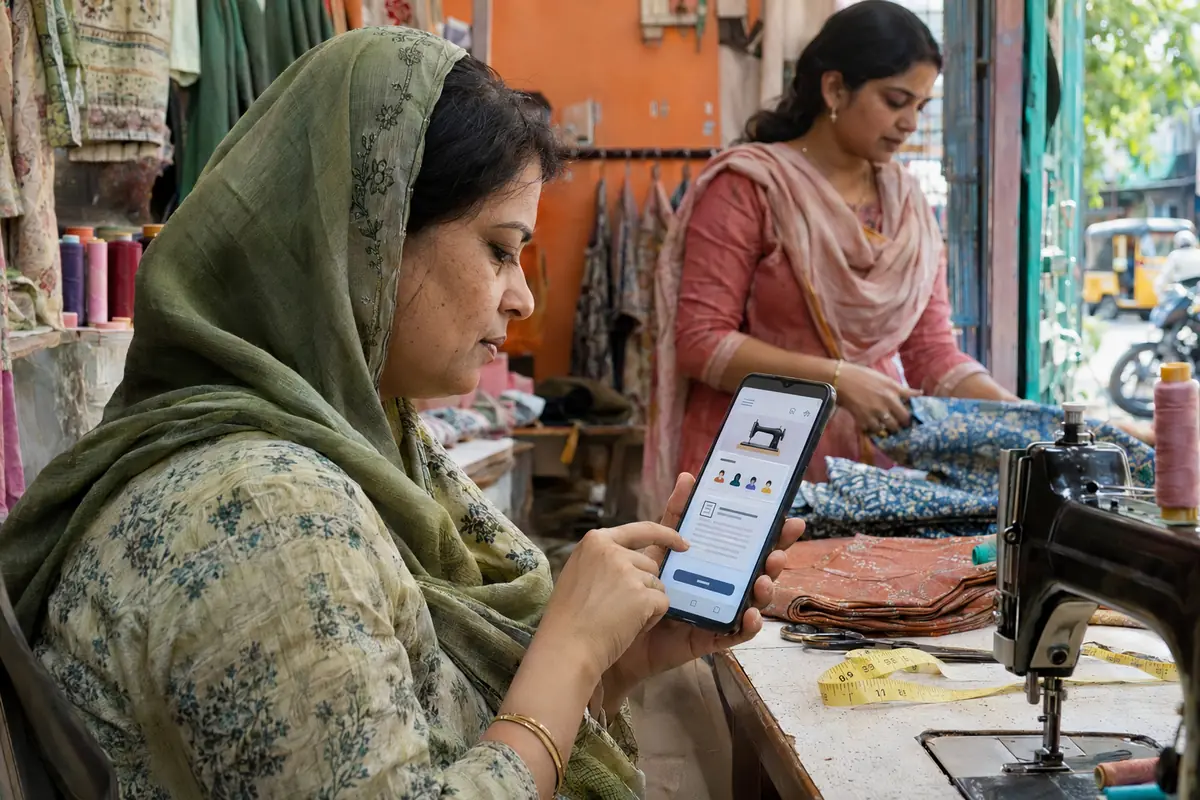
Madurai P2P loan apps online India are internet platforms that connect people in the temple city of Tamil Nadu who want to lend money with residents who need a loan, without a bank standing in the middle. In India such platforms must be NBFC-P2P entities holding a Certificate of Registration from the Reserve Bank of India. They list borrowers, collect funds from individual lenders and handle repayments, but they cannot lend from their own balance sheet or promise any return. Residents of Madurai use them for small business needs, household expenses and short-term gaps.
Madurai and the people who borrow here
Madurai sits on the Vaigai river in southern Tamil Nadu and has long been a centre of trade around the Meenakshi Amman temple. Streets near the temple are packed with small shops selling flowers, brass goods, textiles and everyday items, and the city is known for Sungudi sarees and a busy jasmine market.
Many working people here are self-employed or run family businesses. Their income often follows festival seasons and temple crowds, so cash flow can swing from one month to the next. That pattern explains why short, flexible loans attract interest in the city.
The wider region around Madurai also feeds the market: farmers, transport operators and small workshop owners from nearby towns visit the city for banking, healthcare and education, and some of them look at online credit when a bank branch visit would take too long.
How an NBFC-P2P app works for a resident
A registered platform acts as a marketplace. A borrower completes identity verification, shares income details and submits a loan request. The platform assesses the profile, assigns a risk grade and lists the request. Lenders choose how much to place and with whom.
- Register with a mobile number and complete KYC using Aadhaar-based or other accepted documents.
- Borrowers receive offers; lenders browse listings.
- Funds move through a regulated escrow-style arrangement, and repayments are collected on schedule.
Tamil is widely used in Madurai, so check whether the app terms are available in a language you read comfortably before accepting them.
Limits set by the RBI
The RBI framework for NBFC-P2P platforms places firm caps on how much one person can lend or borrow through these apps.
- A lender can place at most Rs 50 lakh in total across all platforms.
- A borrower can have at most Rs 10 lakh outstanding across all platforms.
- Loan maturity cannot exceed 36 months.
A platform also cannot guarantee repayment or advertise assured returns. These limits spread exposure, yet they do not remove credit risk: a borrower may still pay late or default, and a lender can lose part of the money placed.
Typical lenders and borrowers
Borrowers in Madurai commonly include shopkeepers needing stock before a festival, weavers and small textile traders waiting for buyers to pay, salaried staff from hospitals and colleges facing an unexpected bill, and young professionals consolidating small debts.
Lenders tend to be salaried residents, retired people and traders who want to diversify beyond fixed deposits. Spreading small amounts across many borrowers is a standard way to reduce the damage if one loan fails. Anyone lending should be ready to lose some capital, and should never commit money needed for rent, fees or medical costs.
Interest-free options in the community
Not everyone in Madurai wants an interest-bearing loan. Many residents prefer arrangements based on Islamic principles or on simple mutual help. A genuine Qard Hasan, also called Qarz-e-Hasana, means the borrower repays only the principal and the lender expects no predetermined return.
Murabaha and Ijarah are different: they include a profit margin or a rental element, so they are not interest-free in the strict sense. Most interest-free options in India run through community, charitable or cooperative systems rather than RBI-registered NBFC-P2P apps, so ask clearly who is responsible, how records are kept and what happens if repayment is delayed.
Checks before you use any app
Fraudulent loan apps copy the look of genuine ones, so verify before sharing documents.
- Confirm the legal entity name and its RBI Certificate of Registration as an NBFC-P2P.
- Be suspicious of any app that promises guaranteed returns or instant approval without checks.
- Read the fee schedule, processing charges and late-payment terms before accepting an offer.
- Never grant access to your contacts, photos or messages that the loan does not require.
- Keep copies of every agreement and payment receipt.
Anyone facing harassment from a lender or collection agent can complain to the platform's grievance officer and, if unresolved, to the RBI.
Worked examples from daily life
A sari trader near the temple streets needs working capital for the weeks before a major festival. She applies for a short loan, receives an offer after verification and repays in monthly instalments once customers settle their bills.
A hospital technician faces a sudden dental or repair bill and prefers a small loan to selling savings. A retired teacher with spare funds instead places small sums with several verified borrowers and tracks each repayment in the app dashboard.
In each case the useful habit is the same: borrow only what the income can carry and lend only what can be lost without hardship.
Questions worth asking the platform
Before committing money, put a few direct questions to the platform and keep the answers in writing.
- Which RBI registration number does the company hold, and under what legal name?
- How are borrowers screened, and what happens when a loan turns overdue?
- Which charges apply to borrowers and lenders, and when are they deducted?
- How can funds be withdrawn, and how long does that take?
- Who handles complaints, and in which languages can they respond?
Staying disciplined with repayment
A loan is easier to manage when the instalment fits comfortably inside monthly income. In a city where earnings rise around festivals and dip afterwards, a borrower should plan repayments on the quieter months, not only the busy ones.
Set an automatic reminder a few days before each due date, keep a small buffer in the linked account and speak to the platform early if trouble is coming. Missing payments can damage a credit record and add penalty charges. The information given here is general and does not replace personal advice or constitute a loan offer.
Frequently asked questions
Are P2P loan apps legal in Madurai?
Yes, when the platform is an NBFC-P2P registered with the Reserve Bank of India. The same national rules apply in Madurai as elsewhere in India, so residents should confirm the registration certificate before registering or sharing documents.
How much can a lender put into one Madurai borrower?
Under the RBI framework, one lender's exposure to the same borrower across all platforms is capped at Rs 50,000, and total lending across platforms is capped at Rs 50 lakh. Spreading money over several borrowers reduces risk.
Is there an interest-free alternative to a P2P app?
In Madurai, Qard Hasan arrangements, where only the principal is repaid, exist in community, charitable and cooperative settings. They are generally not RBI-registered NBFC-P2P apps, so borrowers should check who runs the scheme and how disputes are handled.
Further reading
- Lendbox : Lendbox is an NBFC-P2P lending platform, useful for seeing how registered platforms present borrower listings, risk grades and lender terms to residents of Madurai.