
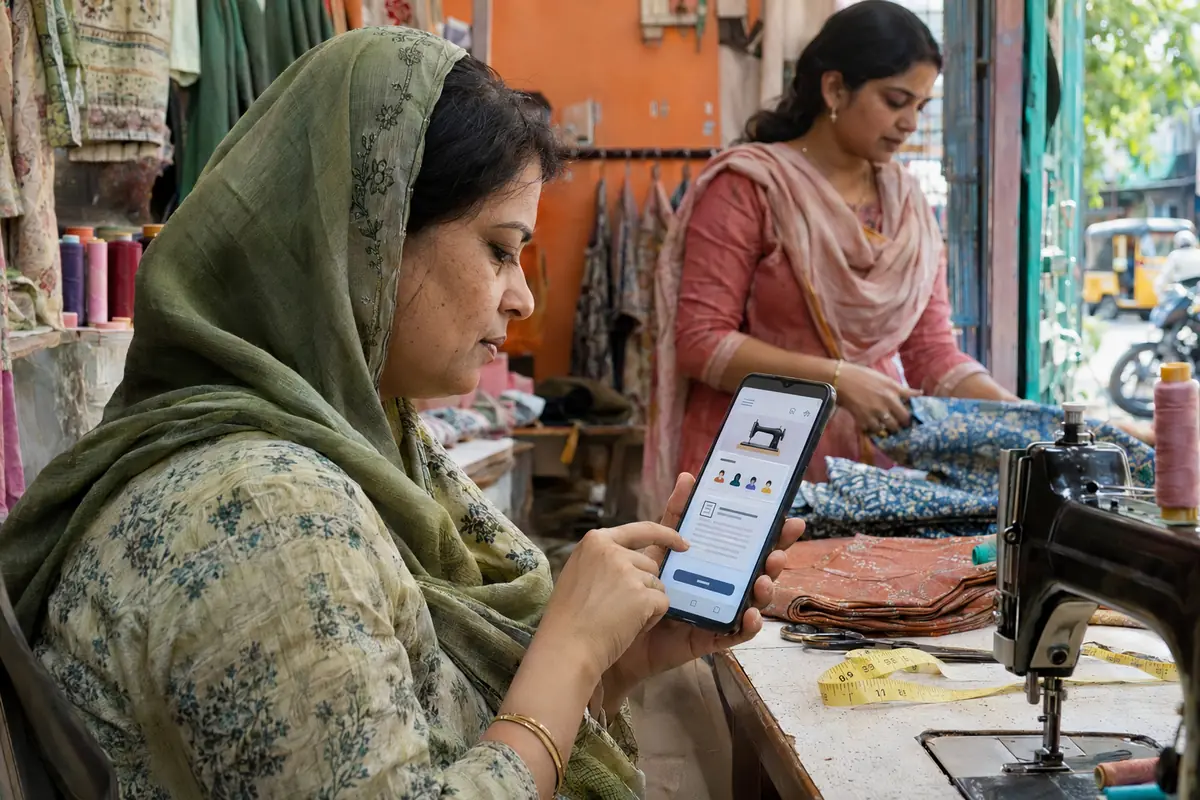
Hyderabad P2P loan apps online India are digital services that let residents of the Telangana capital lend to, or borrow from, other individuals through a registered intermediary. The intermediary is an NBFC-P2P company holding a Certificate of Registration from the Reserve Bank of India. It checks identity, lists loan requests, collects instalments and forwards them to lenders, but it never lends from its own funds and cannot guarantee repayment. Every lender therefore accepts that a borrower may pay late or not at all. It is information only and not an offer of any loan.
The city behind the platforms
Hyderabad is the capital of Telangana and a major centre for information technology, pharmaceuticals, biotechnology and education. HITEC City and Gachibowli house large technology employers, while Genome Valley and the pharma clusters around the city add scientific and manufacturing jobs.
The old city is a different world. Around Charminar, Laad Bazaar and Begum Bazaar, pearls, bangles, textiles and spices are traded by families across generations, often on informal credit and personal trust.
This mix of a modern salaried class and a traditional trading class explains why peer lending interests so many residents: some want speed and convenience, others look for alternatives to bank paperwork.
Borrower and lender profiles
Borrowers in the city include young engineers new to the workforce, medical and nursing students, small traders who need stock before Ramzan or wedding seasons, and families facing hospital costs. Many come from districts across Telangana and Andhra Pradesh and relocate for work, so they may lack local guarantors.
Lenders are frequently mid-career professionals, doctors, chartered accountants and entrepreneurs who want to place modest amounts in many loans instead of a single deposit. Some are returnees from Gulf countries who have saved abroad and now live in the city.
Telugu and Urdu are the main local languages, with Hindi and English used on most apps, so a user can usually find an interface in a familiar tongue.
How regulated platforms handle a loan
After a user completes KYC, a borrower's request is assessed and shown to lenders. Lenders choose how much to offer, and an escrow account holds funds separate from the platform's own money. Instalments are collected from the borrower's bank account, and each lender receives a share.
The framework prohibits the platform from promising assured returns. It also sets lender and borrower ceilings: Rs 50 lakh aggregate lender exposure, Rs 50,000 per lender with one borrower, Rs 10 lakh aggregate borrowing per borrower and a 36-month maximum term. These apply across all platforms.
Residents should treat any app that ignores these limits as suspect.
Fraud patterns to avoid
Fraudsters in the region imitate genuine lenders using similar names, fake offices and social media pages. Typical tricks include asking for a processing fee before a loan is released, sending a link that installs a remote-access program, or flooding a borrower's contacts with abusive messages.
- Check the company's registration in the RBI list of NBFCs.
- Never share an OTP or install a screen-sharing tool for a lender.
- Do not pay money to unlock a promised loan.
- Keep a copy of every agreement.
- Report fraud on the national cybercrime helpline or portal.
This is general information and not personal financial advice.
Interest-free lending in Hyderabad's communities
The city has a large and long-established Muslim population, and areas such as Tolichowki, Mehdipatnam, Malakpet and the old city have many welfare organisations and trusts. Qard Hasan, sometimes written Qarz-e-Hasana, means that the borrower repays only the principal and the lender expects no fixed return.
Most such help is extended through masjid committees, charitable societies, cooperative groups and family circles, not through RBI-registered apps. Certain cooperatives charge a fixed service fee to cover costs, which is separate from interest on the sum lent. Murabaha and Ijarah transactions include a profit or rental element and should not be confused with pure loans.
Written terms and a named person in charge of funds are sensible in every case.
Managing repayment in daily life
Rent and school fees in the newer parts of the city have climbed with the growth of technology jobs, and a borrower can overextend quickly. Before accepting, it helps to write down monthly income, fixed costs and the instalment, and to confirm that the remainder is still enough for emergencies.
Automatic debit prevents accidental delays, and a small reserve can cover a month when pay arrives late. If repayment becomes impossible, speaking to the platform early may open the way to rescheduling.
Taking one loan to settle another increases the burden and should be avoided.
Tips for lenders who want to start small
A new lender can begin with a very small amount, observe how several instalments are paid and learn how the dashboard reports delays. Spreading the amount across many borrowers keeps one default from hurting too much, and the per-borrower cap of Rs 50,000 is a ceiling, not a target.
Gulf returnees and retirees especially should keep emergency funds outside peer lending, since money can stay locked for the full tenure. Interest received is taxable, so statements should be saved for the annual return.
Avoid agreeing to deals arranged through messaging groups, where none of the platform's safeguards apply.
Choosing between apps and other credit
A peer loan is one option among several. Salaried residents may qualify for a bank personal loan at a lower rate, gold loans are widely used in the city, and self-help groups and cooperatives serve smaller needs. Peer platforms mainly help people whom banks find difficult to score, such as the self-employed and new arrivals.
Comparing total cost is essential. The annual percentage rate on a peer loan may be higher than a bank rate because the borrower is judged riskier, and processing fees add to it. A borrower who can qualify for cheaper credit should usually prefer it.
Asking each provider for the full repayment schedule, in writing, makes comparison simple and avoids hidden charges.
Documents and onboarding in practice
Registration usually takes place on a phone. The user enters a mobile number, completes Aadhaar-based verification, uploads a PAN card and links a bank account in their own name. Borrowers may add income proof such as salary slips, bank statements or business records, and the platform may request a short video or selfie to confirm identity.
People who recently moved into Hyderabad should make sure the address on their documents matches where they live, because mismatches slow approval. Tenants often use a rental agreement as supporting proof.
Frequently asked questions
How do I know a Hyderabad P2P app is genuine?
Look for the company's legal name and its RBI Certificate of Registration as an NBFC-P2P, and check that it appears on the RBI list. Genuine platforms do not demand advance fees or access to your contacts and photographs.
Can a Hyderabad borrower take several P2P loans at once?
Yes, but total outstanding borrowing across all platforms is capped at Rs 10 lakh for one borrower. A person should also test whether combined instalments fit income, because late payment can damage the credit record.
Are there Sharia-compliant choices in the city?
Community Qard Hasan arrangements repay only the principal, but they usually run through trusts, cooperatives or family networks rather than RBI-registered apps. Murabaha and Ijarah involve profit or rent, so terms need careful reading.
Further reading
- Lendbox : Lendbox is an NBFC-P2P lending platform, which lets Hyderabad readers see how a regulated peer lending service explains loan listings, lender choices and repayment to its users.