
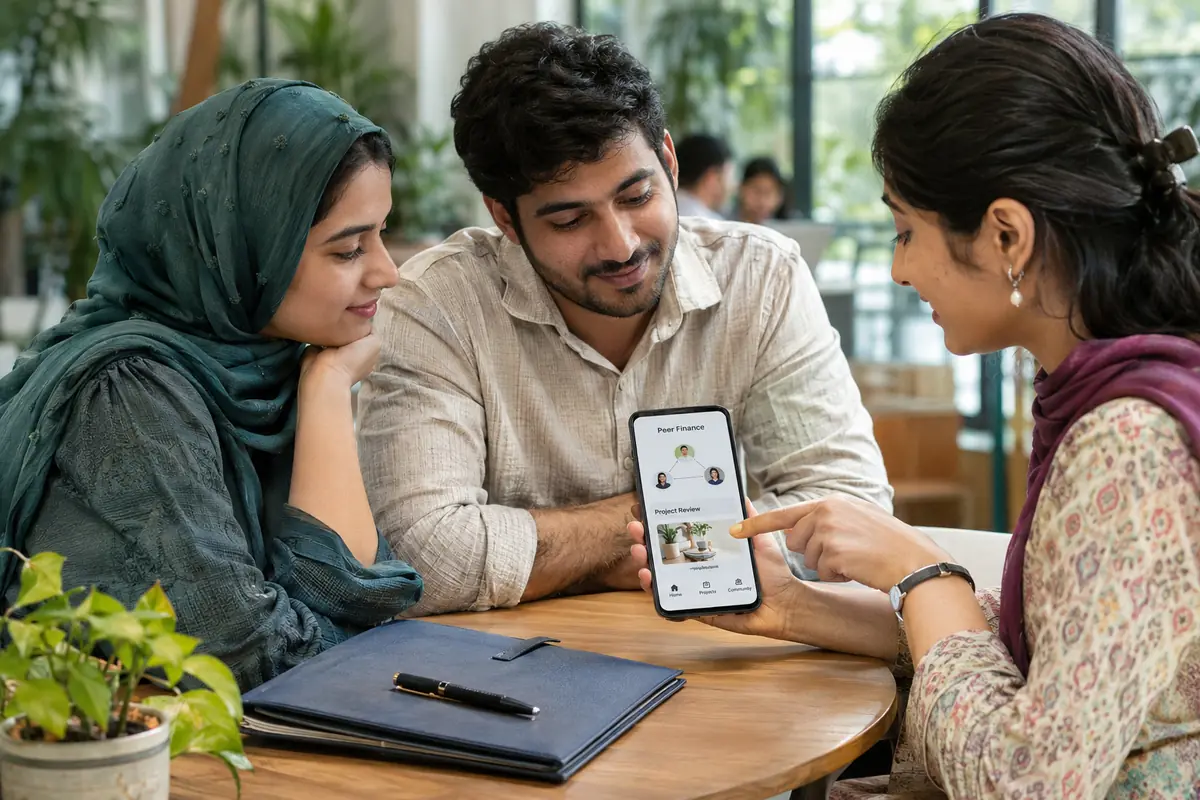
Varanasi P2P loan apps online India are mobile and web platforms that let residents of this Uttar Pradesh city borrow from, or lend to, other individuals without a bank in between. In India the model is regulated: only companies holding an RBI Certificate of Registration as an NBFC-P2P may operate, and they act purely as intermediaries. They match borrowers with lenders, handle onboarding, documentation and collection, but never lend from their own funds or promise returns. Users in Varanasi apply with Aadhaar-based identity checks, a bank account and income details.
Varanasi and its borrowing landscape
Varanasi, also called Kashi or Benares, sits on the Ganga in eastern Uttar Pradesh and is one of the oldest continuously inhabited cities in the world. Its economy rests on pilgrimage and tourism, silk and brocade weaving, carpets, small workshops, wholesale markets and Banaras Hindu University. This mix produces many self-employed people whose income rises and falls with festival seasons and visitor numbers.
That irregular income explains much of the interest in online peer lending. A boatman, a guesthouse owner, a weaver selling through traders or a shopkeeper near the ghats may find a bank loan slow to arrange, because documents and steady salary slips are missing. Online platforms promise faster, document-light processes, but they still apply credit checks and may decline thin-file applicants.
Hindi, Bhojpuri and Urdu are widely spoken, and many residents prefer apps with Hindi interfaces and phone support in the local language.
Mobile internet is now common even in the old lanes near the ghats, so a smartphone and a bank account linked to Aadhaar are often all that is needed to begin an application.
How regulated platforms work for city residents
A registered platform runs a marketplace. A borrower creates a profile, completes e-KYC and receives a risk grade based on credit history, income and repayment capacity. Lenders browse these profiles or choose automated allocation, then spread small amounts across many borrowers.
Funds move through escrow arrangements and bank accounts rather than through the platform itself. Repayments are collected in instalments and passed on to lenders. Under the RBI framework the maximum loan maturity is 36 months, so these loans suit short working-capital needs, medical bills or small purchases, not long projects.
Because disbursal and collection run through bank channels, the borrower normally repays by auto-debit or UPI to a designated account, and the lender receives a share of each instalment, not a lump sum at the end.
Residents should confirm the exact legal name of the company on the app and look for its RBI registration, because unregistered lending apps have caused serious harm in many Indian cities.
Typical borrowers in Kashi
The people who most often look at P2P apps in this city fall into several groups:
- Small traders and weavers who need stock or raw silk before a wedding or festival season.
- Students and young professionals linked to the university and coaching institutes who need short-term funds.
- Families facing a medical expense at one of the large hospitals that serve the wider region.
- Guesthouse and food-stall operators who want to repair premises before the busy months.
A pilgrim-season trader, for instance, may need money for only a few weeks, so the shortest suitable tenure keeps the total cost lower than a long loan repaid slowly.
Each group should compare the total repayment, including processing fees and late charges, with cheaper sources such as a bank, a cooperative or a family loan.
The lender side: lending small amounts across many borrowers
Lenders in Varanasi are usually salaried residents, professionals, retired people or traders with idle savings. The RBI limits protect them from concentration: a single lender may put no more than Rs 50,000 into the same borrower across platforms, and total lender exposure across all platforms is capped at Rs 50 lakh.
These caps reduce, but do not remove, credit risk. A platform cannot guarantee repayment or an assured return, and defaults do occur. Sensible lenders split small sums over many borrowers, avoid chasing the highest advertised rate and treat the money as capital that may be delayed.
Returns are also taxable income, so lenders should keep the statements that the platform issues.
A cautious approach for a first-time lender is to start with a very small sum, watch several months of actual repayments and only then decide whether the experience justifies adding more capital.
Interest-free options in a religiously plural city
Varanasi has a large Hindu majority and a sizeable Muslim community, notably among the weaving families of areas such as Madanpura and Lallapura. Within that community, interest-free help often travels through informal and charitable channels: relatives, neighbourhood committees, mosque-linked funds and cooperatives.
A genuine Qard Hasan, known locally as Qarz-e-Hasana, requires repayment of the principal only, with no predetermined return to the lender. Murabaha and Ijarah arrangements, by contrast, include a profit or rental element and should be understood as such.
Most of these options are community, charitable or cooperative systems. They are not RBI-registered NBFC-P2P apps, so the app protections described earlier do not automatically apply.
Safety checks before using any app
A short checklist helps residents avoid fraudulent apps:
- Verify the company name and RBI Certificate of Registration, not just the app store rating.
- Read the loan agreement, the repayment schedule and the penalty clauses before accepting.
- Be wary of any app that asks for access to contacts, photos or gallery, or that demands an advance fee.
- Refuse offers that guarantee approval or assured returns, because a genuine NBFC-P2P cannot promise them.
- Keep screenshots and payment receipts, and use only the registered bank account for transfers.
Complaints can be raised first with the platform's grievance officer and then with the RBI's complaint channels.
Repayment discipline and the borrower's limits
A borrower may have no more than Rs 10 lakh in total outstanding across all platforms. In practice, most people in Varanasi will need far less, and it is wise to borrow less than the level that makes the monthly instalment uncomfortable.
Missed instalments attract late fees and are reported to credit bureaus, which can make later borrowing from banks harder. Setting up an auto-debit from the salary or business account, and keeping a small buffer for slow months around the monsoon when tourism dips, helps avoid defaults.
This text is general information, not personal advice and not a loan offer.
Frequently asked questions
Are P2P lending apps legal in Varanasi?
Yes, when the platform is an NBFC-P2P holding an RBI Certificate of Registration. The same national rules apply in Varanasi as elsewhere in India. Apps without registration are not permitted to run a peer lending marketplace, so residents should verify the company before sharing documents.
How much can a Varanasi resident borrow through a P2P app?
A borrower's total outstanding across all platforms is capped at Rs 10 lakh, and loans run for at most 36 months. The amount actually approved depends on income, credit history and the platform's own risk assessment, and is often much smaller.
Is a P2P loan in Varanasi guaranteed for lenders?
No. A platform cannot lend from its own funds, guarantee repayment or promise assured returns. Lenders face real credit risk, which is why the RBI limits a single lender to Rs 50,000 per borrower across platforms and Rs 50 lakh overall.
Further reading
- Faircent : Faircent is a P2P lending marketplace operating as an RBI-registered NBFC-P2P, showing how a regulated platform onboards borrowers and lenders, which is useful for residents comparing legitimate apps.