
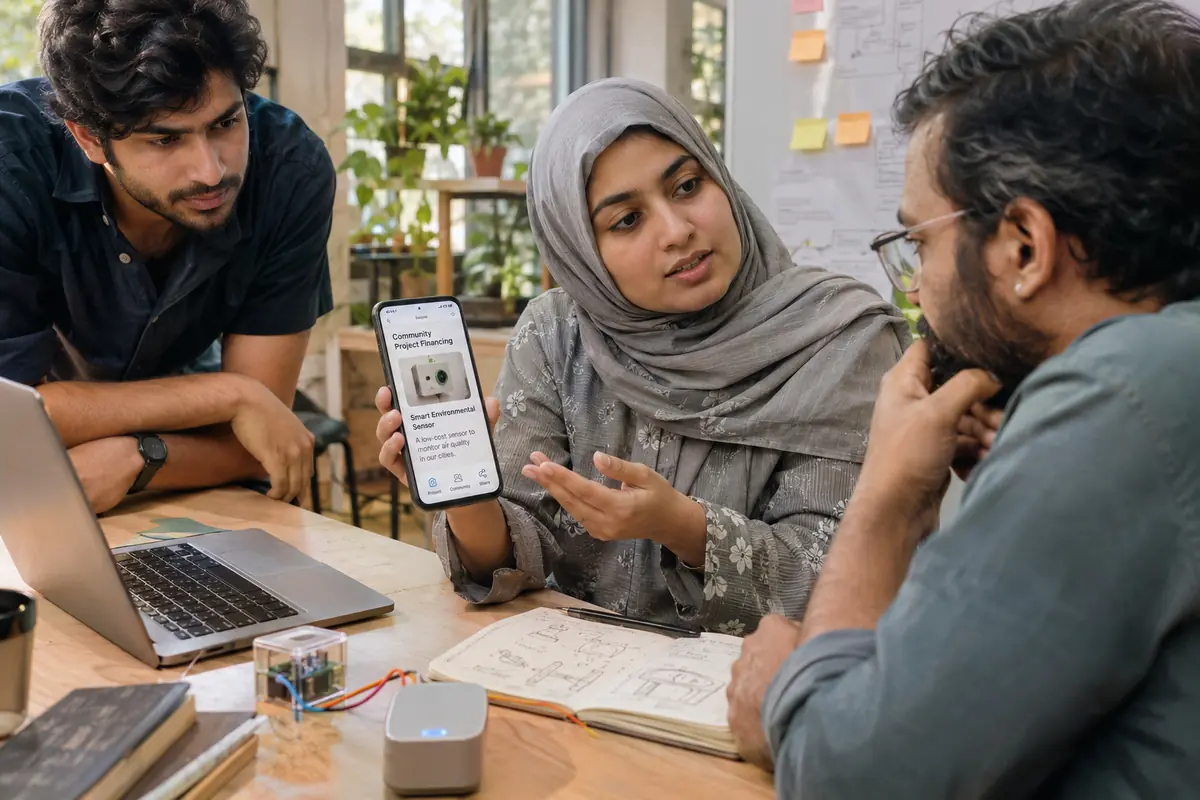
Kanpur P2P loan apps online India are digital lending marketplaces that let people in this industrial city of Uttar Pradesh borrow from or lend to other individuals without a bank branch. Lawful platforms are NBFC-P2P companies registered with the Reserve Bank of India. They publish requests, support lender choice, collect instalments and distribute them, but cannot lend from their own balance sheet or promise repayment. For workshop owners, traders and salaried families, they are an extra source of small, short loans carrying real default risk.
An industrial city with a long trading history
Kanpur on the banks of the Ganga was once called the Manchester of the East because of its cotton and woollen mills. Today its best-known sectors are leather and footwear, tanning around Jajmau, saddlery and other leather goods, chemicals, engineering and a large wholesale trade in textiles and general merchandise.
The city also hosts the Indian Institute of Technology Kanpur and several other educational institutions. The economy runs on thousands of small and medium workshops, each dependent on regular cash flow, and many of them lack the paperwork that banks request.
Rail and road links make the city a distribution point for much of central Uttar Pradesh, which sustains transport operators, warehouse owners and commission agents. Many of them run on advances and credit between traders, so cash tightness spreads quickly along the chain.
Working-capital needs of small units
A leather workshop buys hides and chemicals before it can sell finished goods. A garment unit may have to pay wages weekly while its buyer pays after thirty or sixty days. A retail trader in the busy bazaars stocks goods before a festival and waits for sales.
These gaps are usually temporary, and a short loan can bridge them. The danger is turning a temporary gap into permanent borrowing. A sensible borrower asks which invoice or sale will repay the loan and whether the date is firm. If the answer is vague, the loan is probably too risky.
Tanneries and finishing units also face compliance and equipment costs, and a small owner may need a lump sum to upgrade machinery or treatment equipment. Such borrowing is better planned against a known contract than taken in a panic after a payment is delayed.
A written record of orders and expected receipts helps both the borrower and the lender judge the request fairly.
Salaried workers and families
Beyond business, Kanpur has many employees of factories, defence-related establishments, banks and schools. They borrow for medical needs, home repairs, school fees or family functions.
For such uses a modest amount, a short tenure and a fixed day of repayment are best. The 36-month ceiling on loan maturity under the Reserve Bank framework is a limit, not a target, and a longer term only adds cost.
A factory worker whose employer pays late in a difficult quarter, a school teacher with an unexpected hospital bill, or a young graduate from the local institutions moving into a first job all show how everyday needs arise. Each should compare the full cost of repayment with monthly take-home pay before agreeing, and avoid stacking one loan on another.
How lenders participate
Lenders are often small business owners, professionals and retired employees with spare funds. A platform lets them browse loan requests and place small amounts across several borrowers.
Under the framework, the maximum placed by one lender with the same borrower across platforms is Rs 50,000, while total lender exposure across platforms is Rs 50 lakh. The platform cannot promise a return or promise that a borrower will pay. For this reason, lenders should assume some loss and should avoid putting in funds needed for medical bills, school fees or business expenses.
Local lenders sometimes know borrowers personally and are tempted to lend outside the platform on trust. Dealing only through the regulated channel keeps records, collection and legal identity clear, which protects both parties if a dispute arises.
The rules that every platform follows
An NBFC-P2P must hold a Certificate of Registration from the Reserve Bank of India and observe a tightly drawn set of limits.
- It cannot give a loan from its own funds.
- It cannot guarantee repayment or an assured yield.
- One borrower may have at most Rs 10 lakh outstanding across platforms.
- No loan may run beyond 36 months.
Because these rules come from the national regulator, they apply in Kanpur exactly as elsewhere.
Spotting unsafe apps
Kanpur, like every large city, sees fake loan apps that promise instant approval. Warning signs are consistent and easy to remember.
- An app that cannot show its registered legal name or registration status.
- A request for a fee or deposit before any money is released.
- Pressure to accept the offer within minutes.
- Permissions that read contacts, messages or photographs.
- Vague or missing terms for interest, charges and penalties.
Verify the company independently of the app, and keep a copy of every document you sign.
Another trap is the so-called loan agent who offers to arrange approval for a commission. Genuine platforms do not need such middlemen, and anyone who takes an advance fee should be treated with suspicion and reported.
Interest-free options within communities
Kanpur has several well-known Muslim neighbourhoods, and many residents seek finance that avoids a fixed interest charge. Such options generally exist as community, charitable or cooperative arrangements, not RBI-registered P2P apps.
A pure Qard Hasan, or Qarz-e-Hasana, returns principal only. A few cooperatives add a fixed service fee for expenses. Murabaha and Ijarah involve a profit or rental element. Before joining any scheme, a person should ask who administers it, how funds are held and what the terms are if a payment is missed, and may wish to consult a qualified scholar or adviser.
Language, documents and repayment
Hindi dominates daily business in Kanpur, with Urdu and English also used, and many apps present information in English. Verification generally requires Aadhaar-linked identity, PAN, a bank account and proof of earnings, and a small business may be asked for further business records.
Plan instalments around the dates when customers pay. A unit with uneven receipts should keep a reserve, and anyone expecting a delay should contact the platform before the due date. This text gives general information only and is neither personal advice nor a loan offer.
Keep agreements, receipts and screenshots together, so any dispute over an amount can be settled with a clear record.
Frequently asked questions
Can a small workshop in Kanpur borrow from a P2P app?
Possibly, if the platform is a registered NBFC-P2P and the owner passes its verification. Approval, amount and cost depend on the platform's assessment, and the loan must be repaid within the 36-month ceiling.
What is the borrowing ceiling on P2P platforms in India?
One borrower can have at most Rs 10 lakh outstanding across all platforms. Most loans are far smaller. A Kanpur borrower should ask for the amount that matches a specific need and repayment source, not the largest available.
How can a Kanpur lender reduce the risk of losses?
Spread small amounts across many borrowers, remember the Rs 50,000 limit per borrower across platforms, and lend only money not needed soon. Returns are never guaranteed, and defaults happen even on regulated platforms.
Further reading
- Lendbox : Lendbox is an NBFC-P2P lending platform, which gives Kanpur borrowers and lenders a regulated example of how loan requests are listed, funded and repaid.