
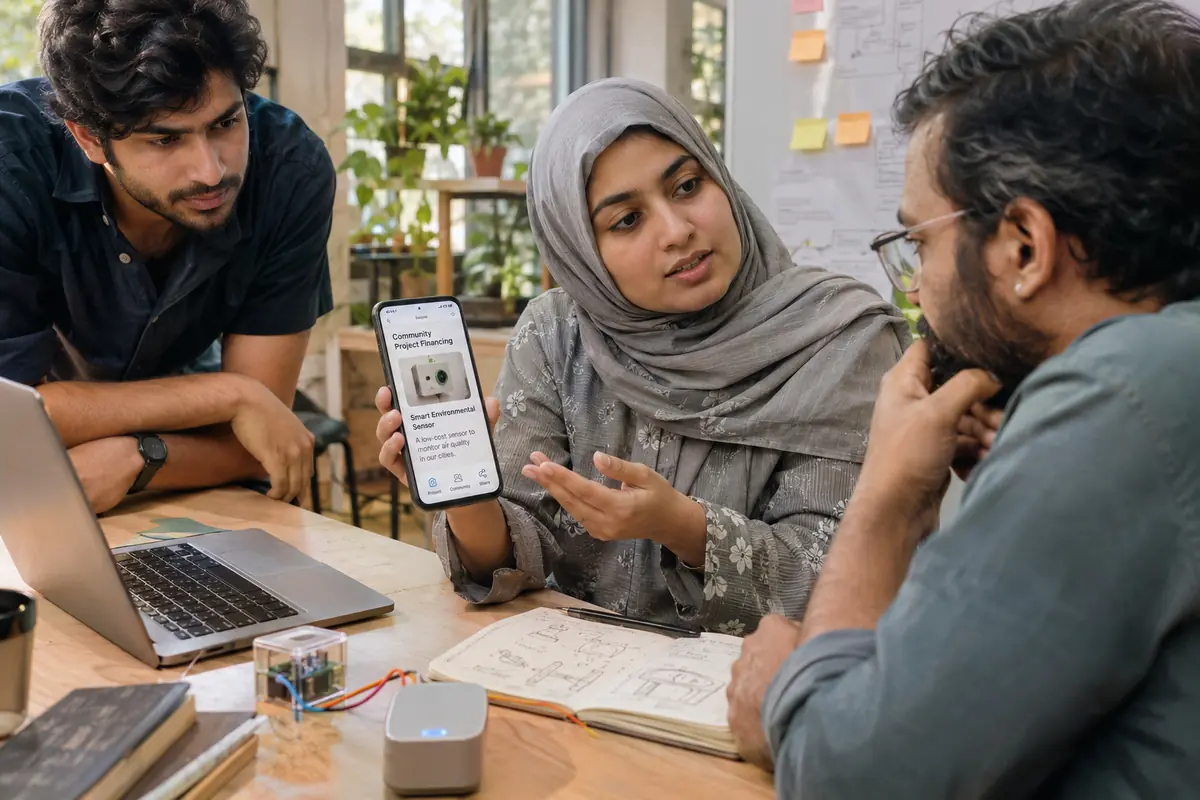
Vijayawada P2P loan apps online India are internet platforms that let people in this Andhra Pradesh city lend money to other individuals or request a personal loan funded by them. Each platform has to be an NBFC-P2P company holding Reserve Bank of India registration. It identifies users, lists loan requests, collects instalments and passes them on, yet it may not lend from its own balance sheet, guarantee repayment or advertise assured returns. Credit risk therefore stays with the lenders, and borrowers remain legally bound to repay.
Where the Krishna meets the trade routes
Vijayawada lies on the banks of the Krishna river beside the Prakasam Barrage and the Indrakeeladri hill, where the Kanaka Durga temple draws pilgrims throughout the year. Its railway junction connects the southern and eastern parts of the country, and the city has long acted as a commercial gateway for coastal Andhra.
That position produced a lively trading culture. Wholesale markets, transport operators, commission agents and small manufacturers form the backbone of local business, and many of them handle cash flows measured in days, not months.
Food and agriculture shape the surrounding region as well, with rice, chillies, mangoes and aquaculture products reaching the city's markets from the Krishna delta. Traders buy on credit from farmers and sell onward, so payment timing is a constant concern.
Industrial estates on the city's edge produce engineering goods and building materials, and the auto-nagar area is known for vehicle repair and body-building units. These workshops employ many skilled workers on modest wages.
Telugu-speaking customers and digital habits
Telugu is the main language, with English widely used in education and business and Urdu and Hindi spoken by sizeable communities. Mobile payment apps are common among traders and young residents, which makes digital lending feel familiar.
Familiarity is not the same as safety. A person who pays a vegetable seller through a phone is not automatically equipped to judge a loan agreement. Terms should be read in full, and when the platform only offers English or Hindi screens, a trusted relative or friend should help translate the important clauses.
Printed receipts, bank messages and platform statements together form the borrower's best protection if a figure is ever questioned.
Keep them organised by month.
Borrower groups in the city
Common borrowers include:
- wholesalers and retailers around the busy bazaar areas who buy stock on short credit;
- transport and logistics operators who must pay fuel and tolls before receiving freight payments;
- employees of private firms, hospitals and educational institutions with sudden family costs;
- students from the Krishna and Guntur districts who rent rooms while preparing for professional courses.
Each applicant is assessed on income, existing debts and repayment history. Honest disclosure of other loans speeds up the process and avoids rejection later.
Applicants should state the real purpose of the loan and avoid inflating income, because inconsistent details are a frequent reason for refusal.
Lenders and the exposure limits
Lenders in Vijayawada include business owners, professionals and retired employees who seek to place surplus savings in small portions. An individual's total exposure on all platforms may not exceed Rs 50 lakh, and no more than Rs 50,000 may go to the same borrower.
These ceilings encourage spreading money over many loans. They do not guarantee recovery. A lender should study the borrower's stated purpose, the term and the risk grade, and should keep some liquidity outside peer lending in case a family need arises. Returns can differ sharply from the numbers shown at the time of lending.
Another point deserves attention: a lender should record the date, amount and purpose of each commitment in a personal ledger, because platform dashboards can change and screenshots alone are fragile evidence.
How a regulated loan proceeds
- Choose a platform and check its registration on the regulator's list.
- Sign up and complete electronic KYC.
- Add a bank account in your own name.
- Browse requests as a lender, or post a request as a borrower.
- Confirm the terms and let the platform handle collections.
No loan may extend beyond 36 months, and a borrower may not have more than Rs 10 lakh outstanding across platforms. Prepayment rules and late fees vary, so they must be read before confirming.
Borrowers who are self-employed should expect more questions than salaried applicants, since income has to be inferred from bank entries, invoices and tax filings. Giving accurate information at the start avoids delays and later disputes.
Interest-free options in local communities
Muslim families in Vijayawada, as well as Christian and Hindu charitable groups, practise forms of mutual help in which no interest is charged. Qard Hasan, also known as Qarz-e-Hasana, is a loan where only the principal is returned and the lender expects no predetermined profit.
These arrangements are generally run by mosque committees, church funds, trusts and cooperatives, not by RBI-registered P2P platforms. A cooperative may charge a fixed service fee, and Murabaha or Ijarah deals include a profit or rental component. Anyone using such help should ask for written conditions and a clear record of what was borrowed and repaid.
Checking an app before trusting it
Weak regulation of unregistered apps has led to harassment and data misuse in many cities. Simple precautions help:
- match the app's operator to a company registered with the RBI;
- read the list of permissions requested at installation;
- avoid any app that asks for a fee before giving a loan;
- save agreements, call logs and screenshots;
- report threats to the platform's grievance officer and the cyber police.
A genuine platform never needs access to a user's contact list or gallery to approve a loan.
Cash flow, floods and sensible repayment
Low-lying neighbourhoods along the river and canals sometimes face heavy monsoon disruption, which can interrupt trade and transport work. Borrowers who rely on such income should keep a reserve and avoid stretching their budget to the limit.
A practical rule is to keep the monthly instalment well under the amount left after rent, food and other fixed costs. If trouble arises, contact the platform early and explain the situation. Lenders who stay calm and keep records are better placed to benefit from a platform's collection support than those who try to chase a borrower privately.
It also helps to build an emergency fund over time, even a small one. Many borrowers turn to loans because they have no reserve at all, and a reserve of a month or two of expenses reduces dependence on borrowing.
Frequently asked questions
Is it possible to lend to a Vijayawada borrower from another state?
Yes. Platforms operate across India, so a lender anywhere can fund a borrower in Vijayawada after completing KYC. The same RBI limits apply, including Rs 50,000 maximum exposure to one borrower and Rs 50 lakh overall.
What happens if a borrower in Vijayawada stops paying?
The platform follows its collection process, which may include reminders and recovery steps, but it cannot guarantee payment. The lender may recover only part of the amount or none, so lending should always be limited to money that can be spared.
Are interest-free loans offered by P2P apps in Vijayawada?
Registered P2P apps are commercial and do not normally offer interest-free loans. Genuine Qard Hasan help is available through some community, charitable and cooperative bodies, and each follows its own eligibility rules.
Further reading
- Faircent : Faircent runs a P2P lending marketplace as an RBI-registered NBFC-P2P, which shows Vijayawada residents how verified lenders and borrowers are matched online under regulation.