
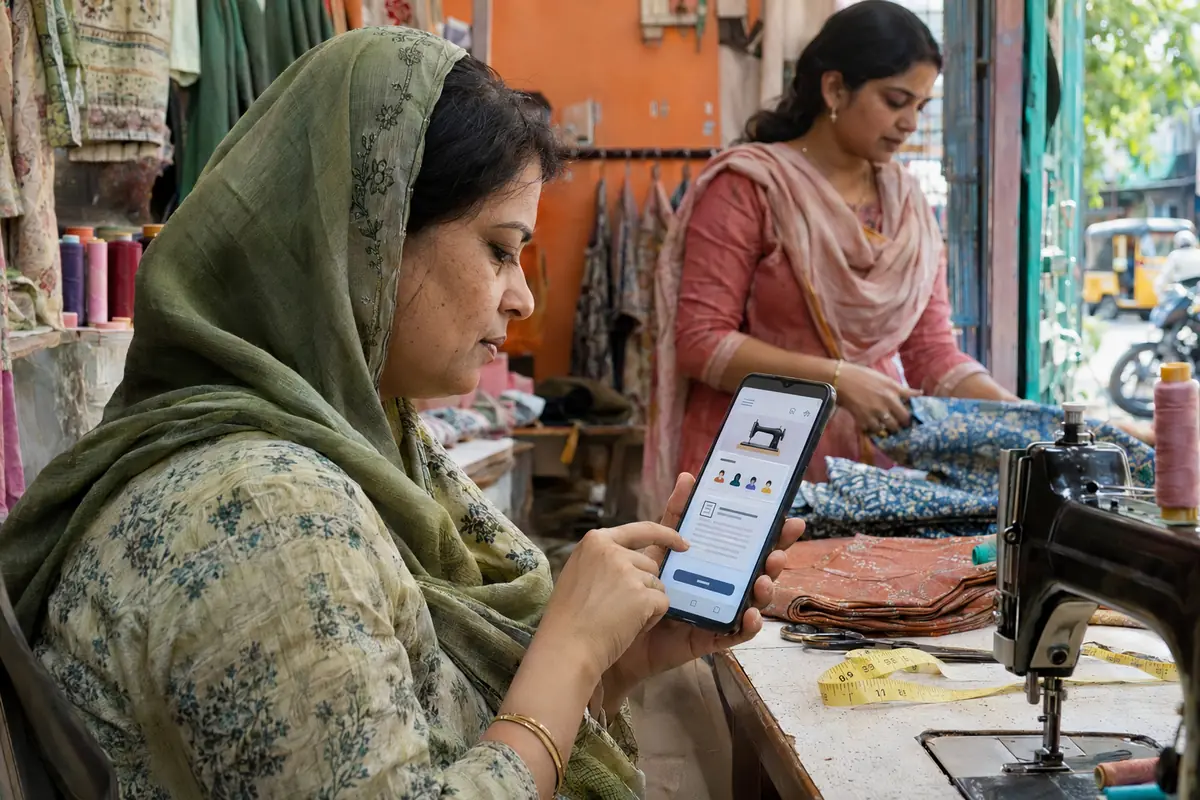
Amritsar P2P loan apps online India are internet platforms that let people in this Punjab city lend to or borrow from other individuals without a branch visit. Indian law permits the model only through NBFC-P2P companies holding an RBI Certificate of Registration, which serve purely as intermediaries. They verify users, match lenders and borrowers, and manage collections, but cannot lend their own money, guarantee repayment or promise returns. Residents normally need e-KYC through Aadhaar, a PAN, a bank account and a smartphone.
A border city built on trade and pilgrimage
Amritsar is home to the Golden Temple, Sri Harmandir Sahib, which draws pilgrims and tourists throughout the year, and to Jallianwala Bagh and the nearby Attari-Wagah border ceremony. Visitors support hotels, food stalls, transport operators and shops selling woollens, phulkari embroidery and the city's famed papad and wadi.
Beyond tourism, the city is a wholesale hub for textiles, dry fruit and agricultural produce, and it has a long record in carpet and shawl making. Punjabi is the main language, with Hindi and English widely understood.
The area's farm economy, based on wheat and paddy, links the city to arhtiyas, or commission agents, who traditionally extend informal credit to growers and shopkeepers.
The city also has a large community of drivers, truck operators and small manufacturers serving the Grand Trunk Road trade corridor towards Delhi, which keeps short-term working capital in constant demand.
Informal credit culture and the digital alternative
Punjab has a deep tradition of borrowing through commission agents, relatives and local financiers, often on verbal terms and at high effective rates. Peer lending apps offer a written, traceable alternative with a stated tenure and schedule.
That formality is a strength, but it does not make the loan cheap. Borrowers should compare the total cost with bank, cooperative and family sources, and read every clause about fees and late charges.
Both sides should treat a P2P app as a regulated marketplace and not as a friendly arrangement among acquaintances, since collection practices follow written rules.
A borrower who is used to flexible, face-to-face understandings may be surprised that a missed instalment triggers automatic fees and a credit report entry, so reminders and auto-debit are worth setting up from the first day.
It is also worth asking how the platform treats prepayment, since repaying early may save interest but sometimes carries a charge.
What the RBI framework requires
The central rules are straightforward:
- The platform must be a registered NBFC-P2P and cannot lend from its own funds.
- It cannot guarantee repayment or assure returns to lenders.
- Loans can run for at most 36 months.
- One borrower's outstanding across platforms is capped at Rs 10 lakh.
- A lender may place at most Rs 50,000 with the same borrower across platforms, and Rs 50 lakh in total.
Such limits reduce concentration but do not remove credit risk, and lenders should assume that some loans will be paid late or not at all.
Lenders can diversify across borrower grades, tenures and purposes, rather than placing everything in the highest-yielding bracket, which usually carries the highest default risk.
Typical borrowers and lenders in the city
Borrowers in Amritsar include shopkeepers in the old walled-city markets, small hotel and dhaba owners, drivers, textile and dry-fruit traders, students planning to study abroad and families paying for weddings, which in Punjab can involve large expenses.
Lenders are often business owners, professionals and non-resident families with relatives in the city who want a modest return and accept the associated risk. Because many Punjabi families have overseas connections, some lenders operate from abroad, and they should check the tax and foreign-exchange rules that apply to them.
Prospective borrowers headed overseas for study or work should be cautious: a loan taken to fund such a plan must still be repaid if the visa or job falls through.
Wedding loans deserve a similar warning, because a celebration lasts a day while the instalments last for months, and scaling the event to the family's real means is the safest form of risk control.
Interest-free and ethical options
Sikh tradition places weight on seva, honest earning and sharing, and gurdwara-linked and community bodies sometimes support families in hardship through grants or help in kind, often without interest. These are charitable or community arrangements and not regulated lending products.
The city also has a Muslim minority, and Islamic concepts are relevant for some residents. A genuine Qard Hasan, or Qarz-e-Hasana, requires only the principal to be repaid, with no predetermined return to the lender, though some cooperatives charge a fixed service fee.
Most interest-free routes in India are community, charitable or cooperative systems rather than RBI-registered NBFC-P2P apps, so a borrower should verify who operates the fund and what is written down.
Langar and other community kitchens ease the daily cost of food for many households, which frees up a little income, but they do not replace the need for a clear plan when a loan is taken.
Fraud signs and protective steps
Fake loan apps and agents prey on urgent need. Residents can protect themselves with simple habits:
- Check the RBI registration and exact company name.
- Pay nothing in advance to receive a loan.
- Refuse apps that ask for contact lists or photo access.
- Ignore promises of guaranteed approval or risk-free returns.
- Keep every agreement, receipt and message.
- Be careful with links sent through messaging apps, since cloned apps often arrive that way.
Complaints can go to the platform's grievance officer, then to the RBI, and threats or blackmail should be reported to the police or the national cybercrime portal.
Borrowing with discipline
Choose an instalment that can be met in a slow month, not just a good one. Punjab incomes often depend on crop sales, festival demand and tourist seasons, and the cash may arrive in lumps rather than evenly.
Avoid taking a second loan to repay the first. Delays can be reported to credit bureaus and make later bank loans more expensive.
Seasonal swings are real here: tourist numbers peak around festivals such as Vaisakhi and Diwali and thin out in the hottest weeks, so a hotel or shop owner should size any loan to the quieter months and not to the busiest ones.
A simple rule is to keep total monthly debt payments to a modest share of income, and to hold a small reserve for illness or a delayed payment from a customer.
This content is general information, not personal advice and not a loan offer.
Frequently asked questions
Are P2P loan apps allowed in Amritsar?
Yes, if the platform is a registered NBFC-P2P with an RBI Certificate of Registration. National rules apply equally in Punjab. Residents should verify the company name and registration before uploading identity documents or granting bank access.
Can non-resident Punjabis lend through Indian P2P apps?
Rules for non-resident lenders depend on foreign-exchange and tax regulations and on the platform's own policies. Anyone lending from abroad should check eligibility with the platform and a qualified adviser before sending money.
How is a P2P loan different from borrowing from a commission agent?
A registered platform uses written terms, an identified tenure, regulated limits and a grievance route, whereas informal agent credit may rest on verbal terms. A P2P loan can still be costly, so total charges need comparison.
Further reading
- Faircent : Faircent is a P2P lending marketplace operating as an RBI-registered NBFC-P2P, and its public pages explain how lenders and borrowers are matched, which helps Amritsar residents see how a regulated platform works.