
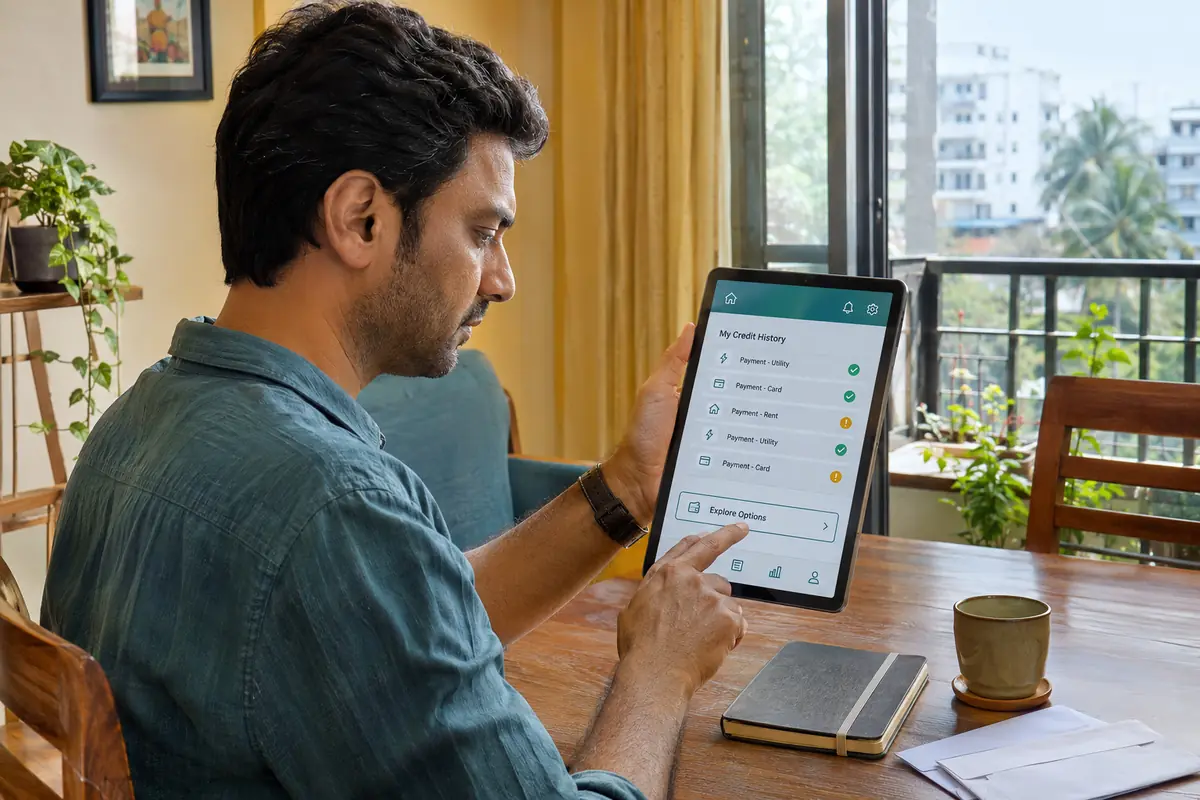
Solapur P2P loan apps online India are internet platforms through which residents of this Maharashtra city can lend money to other individuals or borrow from them without a conventional bank loan. In India such platforms must be NBFC-P2P companies registered with the Reserve Bank of India. They verify users, publish loan requests, collect instalments and pass repayments to lenders, yet they cannot lend from their own balance sheet or guarantee returns. Textile workers, traders and families in Solapur use them for small and short-term credit.
A textile city in southern Maharashtra
Solapur is best known for its textile industry, especially the Solapuri chaddar and towels woven in powerloom and handloom units. Beedi rolling has also been an old source of livelihood for many households. The city is an important rail and road junction between Maharashtra, Karnataka and Telangana, and the Siddheshwar temple and its lake are central to local life.
Marathi is the main language, while Kannada and Telugu are widely spoken within long-established communities, so lenders and borrowers often move between three languages.
The city has also developed a base of education and healthcare, with a university and several hospitals serving patients from the neighbouring districts, which adds a salaried layer to an economy that was long dominated by mills and workshops.
How credit needs arise in Solapur
Textile units buy yarn on credit and sell finished goods to wholesalers who may pay after weeks. This gap forces owners to find working capital repeatedly. Individual weavers face price swings, repairs to machines and delays in payment from agents.
The surrounding district depends on farming, including sugarcane and pomegranate orchards, so seasonal income in the nearby villages influences spending in the city markets. Residents sometimes need short bridging funds when a payment is late or when a family function falls before a harvest or a large order is paid.
For instance, a small weaver may need money to repair a loom before a festival rush, and a trader may need to pay a transporter before the buyer settles the invoice. Such needs are real, but they are short, which is exactly the situation a short P2P loan is designed for.
Using an NBFC-P2P app step by step
A registered platform behaves like a marketplace with rules.
- Install the app from an official store and register with your own mobile number.
- Complete KYC and link a bank account in your name.
- Borrowers submit a request, receive a risk grade and see the proposed terms.
- Lenders pick requests and amounts, and instalments are collected through the platform.
Charges may apply to borrowers, lenders or both. A weaver or trader should calculate the full cost of a loan, including fees, before accepting any offer.
Lenders should read the borrower summary, including stated purpose and risk grade, rather than choosing only by the advertised rate. A higher expected rate normally reflects a higher chance that the borrower will not repay.
Limits that protect both sides
The RBI framework applies to every user in Solapur in the same way.
Knowing the numbers before applying saves time, since an app can only list a request that fits within the regulatory framework and its own credit assessment.
- Lender exposure across all platforms: Rs 50 lakh maximum.
- Borrower outstanding across all platforms: Rs 10 lakh maximum.
- Lender exposure to the same borrower across platforms: Rs 50,000 maximum.
- Loan maturity: 36 months maximum.
No registered platform may offer assured returns or promise to repay lenders if a borrower defaults. The limits reduce concentration, but credit risk remains, and a lender should always expect that some repayments could be late or lost.
Borrowers should note that the Rs 10 lakh ceiling applies in total across platforms, so a person who already has loans elsewhere may find that a new request is limited or declined.
Who borrows and who lends
Borrowers include small powerloom owners, cloth traders in the older market lanes, transport operators, shop owners and salaried employees such as teachers and clerks who face an emergency. Young people setting up repair shops or small online businesses also look for modest sums.
Lenders are often salaried residents, professionals and traders with extra savings. A sensible approach is to lend small amounts to many borrowers across risk grades, avoiding the temptation to chase a high rate on a single loan. Anyone relying on a lender's income for daily expenses should reconsider, because returns are never guaranteed.
Interest-free lending in the community
Solapur has a sizeable Muslim population along with Jain, Lingayat and other communities, and charitable trusts and mutual-aid groups are a familiar feature of city life. Where members wish to avoid interest, they use Qard Hasan, also written Qarz-e-Hasana: the borrower returns only the principal, and the lender expects no predetermined return.
Some cooperatives charge a fixed service fee. Murabaha and Ijarah contain a profit or rental element and should be understood as different contracts. In India, most interest-free options run through community, charitable or cooperative systems, not through RBI-registered NBFC-P2P apps. Because such circles rely on trust, ask for the rules, the record-keeping method and the way delays are handled before contributing or borrowing.
Written notes of each amount and date, even among people who know each other well, prevent confusion later and keep the arrangement fair for everyone involved.
Staying safe from fake lenders
Fake loan apps often target people under financial pressure. Take these steps before engaging with any service.
- Check that the legal entity holds an RBI Certificate of Registration as an NBFC-P2P.
- Avoid anyone who asks for money first to release a loan.
- Refuse access to contacts and photos that the loan does not need.
- Never share your one-time password or card PIN.
In case of harassment, save evidence and complain to the platform's grievance officer, the cyber crime portal or the RBI.
Family members, especially older relatives, are frequent targets of phone scams, so it helps to discuss these warning signs at home.
Repayment discipline for business owners
A textile unit with delayed receivables should pick an instalment that does not depend on a single customer paying on time. Where income arrives in lumps, a shorter loan with a higher instalment may cost less overall, but only if cash flow can support it. Keep a buffer in the linked bank account to avoid a failed debit.
Missed payments can mean penalty charges and a weaker credit record. If trouble arises, contact the platform promptly and ask what options exist.
Frequently asked questions
Is it safe to borrow through a P2P app in Solapur?
It can be reasonably safe when the platform is an RBI-registered NBFC-P2P and the borrower reads every term. Risk remains, since fees, penalties and repayment obligations still apply, so borrow only what the income can comfortably repay.
Can a P2P platform promise me a fixed return?
No. Under the RBI framework a platform cannot guarantee repayment or promise assured returns. A lender in Solapur should treat any such promise as a warning sign and verify the platform's registration before sharing documents.
Is Qard Hasan the same as a P2P app loan?
No. Qard Hasan means repaying only the principal with no predetermined return, and it usually operates in community, charitable or cooperative settings. A registered NBFC-P2P app charges interest, so the two models differ in structure and regulation.
Further reading
- LenDenClub : LenDenClub is an RBI-registered NBFC-P2P lending platform, and its public pages help Solapur residents see how lenders and borrowers are matched on a regulated app.